





Subsidy Removal and FX Reform: Pillars of Nigeria’s Economic Revival Strategy


The Nigerian government has underscored the necessity of its current economic reforms, acknowledging their immediate impact on citizens while asserting their critical role in averting a complete economic collapse. These measures, implemented by the present administration, are framed as foundational adjustments essential for sustainable national growth.
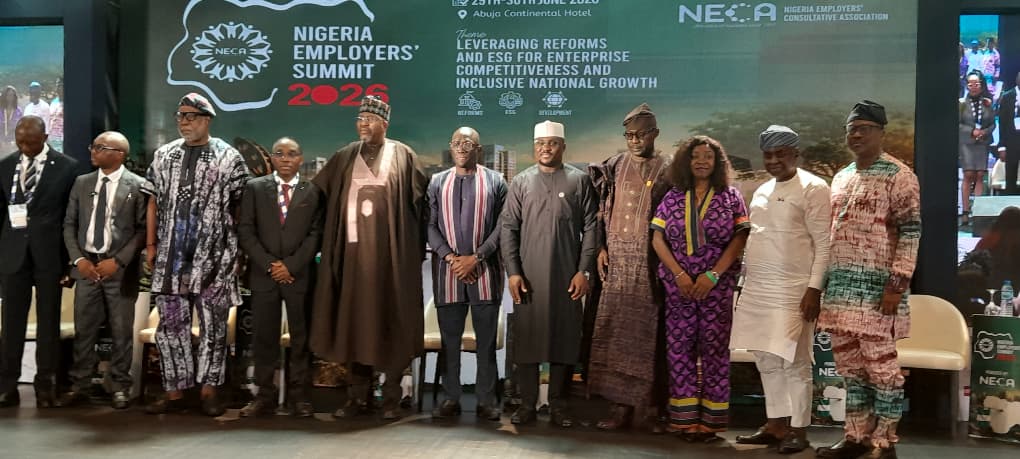
Vice President Senator Kashim Shettima articulated this position in Abuja during the opening of the 5th Nigeria Employers’ Summit 2026. The summit, organised by the Nigeria Employers Consultative Association (NECA) under the theme “Leveraging Reforms and ESG for Enterprise Competitiveness and Inclusive National Growth,” provided a platform for dialogue on the nation’s economic trajectory. Dr. Aliyu Modibo-Umar, Special Adviser, General Duties to the President, Office of the Vice President, delivered the Vice President’s remarks, highlighting the precarious state of the economy upon the administration’s assumption of office three years prior.
“When His Excellency, President Bola Ahmed Tinubu, GCFR, assumed office, the economy carried deep structural burdens,” Dr. Modibo-Umar stated, conveying the Vice President’s message. “Fuel subsidies had become fiscally unsustainable. The foreign exchange market was fragmented, government revenue was weak and investor confidence required rebuilding.” The “Renewed Hope Agenda,” he explained, was conceived to address these fundamental challenges. The administration’s stance is that prosperity cannot be built on economic distortions, investment is deterred by an uncertain foreign exchange environment, and job creation is stifled by excessive taxation, logistical impediments, and insecurity. The reforms, though arduous, are designed to rectify these foundational issues, paving the way for genuine, durable, and inclusive economic expansion.
Restoring macroeconomic stability was identified as a primary objective, with the Vice President emphasizing that a stable economy serves as the prerequisite infrastructure for all business operations. “Before roads, railways and ports, businesses need confidence to plan and invest,” he noted. Consequently, the removal of fuel subsidies and the reform of the foreign exchange market are central to the administration’s strategy. The subsidy regime was seen as a disincentive to investment and a promoter of inefficiency and rent-seeking. In contrast, the foreign exchange reforms are intended to foster a more transparent and market-driven system.
Fiscal and tax reforms are aligned with this logic, aiming to create a more predictable and equitable tax environment. The administration’s approach seeks to reduce the multiplicity of taxes, harmonise their administration, protect vulnerable segments of the population, support small businesses, and incentivise compliance through lower rates and an expanded tax base necessary for funding infrastructure development.
Further initiatives in the power sector, gas development, debt management, the Presidential CNG Initiative, and the broader energy transition are all geared towards alleviating the energy cost burden on both businesses and households. The adoption of Compressed Natural Gas (CNG), for instance, leverages domestic resources to reduce transportation expenses, promote cleaner mobility, and attract investment. The expectation is that as energy production becomes more cost-effective and reliable, job creation, income improvement, and aggregate demand will follow, fostering organic economic growth.
Senator Shettima also highlighted the significant opportunities presented by the African Continental Free Trade Area (AfCFTA). However, he stressed that these opportunities are not automatic and require Nigeria to actively participate as a producer and exporter, rather than solely as a consumer market. The private sector’s primary request, he acknowledged, is for the government to avoid creating unnecessary obstacles to doing business. Delays in approvals and regulatory ambiguity impose tangible costs on enterprises. Therefore, the administration remains committed to streamlining processes and digitising government operations to ensure that reforms enacted in Abuja are effectively implemented across all regions of the country without undue delay.

Addressing security and food production was also cited as crucial for enabling businesses to operate without fear and for farmers to return to their fields safely, thereby supporting economic activity.
Mr. Adewale-Smart Oyerinde, Director General of NECA, provided an overview of the summit, explaining its genesis five years prior. The summit was established on the premise that employers need a dedicated forum to share economic perspectives and identify policies that empower the private sector as the engine of national development. He noted the strength derived from NECA’s representation of over 35 sectoral employer groups, spanning industries such as construction, food and beverages, chemicals, iron and steel, and commerce. The summit has consistently delivered practical policy recommendations that have been valuable to successive governments.
Mr. Oyerinde specifically recalled that the removal of the fuel subsidy was a key recommendation consistently advocated by the organised private sector over the years, a position reinforced at every NECA Annual General Meeting. He acknowledged that the subsidy has now been removed, and all stakeholders are experiencing its consequences. The summit, he stated, has been instrumental in shaping national discourse and fostering confidence between the government and the organised private sector. While the private sector understands the rationale behind government reforms, it is imperative that the government also comprehends the challenges faced by businesses and the policy adjustments needed to enhance enterprise competitiveness. The summit serves as this vital platform, ensuring that employers’ voices are heard and that policy decisions are informed by practical business realities.