







AMMON Withdraws Legal Challenge on Smart Meter Importation, Cites National Interest and Resolution with FG

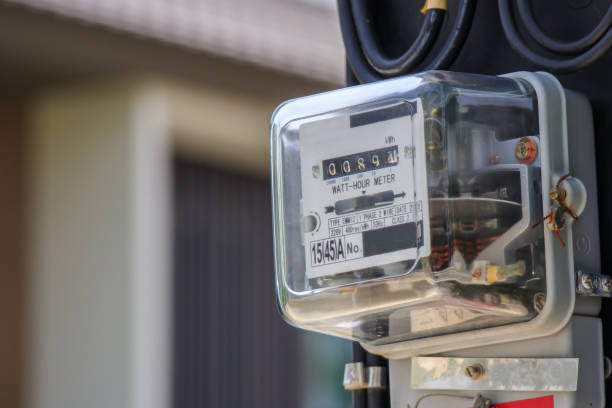

The Association of Meter Manufacturers of Nigeria (AMMON) has formally discontinued its legal action against the Federal Government over the importation of 1.55 million smart meters under the World Bank-backed Distribution Sector Recovery Programme II (DISREP II), citing the overriding national interest and an amicable resolution reached with the Federal Government.
The decision followed engagements between the association and the Federal Government, including discussions with the Minister of Power, Joseph Tegbe, and the Director-General of the Bureau of Public Enterprises, Ayo Gbeleyi.
Speaking with our correspondent, AMMON President, Durosola Omogbenigun, said the association decided to withdraw the case in support of the sustainable development of Nigeria’s electricity sector.
“The Association has consequently discontinued its legal action in the overriding national interest and in furtherance of its long-standing commitment to the sustainable development of Nigeria’s electricity sector,” Omogbenigun said.
The PUNCH recalls that the World Bank had warned that the court action could jeopardise the planned importation of the 1.55 million smart meters under DISREP II. The bank described the legal dispute as the programme’s biggest implementation risk, warning that the procurement could be cancelled if the matter was not resolved promptly.
According to the World Bank, a court injunction obtained by AMMON had stalled the opening of bids under the second phase of the international competitive bidding process for the procurement of additional smart meters.
With the dispute now resolved, AMMON said its discussions with the government had produced agreements that addressed the immediate concerns while establishing a framework for stronger collaboration between the government and indigenous meter manufacturers.
“The discussions were candid, respectful and forward-looking. They produced creative and mutually beneficial understandings that not only resolved the immediate dispute but also laid the foundation for a stronger partnership between the government and Nigeria’s indigenous meter manufacturing industry,” Omogbenigun said.
AMMON had challenged the procurement requirements adopted for the World Bank-backed DISREP II acquisition, arguing that the qualification criteria for the international competitive bidding process effectively disadvantaged Nigerian meter manufacturers.
“The dispute arose from qualification criteria adopted under the DISREP II International Competitive Bidding (ICB) procurement for 1.55 million smart meters, which effectively excluded Nigerian meter manufacturers while favouring long-established foreign manufacturers,” Omogbenigun stated.
He said the association had consistently argued that such procurement outcomes, although unintended, could slow the development of Nigeria’s domestic metering industry, discourage industrial investment and limit opportunities for local value creation.
Omogbenigun said the resolution of the dispute demonstrated that sustained dialogue between the government and industry remained the most effective way to address legitimate concerns while maintaining confidence in ongoing power sector reforms.
“The resolution reached through dialogue demonstrates that national development objectives are best achieved when the government and industry work collaboratively to address legitimate concerns while preserving confidence in public institutions and ongoing sector reforms,” he added.
The AMMON president said the outcome would help align future electricity metering procurements with the Federal Government’s industrialisation and local content policies.
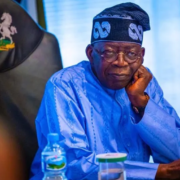
He said the development was particularly consistent with President Bola Tinubu’s “Nigeria First Policy,” the government’s industrial policy and its broader local content objectives.
“These policy initiatives recognise that sustainable economic growth is best driven through domestic production, technology development, industrial capacity expansion and the creation of quality Nigerian jobs,” the association stated.
AMMON expressed optimism that greater participation by local manufacturers in electricity metering would stimulate component manufacturing, facilitate technology transfer, develop technical skills and promote research and innovation. It added that increased local production could also create jobs and conserve foreign exchange.
The association further reaffirmed its support for government metering initiatives, including the Distribution Sector Recovery Programme, the Presidential Metering Initiative and the Meter Acquisition Fund.
AMMON said it remained committed to working with government and other stakeholders to accelerate universal electricity metering and strengthen Nigeria’s domestic metering industry.
The development comes as the Minister of Power recently assured Nigerians that the Federal Government would deploy more meters as part of efforts to close the country’s metering gap.