






Tanzania-Singapore Carbon Deal: Unlocking Commercial Capital Through Article 6 Compliance

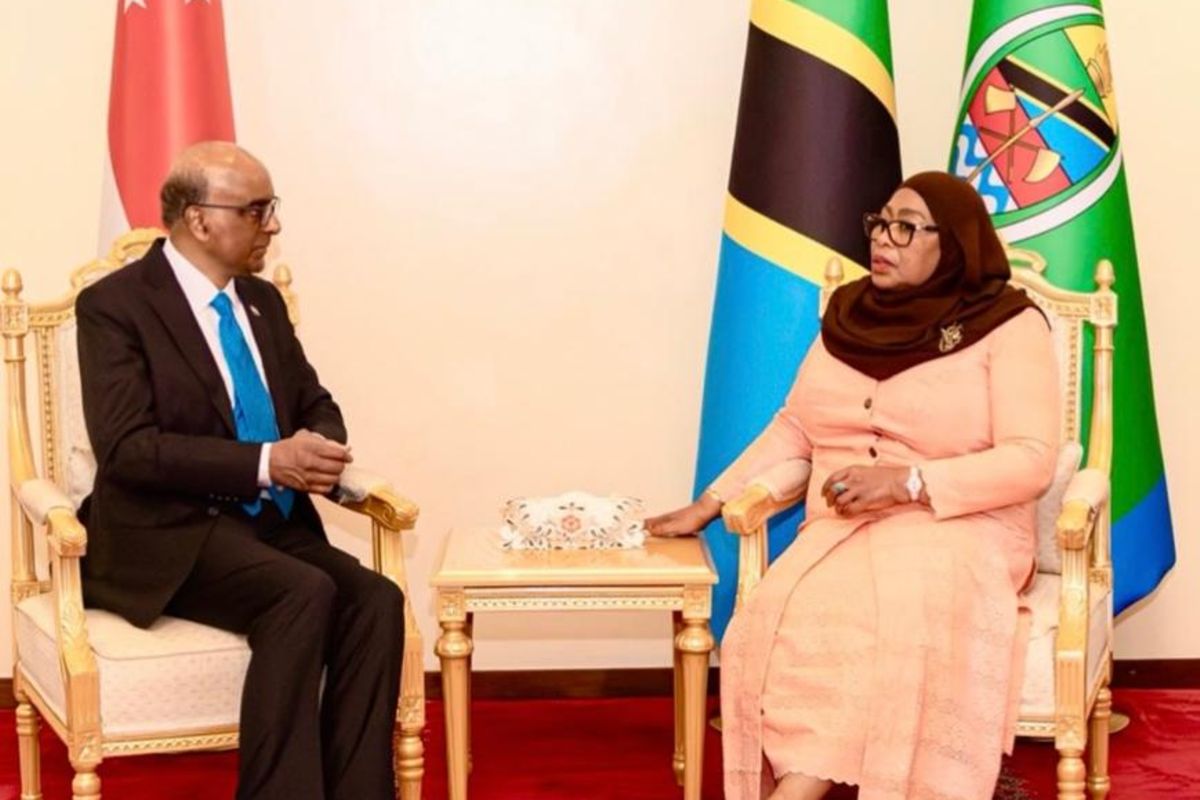

The recent state visit of Singapore’s President Tharman Shanmugaratnam to Dar es Salaam, the first by a Singaporean head of state since diplomatic ties were established in 1980, has largely been framed through the lens of enhanced trade volumes and the symbolic deepening of a 45-year partnership. However, a closer examination of the five agreements signed at State House reveals one particular Memorandum of Understanding (MoU) that may hold more profound commercial implications than all others combined.
This MoU, signed between Tanzania and Singapore on carbon credits collaboration under Article 6 of the Paris Agreement, commits both nations to exploring bilateral cooperation in carbon markets, mobilising finance for climate action, and ultimately working towards a legally binding Implementation Agreement. This agreement will govern the authorisation and international transfer of “correspondingly adjusted” carbon credits – a critical legal concept that has, thus far, received insufficient analytical attention.
Singapore’s strategic interest in such agreements is rooted in its structural limitations. As a densely populated island city-state with minimal capacity for large-scale renewable energy deployment, Singapore relies on international carbon markets to meet its Nationally Determined Contributions (NDCs). Under its International Carbon Credit framework, taxable facilities are permitted to offset up to five percent of their taxable emissions using eligible international credits. Consequently, Singapore has been actively pursuing bilateral carbon cooperation agreements across Asia, Africa, and the Pacific, having already concluded full Implementation Agreements with eleven countries, including Rwanda, Ghana, and Vietnam, by late 2025. Tanzania now joins this cohort at the MoU stage.
This distinction between an MoU and a full Implementation Agreement is of paramount importance for investors. While an MoU signifies intent, an Implementation Agreement establishes the essential legal architecture for project authorisation, reporting requirements, and the crucial corresponding adjustments. Without this framework, carbon credits generated in Tanzania cannot be legally transferred and recognised within Singapore’s compliance market. Rwanda’s progression from an MoU to a binding Implementation Agreement serves as a precedent, highlighting that Tanzania’s path forward is neither automatic nor swift.
The decisive factor in this progression is institutional readiness, an area where Tanzania’s position is stronger than often acknowledged. The National Carbon Monitoring Centre (NCMC) serves as the sovereign authority for measuring, reporting, and verifying carbon stocks, forming the technical bedrock for any future Implementation Agreement. Credible Measurement, Reporting, and Verification (MRV) infrastructure is indispensable; without it, negotiations will falter, and no Article 6-compliant mitigation activity can be authorised for international transfer.
International capital consistently inquires not about the existence of Tanzania’s carbon assets – which are abundant, spanning from its forests to its clean cooking initiatives – but rather about the capacity of its verification architecture to certify these assets to a standard acceptable to compliance buyers. The answer, with appropriate conditions, is affirmative. Tanzania enacted its pioneering Carbon Trading Regulations in 2022, and the NCMC is operational. The regulatory pathways for project registration, designation of national authorities, and credit approval are in place.

The Singapore MoU now provides a vital demand signal: a sovereign buyer with a structural need for high-integrity African credits, a government committed to compliance-grade standards, and a diplomatic relationship that fosters the political will to transition from framework to transaction. This collaboration represents an opportunity for Tanzania to shift from concessional revenue to market-based revenue, a genuine commercial exchange grounded in verified environmental integrity, rather than repackaged aid.
From an investor perspective, the critical question is timing. The period between the signing of an MoU and the finalisation of an Implementation Agreement is the most valuable entry point in the cycle. Project developers, verification bodies, and advisory firms that possess a deep understanding of Tanzania’s MRV system, the requirements of the 2022 Regulations, and the Article 6 corresponding adjustment mechanism are strategically positioning themselves. They are actively building project pipelines that will be ready for deployment as soon as the Implementation Agreement is ratified. This window is not a period of inactivity but a crucial phase for strategic engagement and preparation.