








E230 Million Honey Sector Plan Targets Import Displacement and Export Growth Amidst Regulatory Gaps

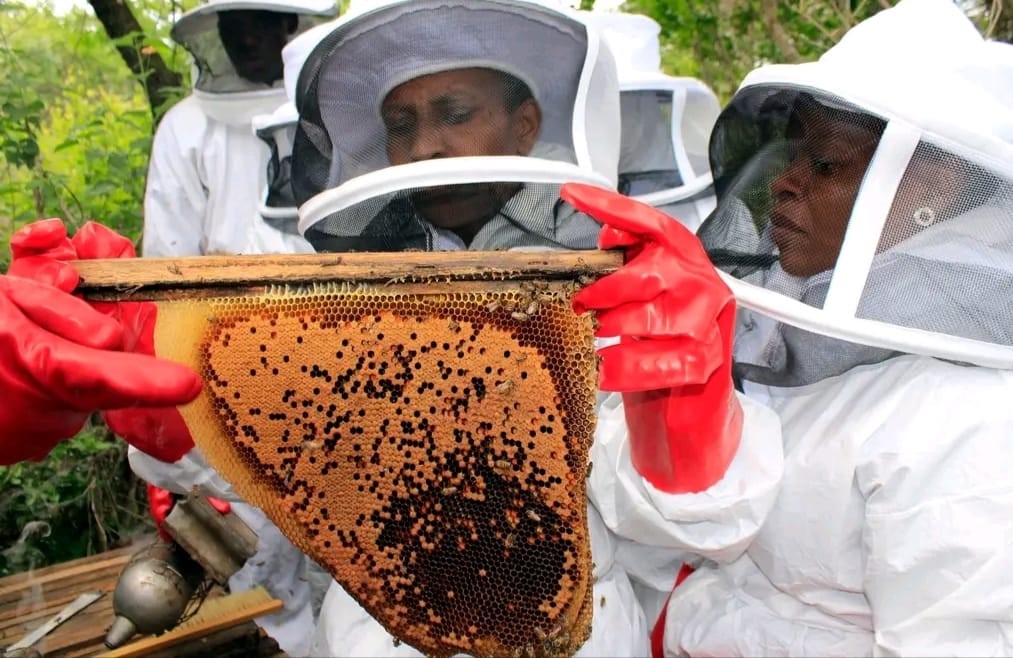

A comprehensive E230 million investment plan, validated by key stakeholders, is set to transform the local honey industry by bolstering production, enhancing quality control, and significantly reducing reliance on imported products. The initiative, presented at a World Bank-supported PROGREEN Value Chain Validation Workshop, aims to address a critical supply-demand imbalance and combat the proliferation of substandard honey in the domestic market.
The proposed Sector Development Programme Agreement for honey seeks to tackle a market where, according to findings presented at the workshop, between 30 and 40 per cent of honey sold locally is either imported, adulterated, or incorrectly labelled, primarily originating from South Africa, India, and China. Stakeholders have voiced concerns that these low-quality imports are distorting market prices, eroding consumer confidence, and creating an uneven playing field for legitimate local producers aiming to access formal retail channels.
The plan outlines a multi-faceted investment strategy. E58 million is earmarked for infrastructure development, including the establishment of four certified honey-processing hubs, cold storage facilities, and six community information centres. Production and hive expansion will receive E74 million, focusing on improved hive technology, new apiaries, and the implementation of climate-resilient systems. Furthermore, E36 million will be dedicated to extension services, training, and institutional support, while E30 million will drive market development, branding, export readiness, and traceability systems. The remaining E32 million is allocated to finance and programme management.
The proposed financing model anticipates a 30 per cent public contribution, estimated at E69 million, with the remaining E161 million expected from private investors and public-private partnerships. However, presenters acknowledged that definitive funding sources and precise implementation timelines require further clarification.
Minister of Tourism and Environmental Affairs Jane Mkhonta-Simelane underscored the significant economic potential of forest-based value chains, including honey, in supporting rural livelihoods, attracting investment, and generating employment when managed sustainably. She emphasised that forests should be viewed not merely as conservation assets but as vital economic resources capable of unlocking opportunities for communities and enterprises. “From timber and bark to honey and related bee products, the development of forest-based value chains can create meaningful benefits for communities, private enterprises and the nation,” the Minister stated.
The domestic formal retail market is identified as the most immediate avenue for local honey producers, where supermarkets and specialty stores continue to stock substantial volumes of imported honey despite a growing consumer appetite for authentic local products. South Africa is positioned as the most practical short-term export market, with longer-term prospects in the European Union and the United States. However, access to these premium markets will necessitate strict adherence to stringent requirements, including robust traceability, residue monitoring, certification, laboratory testing, and accurate labelling – critical considerations for compliance officers and legal counsel.
For smallholder farmers, the economic outlook is promising. A modest investment in a 10-hive operation is projected to yield over E40,000 in net profit within five years, with hives maintaining productivity for up to a decade. The labour demands of beekeeping also allow for integration with other farming activities, presenting a viable diversification strategy.

Local honey farmer Mhlonishwa Dlamini highlighted the challenges faced by genuine producers competing against cheaper, often misleading, imported products. “Many people look at price first and do not understand the difference between pure honey and syrup-based products. Genuine honey takes time and investment to produce, but some imported products are sold at prices we simply cannot match,” Dlamini observed. He stressed the need for stronger regulation, enhanced consumer education, and improved access to processing facilities to unlock the sector’s full potential. “If fake honey is removed from the market and farmers are supported with training and equipment, honey can become a serious income source for rural communities,” he added.
The sector is also grappling with significant governance challenges. The repeal of the Importation of Bees Act has left the industry without a clear legal framework, with responsibilities fragmented across multiple government institutions. To address this, the roadmap proposes the development of a National Apiculture Policy, the establishment of formal honey standards, the implementation of stronger import controls, enhanced inspection regimes, market surveillance, and a national hive registration system to bolster traceability – all areas requiring careful legal and regulatory navigation.
World Bank Country Representative Ikechi Okore reiterated the critical importance of forest protection, noting the forestry sector’s contribution to over 8,000 jobs in the country. Stakeholders expressed optimism that the proposed investment could elevate honey into a competitive rural enterprise. However, they cautioned that weak coordination, funding uncertainties, and inadequate enforcement mechanisms could significantly impede the plan’s overall impact. The validation meeting concluded with a strong call for clear leadership, robust regulatory frameworks, investment in research and development, and practical support for producers to ensure the E230 million plan translates from concept to tangible economic growth.