






Lagos Attorney-General Clarifies Magistrates’ Retirement Age Amendment Bill

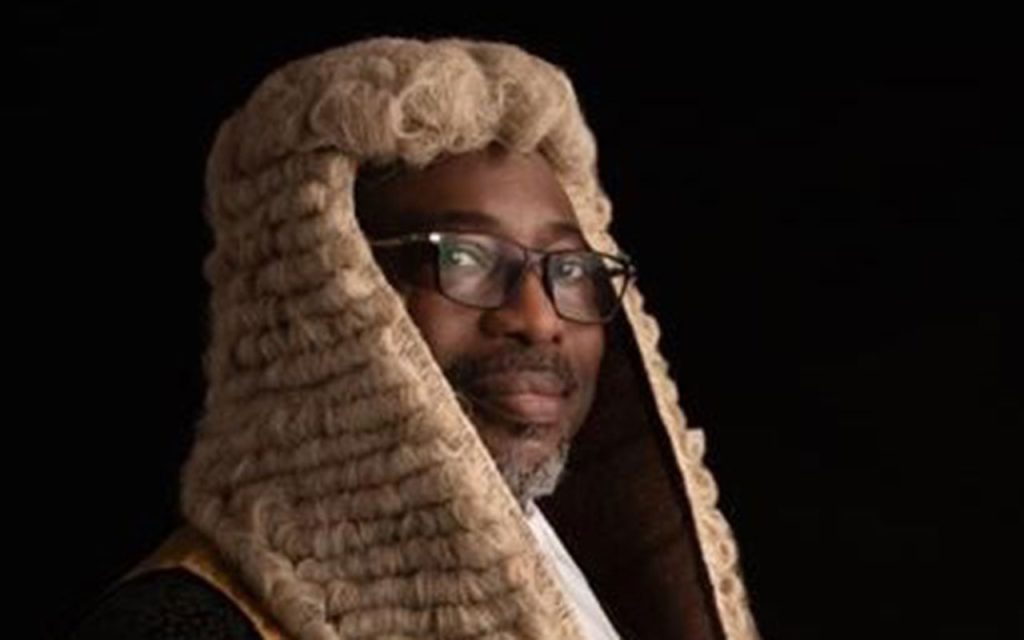

The Lagos State Attorney-General and Commissioner for Justice, Lawal Pedro, SAN, has clarified that the proposed amendment seeking to extend the retirement age of magistrates and law officers in the state was not sponsored by the Executive or his office.
Pedro said the proposal is a Private Member’s Bill currently before the Lagos State House of Assembly, although the Ministry of Justice considers the amendment justifiable as part of efforts to strengthen and sustain the state’s justice sector.
“For the avoidance of doubt, the proposed amendment is not an Executive Bill and is not sponsored by the Office of the Honourable Attorney-General and Commissioner for Justice,” he said.
According to Pedro, the Ministry of Justice’s position is based on a longstanding Lagos State policy of harmonising the conditions of service of law officers with those of magistrates, which he said had been in existence since 1997.
He noted that similar arrangements were in place in several states, including Abia, Kogi, Benue, Imo, Kwara and Osun.
Pedro argued that the proposed amendment should therefore be viewed as a continuation of an existing policy rather than the introduction of a new privilege for law officers.
He cited Osun State as an example, noting that the state, through Law No. 7 of 2023, increased the retirement age of officers involved in the administration of justice, including state counsel and court registrars, to 65.
The Attorney-General stressed that the proposed reform was specifically targeted at law officers as a specialised professional cadre involved in the administration of justice and was not applicable to lawyers generally.
He said the need for the proposed amendment had become more significant following the constitutional amendment that increased the retirement age of High Court judges from 65 to 70 years.
Pedro explained that before the amendment to Section 291(1) of the 1999 Constitution, High Court judges retired at 65, creating regular vacancies that enabled experienced chief magistrates and senior law officers to progress to the High Court Bench.
However, he said the extension of the retirement age for High Court judges had reduced the number of vacancies, leaving some experienced magistrates and law officers facing retirement at 60 despite previously having realistic opportunities for elevation to the Bench.
He described the situation as an imbalance in the career structure of the justice sector that could result in the premature loss of experienced personnel.

“The proposed amendment is therefore intended to correct this unintended disparity and establish a more coherent and sustainable career structure within the justice system,” Pedro said.
He added that the reform would help Lagos State retain experienced personnel, preserve institutional knowledge, improve succession planning and promote mentorship for younger judicial and legal officers.
Under the proposed amendment, a magistrate or law officer could choose to retire at 60 but would be required to leave office at 65 or after 40 years in service, whichever comes earlier.
Pedro urged the public to assess the proposal based on its rationale and policy implications rather than emotion or sentiment.
He maintained that the reform was intended to promote fairness in career progression, retain valuable expertise and strengthen the administration of justice in Lagos State.