








Togo Unveils Structured Tariffs for Private Solar Power Injection into National Grid

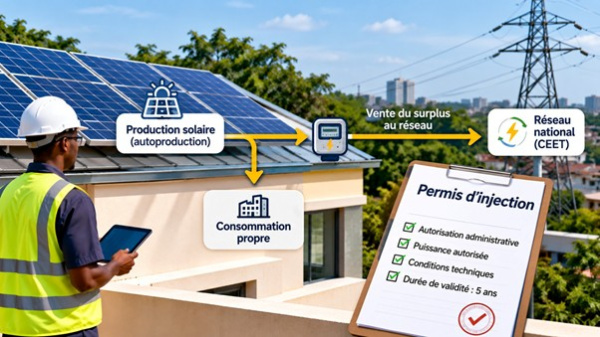

Togo has established a clear regulatory framework and fee structure for private renewable energy producers seeking to inject surplus electricity into the national grid. An interministerial decree, dated September 25, 2026, outlines the precise costs associated with applying for, obtaining, renewing, and maintaining an injection permit for self-producers, primarily targeting solar energy installations. This move signals a significant step towards formalising private sector participation in the nation’s energy landscape and supporting its ambitious electrification goals.
The decree, as reported by Togo First, introduces a tiered fee system based on installation capacity. For smaller systems of 100 kWc or less, the combined application and issuance fees amount to 150,000 FCFA, with an additional annual control fee of 25,000 FCFA. Larger installations, ranging from over 100 kWc up to 1 MWc, face initial fees of 450,000 FCFA and an annual charge of 100,000 FCFA. The costs escalate for greater capacities, with installations between 1 and 5 MWc incurring 1.2 million FCFA in initial fees, and those exceeding 5 MWc requiring a payment of 2.3 million FCFA, exclusive of annual control fees.
This injection permit is a crucial authorisation enabling private electricity generators, particularly those utilising renewable sources like solar, to feed excess power into the public grid. The regulatory structure also accounts for permit renewals, with fees ranging from 50,000 to 750,000 FCFA depending on capacity, in addition to processing charges. The decree further stipulates that any adjustments to the injectable capacity will necessitate a fee equivalent to 50% of the issuance fee applicable to the new capacity. Separate charges will apply for ad-hoc inspections or counter-expert assessments.

A notable provision within the decree offers a 50% reduction in fees and royalties for installations serving health facilities, educational institutions, or social interest infrastructure. This concession, however, is contingent upon a decision by the Minister in charge of Energy. This regulatory development complements the September 2024 decree governing self-producers’ grid access and aligns with Togo’s strategic objective of achieving 100% electricity access by 2030. With national production currently supplying just over half of the electricity injected into the CEET grid, imports remain substantial, underscoring the importance of integrating private renewable energy contributions.