







South Africa Secures ExxonMobil LNG Supply as Landmark Import Terminal Advances Gas Strategy



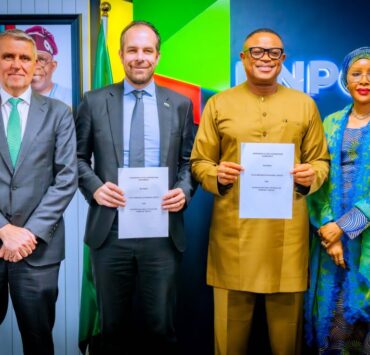
South Africa is poised to establish its inaugural Liquefied Natural Gas (LNG) import terminal, a pivotal development in the nation’s evolving gas-to-power strategy. A preliminary agreement between ExxonMobil and the planned Zululand Energy Terminal (ZET) marks a significant commercial milestone, signalling substantial progress towards diversifying the country’s energy mix and reducing its entrenched reliance on coal.
This strategic move follows a crucial Heads of Agreement signed earlier this month between the state power utility, Eskom, and ZET. This framework establishes Eskom as a “foundation customer” for the terminal, which is designed to provide essential LNG import, storage, and regasification capacity. The facility will underpin a planned 3,000 MW gas-to-power program, a key component of South Africa’s Integrated Resource Plan targeting approximately 6,000 MW of new gas-to-power capacity by 2030. According to a statement released by the companies on Wednesday, these agreements represent considerable forward momentum for a project widely recognised as central to South Africa’s ambition to integrate gas at scale into its electricity system, thereby enhancing grid stability amidst persistent rolling blackouts.
The Zululand Energy Terminal, slated for development at Richards Bay, is a collaborative venture involving Vopak Terminal Durban, Reatile Group, and Transnet Pipelines. Designed as an open-access facility, its phased development aims to cater to both power generation and industrial gas demands. Under the Eskom agreement, the utility will gain access to critical LNG import and regasification capabilities, essential for its planned gas-fired generation expansion. While the ExxonMobil agreement is non-binding, it offers an early indication of potential LNG supply sources for the project, which is currently in the pre-final investment decision phase, with commercial and contracting structures yet to be finalised. ZET has outlined a development plan that could see regasification capacity scale from an initial 3 million tons per annum (mtpa) to approximately 4.5 mtpa in a later expansion, contingent on demand and financing.
South Africa’s accelerated pursuit of LNG imports is a direct response to an impending “gas cliff,” driven by dwindling pipeline supplies from Mozambique’s Pande-Temane fields and limited near-term domestic production. With upstream development still in its nascent stages, LNG imports have emerged as the most immediate pathway to secure supply for planned gas-to-power capacity. However, this strategy introduces structural considerations regarding increased exposure to global LNG markets, particularly at a time of intense competition for cargoes. Although global supply has seen expansion since the 2022 energy crisis, prices remain susceptible to geopolitical events, seasonal demand fluctuations in Asia, and evolving European import requirements, all of which have significantly reshaped global trade flows.

For emerging importers like South Africa, this dynamic creates inherent uncertainty in procurement strategies. While long-term LNG contracts can offer a degree of price stability, they are typically benchmarked against oil or international gas indices. Early-stage projects often retain some exposure to spot market purchases, a hybrid approach that can leave power systems partially vulnerable to global price cycles. Consequently, the transition towards LNG signifies a fundamental shift in South Africa’s energy paradigm – moving from domestically anchored supply to internationally priced fuel. This pivot is being positioned by policymakers as a flexible solution to bolster grid stability and complement renewable energy generation. As the project progresses through financing and construction, critical attention will undoubtedly be directed towards the finalisation of contracting structures, pricing formulas, and supplier diversification strategies. These elements will ultimately determine whether South Africa’s LNG initiative enhances energy security or deepens its exposure to the volatility of global gas markets.