


Niger State Pioneers Subnational Carbon Market Engagement, Seeks Global Climate Finance

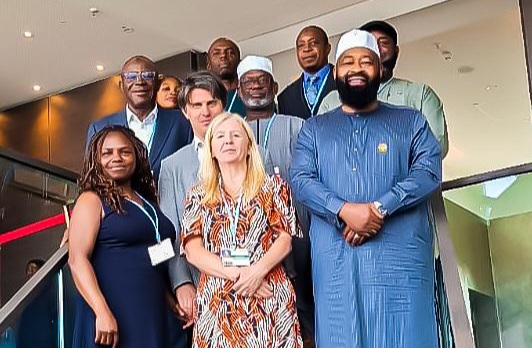

Niger State is positioning itself at the forefront of Nigeria’s engagement with international climate finance mechanisms, signalling a significant shift in subnational government participation in global carbon markets. Governor Umar Mohammed Bago led a high-level delegation to the United Nations Framework Convention on Climate Change (UNFCCC) platform in Bonn, engaging key stakeholders from government, international climate finance organisations, and development partners. The objective was to forge practical pathways for unlocking carbon markets under Article 6 of the Paris Agreement, with a strategic focus on methane reduction, landfill gas recovery, and broader mitigation opportunities across various economic sectors.
This engagement underscores Niger State’s emerging role as a pioneering subnational actor within Nigeria’s evolving carbon market ecosystem. The state aims to establish itself as a pilot hub for innovative climate investment frameworks, demonstrating a proactive approach to integrating climate ambition with actionable investment pipelines. Governor Bago articulated the urgent need to translate climate goals into tangible projects that directly support critical development priorities, including infrastructure enhancement, energy transition, waste management, agricultural development, and environmental remediation.
Governor Bago advocated for a departure from traditional bureaucratic processes, championing an enterprise-driven carbon market model designed to expedite project development, attract investment inflows, and deliver measurable climate outcomes. He stressed that carbon markets should function as “a functional economic enterprise rather than a purely administrative framework,” highlighting the substantial, yet largely untapped, domestic opportunities within sectors such as cement production, agriculture, forestry, aviation, and waste management.
A central theme of the discussions revolved around streamlining Nigeria’s carbon governance architecture, particularly concerning the issuance of Letters of Authorization (LOAs). These are critical prerequisites for participation in international carbon trading systems. Officials from the National Council on Climate Change (NCCC) reiterated their commitment to accelerating approvals and enhancing coordination with subnational governments and private sector entities. They acknowledged ongoing efforts to reduce approval timelines and bolster technical support for project developers, though stakeholders consistently pointed to persistent capacity gaps across institutions as a significant impediment to implementation and investor confidence.
Leading international climate finance institutions, including ICA Finance, presented their expertise. ICA Finance shared its track record of mobilising over €150 million in global carbon finance and developing large-scale methane reduction projects across continents. The organisation expressed keen interest in supporting Niger State’s landfill gas recovery and methane capture initiatives, signalling readiness to invest at risk in viable projects under Article 6 frameworks. ICA Finance emphasised that successful carbon market participation hinges on robust data systems, clear methodologies, and strong institutional coordination between governmental bodies and investors.
Development partners also outlined opportunities available through climate investment funds, concessional financing windows, and blended finance structures, all designed to accelerate mitigation and adaptation projects in developing economies. A significant outcome of the engagement was the renewed focus on domestic carbon credit generation within Nigeria. Participants identified substantial untapped potential in sectors such as cement manufacturing, oil and gas operations, agriculture, livestock methane emissions, aviation, and waste management. The consensus was that enhanced national carbon accounting systems, including comprehensive greenhouse gas inventories, could unlock significant revenue streams if effectively integrated with market mechanisms and investment platforms.
The meeting concluded with a strong consensus on the necessity for structured capacity-building programmes tailored for subnational governments, technical institutions, and regulatory agencies. Partners proposed a collaborative training and pilot initiative involving Niger State, the NCCC, ICA Finance, and other international partners. This initiative aims to deepen technical understanding of carbon markets, improve project pipeline development, and elevate compliance with global standards. Governor Bago reaffirmed Niger State’s commitment to serving as a pilot state for carbon market innovation in Nigeria, positing that early implementation successes would establish a valuable national demonstration model.
Key outcomes from the engagement include the preparation of a scoping mission to Niger State for project assessment, the development of pilot methane and landfill gas recovery projects, the establishment of a structured capacity-building program, the acceleration of LOA issuance processes for eligible projects, and the strengthening of public-private partnerships under Article 6 frameworks. The Niger State Government underscored that this collaboration represents a pivotal moment in aligning subnational ambition with global climate finance systems, with a clear focus on delivering measurable environmental impact and sustainable economic value.