







NCAA Bars Pilot, Grounds Aircraft After Asaba Road Landing Incident

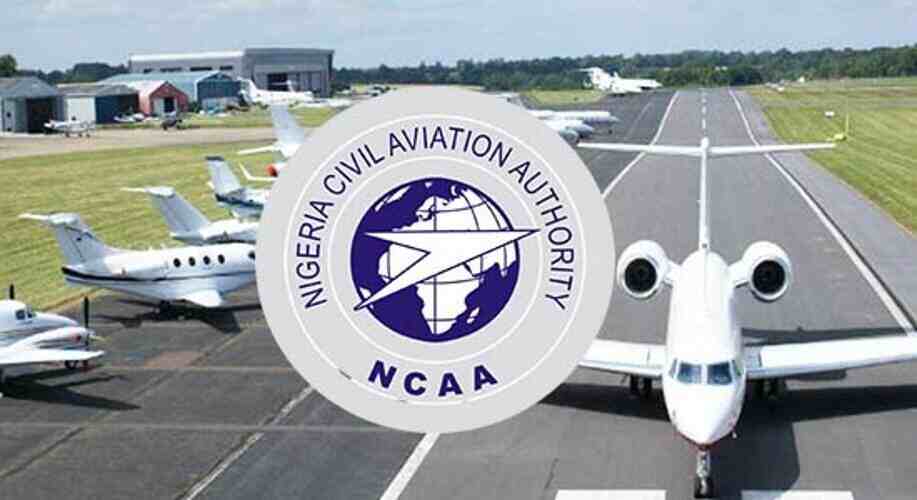

The Nigeria Civil Aviation Authority (NCAA) has taken decisive regulatory action following the highly unusual aviation incident at Asaba Airport, Delta State, where a Bombardier Challenger CL601‑3A (registration N989BC) mistakenly landed on a road under construction near Runway 11 on June 10, 2026.
The agency has barred the Pilot-in-Command from operating in Nigerian airspace, the First Officer suspended pending outcome of investigations, and the aircraft grounded and its Permit to Fly (PNCF) suspended.
Director General of Nigeria Civil Aviation Authority (NCAA), Captain Chris Najomo, speaking at the Airport Business Summit in Lagos, emphasised that the incident was “highly unusual” and pledged that the authority would leave no stone unturned in uncovering the circumstances. He confirmed that while the Nigerian Safety Investigation Bureau (NSIB) conducted the initial safety probe, the NCAA has now assumed regulatory oversight, with the Department of State Services (DSS) joining the investigation.
Najomo also reassured operators that the NCAA remains committed to addressing anti-competitive practices, ensuring fair competition, protecting passengers’ rights, and preventing excessive charges in the aviation sector.
The NSIB in it’s prelimimary report states that the incident happened because the flight crew mistook the road for Runway 11 while flying through cloud and relying on navigation instruments that indicated proper alignment.
The aircraft, operated by VMO Aero Limited, departed the Murtala Muhammed International Airport in Lagos at 08:01 on an IFR flight carrying seven people: a Pilot-in-Command (PIC), Second-in-Command (SIC), an observer pilot, one cabin crew member, and three passengers. All aboard survived, and the aircraft sustained only minor damage to its left nose-wheel assembly, discovered after it returned to Lagos.
The report stated that before departure, the observer pilot pointed out what he believed were errors in the aircraft’s Flight Management System (FMS) programming, but the PIC reportedly told him not to interfere, since he was aboard only in an observational capacity. Both the PIC and SIC later confirmed discrepancies had occurred during FMS setup but said they were corrected before takeoff.
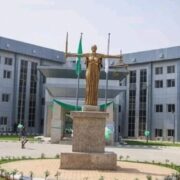
As the aircraft neared Asaba, the report indicated that broken cloud at 300 metres and intermittent visibility obstructed the crew’s view of the runway. During the first approach attempt, the PIC reported that while the aircraft’s navigation system indicated proper alignment with the RNAV approach path, the runway environment appeared visually shifted to the right of the aircraft’s actual track causing him to abandon the approach and request a 360-degree holding turn, which Air Traffic Control approved. After repositioning, the crew reprogrammed the RNAV approach and proceeded inbound a second time. Both pilots maintained that navigational displays continued to show correct alignment, and the PIC reported the runway in sight before landing.
However, the observer pilot contradicted this. He stated the aircraft was still in cloud late into the approach, that the Ground Proximity Warning System issued repeated “terrain, terrain, pull up” alerts, and that he spotted a telecommunications mast ahead causing him to instruct the PIC to abort and climb. Instead, the aircraft touched down at 08:57 h on a paved but unfinished roadway near, not on, Runway 11. The crew believed initially that they had landed on a runway extension, but realised their mistake after coming to a stop near parked construction equipment.
The report also stated that the Asaba Tower made repeated attempts which went unanswered to reach the aircraft over nearly two hours, attributing it partly to an unserviceable tower voice-recording system, forcing investigators to rely on a transcript.