





Libya Marks Oil Majors’ Return With New Production-Sharing Contracts with International Companies

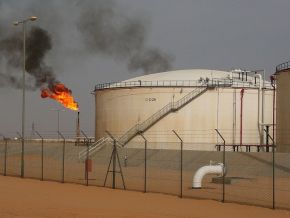

Libya’s National Oil Corporation (NOC) signed production-sharing contracts (PSCs) with several international energy companies on Monday, 15 June, marking a major milestone in the country’s efforts to attract foreign investment and expand oil production.
The agreements were signed with Spain’s Repsol and Turkey’s Turkish Petroleum Corporation (TPAO), Italy’s Eni and Qatar’s QatarEnergy, as well as a consortium comprising Hungary’s MOL Group, TPAO and Repsol. The contracts follow the results of a licensing round announced in February, in which several companies secured exploration licenses for Libyan blocks.
“These agreements reflect growing confidence in Libya’s oil and gas sector and will support the growth of exploration, development and production,” NOC Chairman Masoud Suleiman said in a company statement.
The contracts also introduce a new framework for sharing oil revenues between the NOC and its foreign partners, known as EPSA V, the fifth generation of exploration and production-sharing agreements (EPSA) signed in Libya since the 1970s.
The previous model, EPSA IV, which had been in place since 2005, was viewed by investors as unattractive because it offered them a limited share of profits while requiring substantial upfront payments. The new model addresses that imbalance by providing more favorable profit-sharing terms in an effort to attract additional foreign investment.
A Historic Licensing Round After Nearly Two Decades
The agreements were signed nearly 20 years after Libya’s last oil licensing round, held in 2007 under the rule of Muammar Gaddafi. Since then, the 2011 revolution, civil war and persistent divisions among rival factions had prevented the launch of a new bidding round. The licensing round launched in 2025, with results announced in February 2026, marks a significant turning point in the country’s oil industry.
Thirty-seven companies had prequalified to participate, including Shell, BP, ExxonMobil, TotalEnergies, Eni and QatarEnergy. Only five of the 20 blocks on offer ultimately attracted bidders, a result that Jalel Harchaoui, a Libya specialist at the Royal United Services Institute (RUSI) in London, described as underwhelming. He cited parallel private negotiations conducted by some major companies outside the formal bidding process.
Monday’s contract signing nevertheless ushers in the implementation phase of the awarded licenses, turning exploration rights into legally binding commercial projects.

In May, the NOC recorded its highest monthly revenue in a decade at about $4 billion. Its production reached 1.43 million barrels per day in April, the highest level in 10 years, according to The National. In April, the country also approved its first unified budget in 13 years, allocating the equivalent of about $1.9 billion to the state-owned company.
The contracts with foreign companies add to a series of initiatives launched by the state oil company in recent weeks. The company signed cooperation agreements with services provider SLB and the Project Management Institute to strengthen its technical expertise and workforce capabilities. Its stated objective remains to reach 2 million barrels per day by 2030. Libya is also targeting production of 1.6 million barrels per day by the end of this year as an interim milestone.