









Insurance Industry Faces Growing Protection Gaps: IVW Conference Highlights Systemic Challenges and Regulatory Imperatives

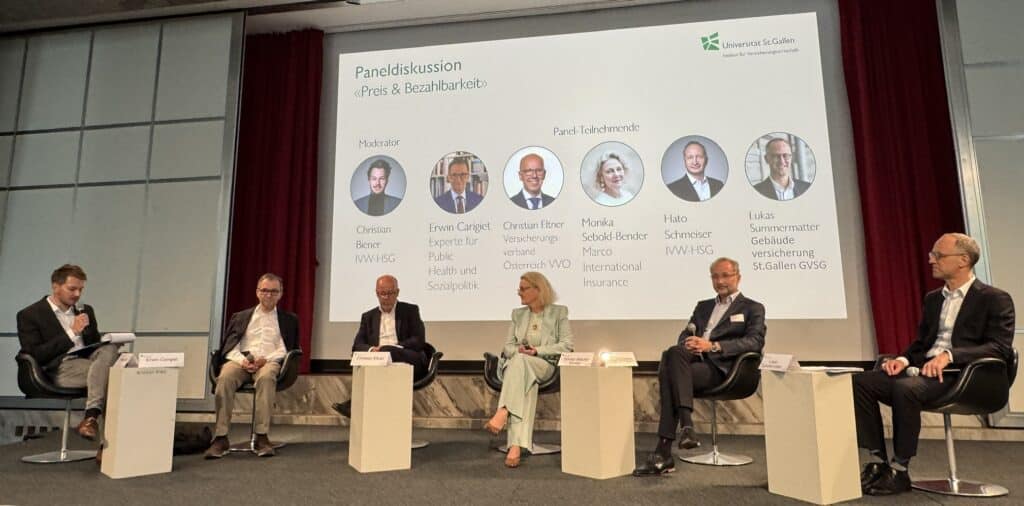

The insurance industry is grappling with a widening chasm between its core promise of managing the unpredictable and the reality of escalating risks, a central theme at the recent IVW Annual Conference 2026 held at the Kunsthaus Zürich. The event, deliberately staged in an unconventional setting to foster deep reflection, underscored systemic issues and prompted critical questions about market failures, the role of the state, and the industry’s own capacity to adapt.
A stark statistic opened the proceedings: only 25 percent of damages from natural disasters in Europe are currently insured, leaving citizens, businesses, and public finances exposed. This “Protection Gap,” as detailed by Carlos Giuné, Head of Sustainability at the European Insurance and Occupational Pensions Authority (EIOPA), is not static but actively growing, disproportionately impacting those with the fewest resources. EIOPA’s dashboard on natural catastrophe coverage, launched in 2022, has raised awareness, prompting debates on mandatory coverage models in countries like Italy, Greece, Portugal, and lively discussions in Germany.
EIOPA has identified several demand-side drivers for this underinsurance, including a lack of risk awareness, an over-reliance on expected state compensation, and a deficit of trust in the insurance sector. While “Impact Underwriting,” which incentivises preventive behaviour, was discussed, Nicolas Jeanmart of Insurance Europe noted the pragmatic challenge of financial incentives for individuals often being insufficient relative to investment costs.
The conference further illuminated regional disparities within the DACH (Germany, Austria, Switzerland) market. Austria faces a political impasse, with Christian Eltner of the Austrian Insurance Association highlighting how state disaster relief funds, distributed inconsistently with electoral cycles, disincentivise private insurance solutions, creating an economically dysfunctional but politically entrenched model.
Germany is more advanced, with a government program proposing mandatory natural hazard insurance. However, Monika Sebold-Bender of Marco International Insurance cautioned that a uniform premium would undermine prevention and personal responsibility by flattening risk. She advocated for risk-based pricing complemented by state-funded social compensation mechanisms, rather than embedding them within insurance pricing. Switzerland, by contrast, has largely addressed natural hazard insurance through mandatory cantonal requirements in 22 out of 26 cantons, with high penetration elsewhere. The remaining gap lies in earthquake insurance, where Dr. Lukas Summermatter of the Building Insurance of the Canton of St. Gallen and Prof. Dr. Hato Schmeiser from IVW-HSG agreed that while insurable, the primary obstacle is a lack of awareness, not capacity.
Shifting to emerging risks, Urs Arbter, Director of the Swiss Insurance Association (SVV), presented a striking figure: 89 percent of Swiss SMEs lack cyber insurance. He framed this not as a crisis but as a significant growth market, underscoring that demand arises where risks exist and new risks present opportunities. Workshops on cyber and AI revealed a supply of products but a deficit in accessibility for smaller businesses, which often require actionable emergency plans and insurers willing to partner beyond mere coverage. Concepts like “Protection as a Service” and digital tools, AI-driven risk analyses, and embedded insurance solutions are emerging, but progress remains incremental. The systemic risk of cyber attacks paralysing entire infrastructures remains a core challenge, necessitating public-private partnerships for long-term sustainability.

The conference also addressed the critical issue of long-term care provision, identified by several speakers as Switzerland’s most significant unsolved financing question, eclipsing the AHV and the second pillar. With projections indicating a rise in nursing home residents requiring supplementary benefits from 85,000 to 140,000 by 2040, the current state safety net, while socially necessary, actively hinders the development of a private long-term care insurance market by eliminating individual incentive for provision. Lukas Kienast of AXA shared insights into increasing acceptance of securities-based provision products through smarter design and enhanced advice, focusing on simpler product architecture and clearer communication, leading to a significant increase in pension assets invested in stocks.
The conference’s overarching theme, moving from diagnosis to implementation, identified three key levers: enhancing risk transparency and prevention, refining product design and market development, and activating demand while rebuilding trust. The outcome is a complex picture: Switzerland leads the DACH region but faces substantial challenges in earthquake coverage, widespread cyber underinsurance, and systemic issues in long-term care. The industry’s capacity for action is evident, but collaboration with public entities is indispensable. The discussions at the Kunsthaus Zürich underscored the urgent need for continued strategic thinking and innovative solutions.