







G7 Critical Minerals Push: African Producers Navigate Shifting Global Supply Chain Dynamics and Investment Opportunities

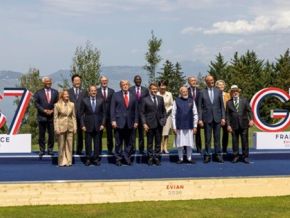

The Group of Seven (G7) nations have unveiled an ambitious strategy to reshape global critical mineral supply chains, signalling a significant shift in international dynamics that will profoundly impact African producers. The G7’s declaration, finalised on June 17, 2026, following three days of talks in Evian, France, aims to reduce dependence on single suppliers, particularly China, for essential resources like rare earths. This move presents both substantial investment opportunities and complex challenges for African nations, which hold approximately 30% of global critical mineral reserves.
The G7 leaders, representing economies that account for roughly 40% of global GDP, have committed to reducing their reliance on a single supplier for rare earths to below 60% by 2030, with a long-term goal of reaching 50%. This objective directly addresses China’s current dominance, which controls over 60% of global rare earth supply and holds a significant share of the world’s refining capacity. The G7 plans to establish similar diversification targets for other critical minerals before the end of 2026.
The G7 has accelerated its efforts in this domain, launching 195 critical minerals initiatives since early 2026. These initiatives represent a substantial €64 billion (approximately $73.5 billion) in investments, encompassing equity stakes and offtake agreements. This concerted push is expected to channel additional Western investment into African producing countries. Recent examples include Orion Critical Minerals, a Washington-backed consortium, entering Glencore’s copper and cobalt assets in the Democratic Republic of Congo, and Japan’s expanded presence in Namibia’s Lofdal rare earth project. Developers of the Longonjo rare earth project in Angola and the Songwe Hill rare earth project in Malawi are also strategically aligning with Western supply chains by targeting the U.S. market.
However, the G7 declaration raises critical questions for African stakeholders regarding local value addition, pricing mechanisms, and the continent’s role in shaping future supply chains. While the G7 acknowledges the importance of supporting local value creation, the practical scope of this commitment remains vague. African governments are increasingly making downstream processing and local beneficiation prerequisites for resource access, and the extent to which partner countries contributing to mineral supply chains will benefit from these G7 policies is yet to be clarified.
The proposal to establish minimum prices for critical minerals has also gained traction, championed by the United States as a countermeasure to what Western governments perceive as China’s strategy of maintaining low prices to gain a competitive advantage. Supporters argue that a price-floor mechanism could enhance the economic viability of mining projects outside Chinese-controlled supply chains, including those in Africa. Nevertheless, the implementation of such a mechanism is uncertain, as the G7 declaration lists it among options under consideration, reflecting ongoing discussions and potential disagreements, particularly around a U.S. proposal based on an artificial intelligence model.

The G7’s declaration also highlights plans to develop strategic stockpiles, accelerate recycling activities, and introduce trade-related tools such as quotas and price floors. Furthermore, the group announced enhanced traceability measures and the establishment of a “G7 Critical Minerals Resilience and Production Alliance.” The G7’s decision to open this new alliance to like-minded partners presents an opportunity for African governments to engage more directly in future discussions on critical mineral supply chains.
Kenya, attending the summit as a partner country, has already articulated its priorities. President William Ruto has underscored local processing and value addition as paramount objectives for Africa to champion in ongoing international dialogues. As critical mineral security increasingly becomes a geopolitical imperative, African countries must proactively advance and safeguard their strategic interests, ensuring that the evolving global landscape translates into sustainable economic development and shared prosperity for the continent.