









Elizade University Convocation: CJN Warns That Talent Exported Abroad Is National Development Denied at Home

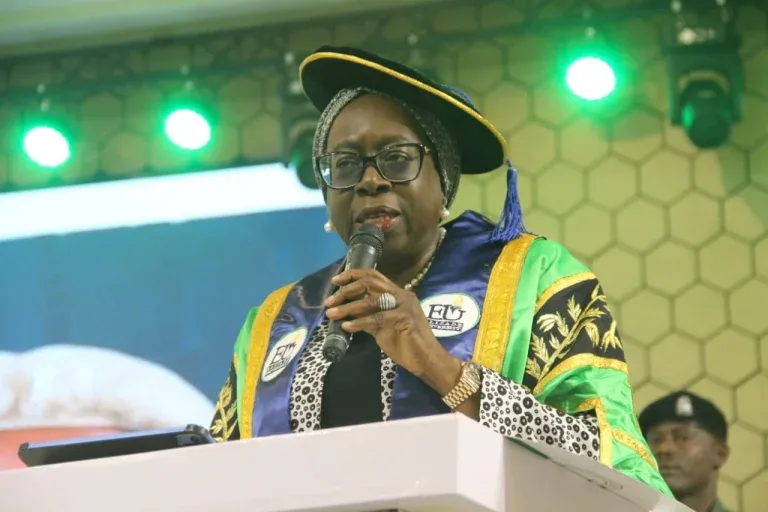

The Chief Justice of Nigeria (CJN), Justice Kudirat Kekere-Ekun, has urged Nigerian graduates to deploy their knowledge, skills and expertise towards national development, warning that the country risks losing valuable human resources if talented professionals devote their abilities exclusively to foreign societies.
Kekere-Ekun gave the charge on Thursday while delivering the convocation lecture at Elizade University, Ilara-Mokin, Ondo State, during the institution’s 10th and 11th combined convocation ceremonies.
The CJN acknowledged the economic difficulties, unemployment and uncertainties confronting young Nigerians but urged graduates not to lose confidence in their capacity to contribute meaningfully to the country’s progress.
She noted that Nigeria’s future would depend significantly on the quality of citizens willing to take responsibility for addressing its challenges.
According to her, the country needs graduates who can think independently, question constructively, innovate responsibly and collaborate in developing solutions to national problems.
She also called for professionals who would resist the misuse of public resources, entrepreneurs committed to creating value and leaders who recognise that authority comes with accountability.
Addressing the growing attraction of opportunities abroad, the judicial officer acknowledged that some graduates might wish to pursue postgraduate studies or explore better career prospects outside Nigeria.
However, she urged them not to lose sight of their home country, stressing that Nigeria’s development could suffer if individuals equipped with relevant knowledge and opportunities chose to remain abroad and contribute exclusively to other economies.

Kekere-Ekun maintained that while the challenges confronting Nigeria were real, determination and individual responsibility remained important in shaping the country’s future.
Meanwhile, the Vice-Chancellor of Elizade University, Professor Philip Oguntunde, described the convocation lecture as an important opportunity to engage graduates and members of the university community on issues capable of broadening their perspectives and inspiring responsible action.
He said the lecture went beyond celebrating academic achievements to encourage graduates to reflect on their responsibilities to society.