









Dangote Refinery’s Dollar Pricing Signals End of Naira-Priced Petrol, Exposing Policy Gaps

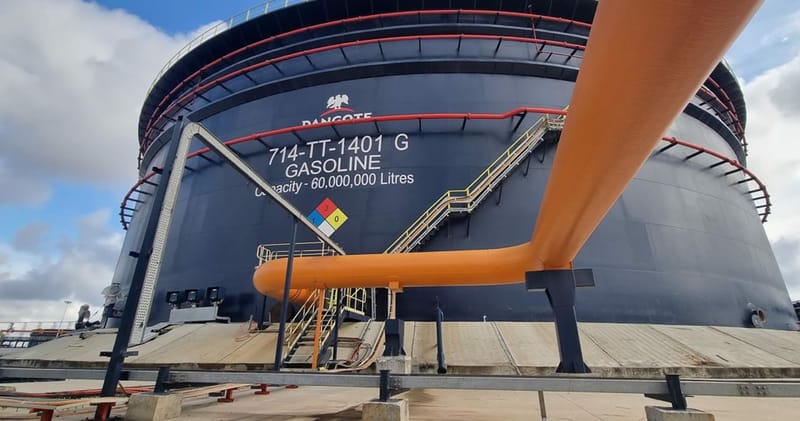

The era of naira-denominated petrol pricing in Nigeria appears to be drawing to a close, following Dangote Petroleum Refinery’s decisive shift to dollar-based sales. This move, a significant policy setback for the nation’s downstream oil sector, underscores a critical vulnerability: domestic fuel prices are now inextricably linked to the foreign exchange market, with profound implications for inflation, transportation costs, and the value of the naira.
Effective July 13, 2026, Dangote Refinery established ex-depot prices of $0.779 per litre for Premium Motor Spirit (PMS), $1.087 for diesel, and $0.942 for aviation fuel, simultaneously cancelling all existing naira-denominated invoices. This decision stems from the refinery’s increasing reliance on dollar-purchased crude, as supplies under the federal government’s naira-for-crude initiative proved insufficient. Industry reports indicate that the refinery received only seven domestic crude cargoes in May, falling short of its monthly requirement of 13-15 cargoes, necessitating substantial dollar-denominated crude imports. This exposure to exchange rate volatility became commercially untenable for the private investor.
At the prevailing official exchange rate of approximately N1,380 per US dollar, the new dollar prices translate to roughly N1,075 per litre before the addition of transportation costs, depot margins, regulatory charges, and marketer profits. While the immediate price increase may seem modest, the long-term danger is the direct tethering of petrol prices to the naira’s fortunes. A depreciation to N1,500/$ would push the cost to approximately N1,169 per litre, and to N1,600/$ would raise it to about N1,246, all without any change in global crude prices or refining costs. Exchange rate depreciation alone now dictates domestic pump price hikes.
This outcome directly contradicts the objectives of the naira-for-crude initiative, launched in 2024 to supply local refiners with crude in naira, thereby reducing dollar demand, bolstering local refining, conserving foreign reserves, and stabilising fuel prices. The policy’s failure to guarantee adequate domestic crude supply in naira has undermined its efficacy. Professor Emeritus of Petroleum Economics, Wumi Iledare, posits that Dangote Refinery has merely stated its price in a deregulated market, a legitimate commercial response to foreign exchange exposure rather than price-fixing.
However, the commercial logic does not negate the broader economic consequences. Nigeria’s downstream petroleum market is far from perfectly competitive. With state-owned refineries operating below capacity and imported products remaining costly, Dangote Refinery’s dominant position means its commercial decisions have national economic ramifications. Stakeholders, including the Petroleum Products Retail Outlets Owners Association of Nigeria (PETROAN), warn that dollar-denominated fuel transactions could accelerate the dollarisation of the Nigerian economy. The Independent Petroleum Marketers Association of Nigeria (IPMAN) anticipates increased competition for scarce foreign exchange, further pressuring the naira and exacerbating pump price volatility. Depot operators have already begun raising loading prices in anticipation of higher replacement costs.

The wider economy faces significant inflationary pressures. With headline inflation at 15.93 per cent and food inflation at 16.96 per cent in May 2026, fuel prices, a major driver of inflation due to their impact on road transport, will inevitably feed into higher costs for goods and services. Businesses reliant on generators due to unreliable electricity supply will also face increased operational expenses.
This development exposes a critical policy contradiction. The government’s failure to ensure a consistent and transparent domestic crude supply framework for refiners has effectively transferred foreign exchange risk from the refinery to consumers and businesses. Unless this framework is urgently restored, local refining alone will not guarantee affordable fuel, and pump prices will increasingly reflect the naira’s value in the forex market rather than domestic refining costs.