





Critical Minerals: What the U.S. DOMINANCE Act Means for African Producers

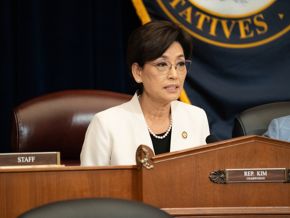

The U.S. House of Representatives passed, Monday, the DOMINANCE Act, a new bipartisan bill designed to reduce American dependence on China for critical minerals. While broadly ambitious in scope, the legislation builds a strategy in which Africa, home to roughly 30% of the world’s critical mineral reserves, could become one of its primary testing grounds.
Sponsored by Republican Young Kim and Democrat Ami Bera, the DOMINANCE Act makes permanent what had previously been left to presidential discretion. It codifies the Forum on Resource Geostrategic Engagement (FORGE), announced in February 2026 as the successor to the Minerals Security Partnership, which already includes African producer nations such as the Democratic Republic of Congo, Zambia and Morocco.
The bill also creates a Bureau of Energy Security and Diplomacy at the State Department and mandates critical minerals training for diplomats posted to producer countries. Its central innovation is a set of “Energy Security Pacts,” bilateral agreements that can run for up to ten years and draw jointly on the U.S. International Development Finance Corporation (DFC), the Export-Import Bank and the U.S. Trade and Development Agency. The eligibility criteria, namely a per capita income below the World Bank lending threshold and strategic importance recognized by Washington, apply to most African mining countries.
By enshrining these tools in statute, Congress gives them a durability that presidential executive orders do not always guarantee. Kim has been explicit about wanting to “lock in” the Trump administration’s minerals strategy. The move comes as U.S. involvement in Africa’s critical minerals sector, though growing, remains modest.
Washington has forged a strategic partnership with the DRC to secure copper and cobalt supplies, but American investment in African mining projects remains limited compared to China. Recent DFC commitments have largely taken the form of loans or grants, with the Lobito rail corridor standing as a notable exception. The DFC announced a $553 million loan for the project in late 2025.
The contrast with Beijing is stark. According to the Africa Center for Strategic Studies, based in Washington, Chinese state banks issued $24.9 billion in Belt and Road-linked mining loans in the first half of 2025 alone, while Chinese companies spent more than $10 billion acquiring African mining assets in 2023 and 2024.
The DOMINANCE Act is not designed to close that gap on its own. The bill caps direct supply chain diversification assistance at $150 million per year. Its logic lies elsewhere: using public funds as a catalyst for private capital, following the model of the Orion consortium, which signed a memorandum of understanding with Glencore earlier this year to take stakes in two Congolese copper-cobalt mines. The aim is also to provide investors with the predictability of a stable bilateral framework spanning multiple years with producer countries.
The bill must still pass the Senate and be signed into law before taking effect. It nonetheless already offers concrete guidance for African governments that are negotiating, or looking to negotiate, with Washington. The first is a more streamlined engagement process. Where an African state previously had to manage multiple U.S. interlocutors, the legislation establishes a single point of contact and even allows governments to submit unsolicited proposals directly. A producer country can therefore proactively seek participation rather than waiting to be approached.
Another consideration is the conditions attached to any potential pact. The bill requires that U.S. assistance be exempt from taxation by the host country, and its stated objectives are explicitly framed around American supply vulnerabilities and access for U.S. companies to mineral deposits. The legislation also provides for FORGE to develop procedures to deter the sale of mining assets to entities deemed hostile, a clause that clearly targets China.
Finally, there is the question of duration. A pact can run for ten years, and the structures governing it are written into law for fifteen, making them harder to dismantle than a presidential decree. The guarantee is not absolute, however. Disbursements will remain subject to annual appropriations passed by Congress. An agreement, once signed, would likely survive a change of administration in Washington, though without any assurance that funding would flow at the same pace.
Following China’s massive investments in Africa, the European Union’s Global Gateway initiative and the partnership currently being formalized between Brussels and Washington, the United States is now putting in place a comprehensive framework designed to secure long-term critical mineral supplies. The question is how these developments will translate into concrete results for African projects in terms of financing and speed of execution.
Facing increasingly well-prepared and organized partners, African producer countries’ leverage in current and future negotiations will depend on their ability to build equally coherent strategies so as to fully benefit from growing major-power interest. Failing that, these opportunities could disappear as quickly as they emerged, leaving no lasting gains for states or their populations.