

Court Restrains SSS, EFCC, Police From Blocking Lawyers Access To Federal High Court Abuja During High Profile Trials

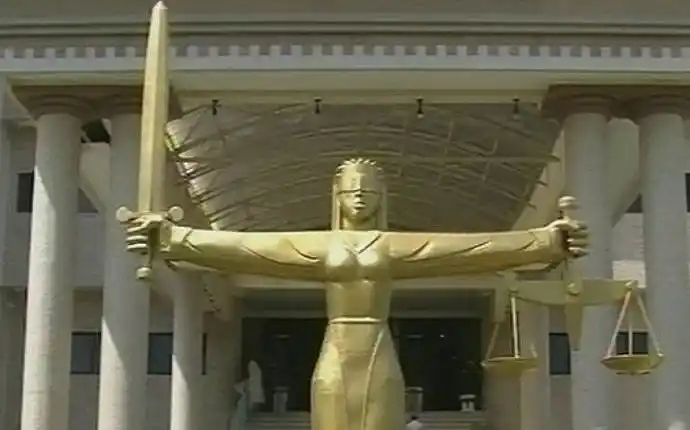

The Federal High Court in Abuja has restrained the State Security Service (SSS), the Economic and Financial Crimes Commission (EFCC) and the Nigeria Police Force from obstructing lawyers and litigants with legitimate business from accessing its premises during high-profile trials.
The court also prohibited the affected security agencies from blocking major roads surrounding the judicial complex, particularly the road leading to Maitama and the route connecting the court to Wuse 2. However, the agencies were directed to maintain adequate security around the court in the interest of public order.
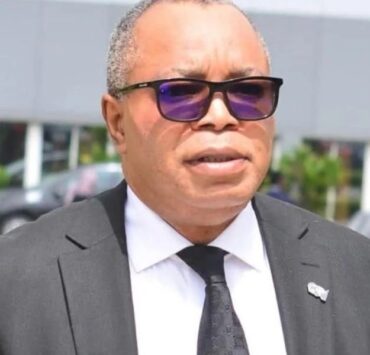
The orders followed a fundamental rights enforcement suit filed by an Abuja-based legal practitioner, Sir Nkemakolam S.C. Okoro, who challenged what he described as the persistent deployment of heavily armed and masked security operatives to barricade the court whenever politically sensitive cases were scheduled for hearing.
In his application, Okoro alleged that the security arrangements subjected lawyers and litigants to humiliating treatment, restricted access to justice and created unnecessary traffic congestion around the judicial complex. He also claimed that security operatives threatened to arrest and detain him when he complained about the restrictions.
Recounting an incident on February 10, 2025, the lawyer said he was forced to park more than one kilometre away from the court after encountering barricades mounted by security operatives. Despite identifying himself as a legal practitioner and carrying his wig and gown, he alleged that he underwent repeated security checks and waited for more than 45 minutes before gaining entry.
He further cited another incident on February 24, 2025, when security operatives allegedly restricted access to the court during proceedings involving former Kogi State Governor, Yahaya Bello. He also referred to similar disruptions during proceedings involving Nnamdi Kanu, arguing that lawyers attending unrelated cases were often caught in the restrictions.
The applicant relied on Sections 34(1), 35(1), 40 and 41(1) of the 1999 Constitution, as well as relevant provisions of the African Charter on Human and Peoples’ Rights. Among other reliefs, he sought N500 million in damages, a public apology and an order permanently restraining the security agencies from obstructing his access to the court.
In granting the orders contained in Relief 10 of the application, the court directed the affected agencies to allow lawyers who establish that they have business before the Federal High Court to access the courtrooms. It similarly protected access for litigants visiting the premises for filing and other litigation-related activities.
The ruling does not prohibit legitimate security screening or remove the responsibility of security agencies to protect judicial institutions. Rather, it requires security operations to be conducted without unnecessarily obstructing access to justice or disrupting the activities of other court users. The orders also do not establish that the applicant’s additional claims for damages and public apologies were granted.