







China’s Renminbi Push Reshapes African Trade Finance Architecture

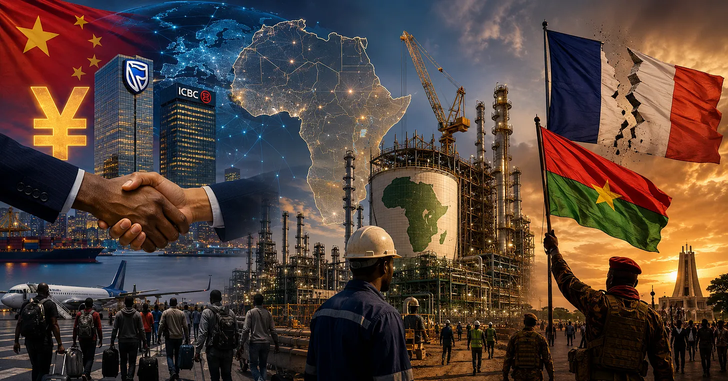

The landscape of African trade finance has undergone a significant structural shift following the People’s Bank of China’s authorisation of Standard Bank and ICBC as the Renminbi Clearing Bank of Africa. This landmark designation, effective June 26, grants businesses in 19 African nations direct access to China’s onshore financial system, a move poised to fundamentally alter the cost and efficiency of doing business with Africa’s largest trading partner.
This development, reported by Africa.com, marks a pivotal moment in China-Africa economic relations. With annual bilateral trade reaching a record $348 billion in 2025, and China accounting for 20% of Africa’s global trade, the ability for African companies to settle transactions directly in yuan, bypassing the traditional dollar conversion step, promises to reduce costs and expedite cross-border commerce. Standard Bank’s appointment as the first African-based bank to receive such authorisation, and the joint operation with ICBC being the first RMB clearing bank named for an entire continent, underscores the strategic importance of this initiative.
The implications for legal and compliance professionals, as well as corporate executives and investors, are profound. Companies engaged in import or export activities with China across the 19 covered markets are advised to immediately assess the impact on their settlement costs and timelines. This strategic move by Beijing is not merely about currency exchange; it represents the systematic construction of an alternative financial architecture for Africa, designed to diminish dollar dependency and concurrently amplify China’s commercial and financial influence. While not an immediate dethroning of the dollar, this development signifies a significant shift in the control of African trade finance conduits. Competitors to Standard Bank are urged to accelerate their yuan positioning strategies, while businesses sourcing from China should meticulously model the cost differentials between yuan settlement and dollar conversion.
In parallel, the energy sector is witnessing a monumental development with Aliko Dangote signing a significant equipment deal on June 27 with Chinese manufacturer XCMG. This agreement aims to double the capacity of the Dangote Petroleum Refinery from 650,000 to 1.4 million barrels per day by 2028-2029. The $400 million XCMG contract encompasses heavy machinery for concurrent expansions in refining, petrochemicals, and fertiliser production. Upon completion, the Lekki facility would become the world’s largest single refinery complex. The refinery has already demonstrated its enhanced capabilities, surpassing its original nameplate capacity in June by reaching 700,000 barrels per day during performance testing. This expansion is expected to significantly boost polypropylene capacity and triple urea production in Nigeria to 9 million tonnes annually, adding a compelling long-term capital appreciation narrative to the Dangote refinery’s already robust pre-IPO demand exceeding $2 billion.
The geopolitical landscape in West Africa is also undergoing a significant realignment, with Burkina Faso formally severing diplomatic ties with France this week. This action follows similar moves by Mali in 2022 and Niger in 2023, solidifying a pattern of West African nations aligning with Russia’s African Corps and forming the Alliance of Sahel States. The withdrawal of French commercial ties, development finance, and security guarantees presents a substantial challenge for existing investment structures in these markets. While the UEMOA currency zone remains intact, the underlying political architecture supporting it is under considerable strain, necessitating a reassessment of supply chains and financing structures dependent on French institutional relationships in the Sahel.
South Africa faces a complex confluence of pressures as the second half of 2026 commences. The nation is grappling with the arrival of a June 30 deadline set by anti-immigration groups, which has prompted thousands of foreign nationals to depart ahead of planned demonstrations. This situation has led to organised repatriation efforts by Ghana, Nigeria, Mozambique, Malawi, and Zimbabwe, and has resulted in diplomatic friction with at least five major African trading partners. President Ramaphosa has publicly condemned vigilantism and violence, emphasising that immigration enforcement is the state’s prerogative. For investors, the immediate risks include potential labour supply disruptions in critical sectors such as construction, agriculture, and services, alongside diplomatic damage that complicates South Africa’s positioning within the African Continental Free Trade Area (AfCFTA). The reputational fallout from this crisis further exacerbates the challenge of converting substantial investment pledges into tangible project execution.

Despite these challenges, South Africa retains significant economic depth. The Johannesburg Stock Exchange (JSE) stands as the continent’s most liquid equity market, supported by the most developed financial and professional services ecosystem in Africa. While Casablanca presents a competitive alternative, the JSE’s market capitalisation and institutional investor presence solidify South Africa’s position as a continental anchor. Standard Bank, now at the forefront of renminbi clearing in Africa, is headquartered in Johannesburg. The critical task for investors is to discern the enduring structural assets from the transient cyclical noise.
Key opportunities for investors in South Africa include financial services and capital markets, mining and minerals processing, renewable energy development, infrastructure (logistics, ports, rail), professional services, agri-processing, and technology. The JSE offers unparalleled listed equity access on the continent. However, risks are present, including rising inflation and tightening monetary policy, which could increase borrowing costs. The xenophobia crisis poses a threat to diplomatic relationships and labour supply, while political uncertainty stemming from an impeachment process adds another layer of complexity. Persistent infrastructure gaps, particularly in electricity and logistics, alongside high crime rates, also present operational challenges. Managing the ANC coalition dynamics ahead of local elections is another crucial consideration.
For operational guidance, English remains the primary business language. Johannesburg serves as the commercial hub, with Cape Town leading in technology and creative sectors. South Africa boasts the continent’s most developed legal system for commercial disputes. Broad-Based Black Economic Empowerment (BEE) compliance is mandatory for government contracts and increasingly expected by major private sector clients. The standard practice of private security for executive personnel necessitates factoring security infrastructure into operational budgets and basing operations in secure business districts.