

Atiku Files Affidavit Challenging Tinubu’s Eligibility for 2027 Presidency

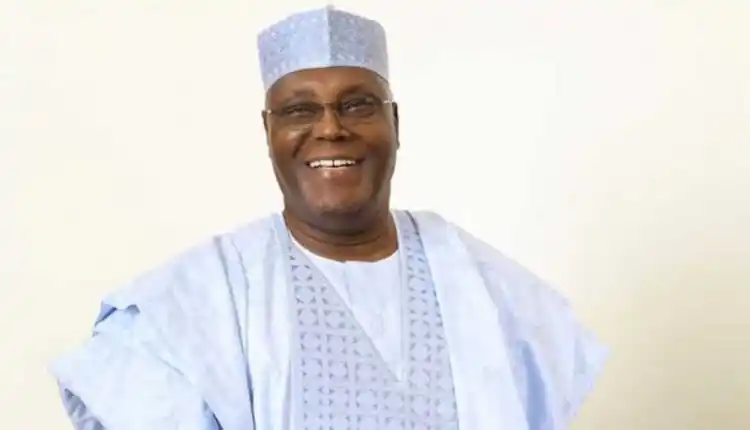

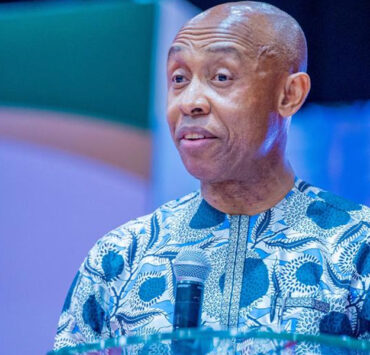
Presidential candidate of the African Democratic Congress (ADC), Atiku Abubakar, on Friday personally appeared at the Registry of the Federal High Court in Abuja to depose to an affidavit in support of a suit challenging President Bola Ahmed Tinubu’s qualification to contest the 2027 presidential election.
The development was contained in a statement issued by Atiku’s Senior Special Assistant on Public Communication, Phrank Shaibu.
According to the statement, the suit filed by Atiku and the ADC against Tinubu, the All Progressives Congress (APC) and the Independent National Electoral Commission (INEC) invokes Sections 137(1)(j), 139(1)(a)(i) and 285(14)(c) of the 1999 Constitution, as amended, alongside relevant provisions of the Electoral Act, 2026.
At the centre of the legal challenge is Section 137(1)(j) of the Constitution, which provides that a person is not qualified for election as President if he has presented a forged certificate to INEC.
The plaintiffs are asking the court to determine whether Tinubu and the APC should be disqualified from participating in the 2027 presidential election over their allegation that the President presented a forged National Youth Service Corps (NYSC) certificate to INEC in connection with the 2023 and 2027 elections.
Speaking after taking the oath, Atiku said he chose to appear personally because of the constitutional implications of the case.
“I came here personally because the issues before the court go to the heart of our Constitution and the integrity of the office of President,” Atiku said.
He added that he had put his “name, signature and oath” behind the facts presented before the court and challenged Tinubu to respond to the allegations through the judicial process.
In his affidavit, Atiku alleged that Tinubu submitted an NYSC discharge certificate to INEC bearing the name “Tinubu Bola Adekunle”, which the plaintiffs contend differs from the President’s name, Bola Ahmed Tinubu.
The affidavit further alleges that the same certificate was submitted in connection with the 2027 presidential election and claims that the document was not obtained by Tinubu.
Atiku also disclosed that he had placed INEC on notice to produce Tinubu’s Form CF001 submitted in connection with the 2023 and 2027 presidential elections.
According to the statement, Atiku had applied for certified true copies of the relevant forms before commencing the action but had not received a response by the time the court processes were prepared.
Atiku said the matter should be determined by the courts rather than through public debate.
“This is precisely why we have gone to court. We are not asking Nigerians to decide this matter on social media, and we are not asking INEC to become a court. We are asking the institution holding the records to produce them and the judiciary to examine the evidence and pronounce on it,” he said.
He maintained that the court should determine whether the names appearing on the certificate refer to the same individual.
Beyond the alleged certificate discrepancy, Atiku and the ADC are challenging provisions of the Electoral Act, 2026, which they argue restrict the ability of individuals to challenge the qualification of candidates at the pre-election stage.
They also contend that the legislation removes qualification as a ground for questioning an election in circumstances contemplated by Section 139(a)(i) of the Constitution.
According to the plaintiffs, legislation enacted by the National Assembly cannot prevent the enforcement of an express constitutional provision.
Atiku described the case as a fundamental constitutional question, arguing that the Constitution should remain supreme where there is a conflict between it and an Act of the National Assembly.
The originating summons asks the Federal High Court to determine whether the statutory restrictions being challenged can prevent the plaintiffs from invoking Section 137(1)(j) of the Constitution.

The plaintiffs are ultimately seeking an order disqualifying Tinubu and the APC from participating in the 2027 presidential election if their allegations are established before the court.
Atiku also argued that the same standards applied to ordinary Nigerians seeking employment should apply to those seeking the presidency.
“Nobody should misunderstand what is at stake,” he said, arguing that discrepancies in certificates are routinely scrutinised when Nigerians seek employment and that the highest political office should not be exempt from constitutional scrutiny.
The former vice president also called on INEC to provide the relevant documents and demonstrate its neutrality in the proceedings.
“INEC is holding the documents. The court has the jurisdiction to examine the issues. President Tinubu has the opportunity to defend himself. That is the constitutional process, and nobody should be afraid of it,” Atiku said.
He added that his personal appearance at the court registry was intended to demonstrate his willingness to submit himself to the same constitutional standards he was demanding of other political actors.
“This is not about privilege, personalities or presidential power. It is about one Constitution and one standard for every Nigerian,” Atiku said.
Counsel to the plaintiffs, Edwin Inegedu, SAN, and Joseph Onu Silas, expressed confidence in the case.
Speaking on behalf of the legal team, Silas Onu said the lawyers had carefully reviewed the applicable law and presented their arguments before the court, adding that they were prepared to respond to the defendants’ case once they were served.