









What the Selar vs. Mainstack Feud Says About Africa’s $30B Creator Economy

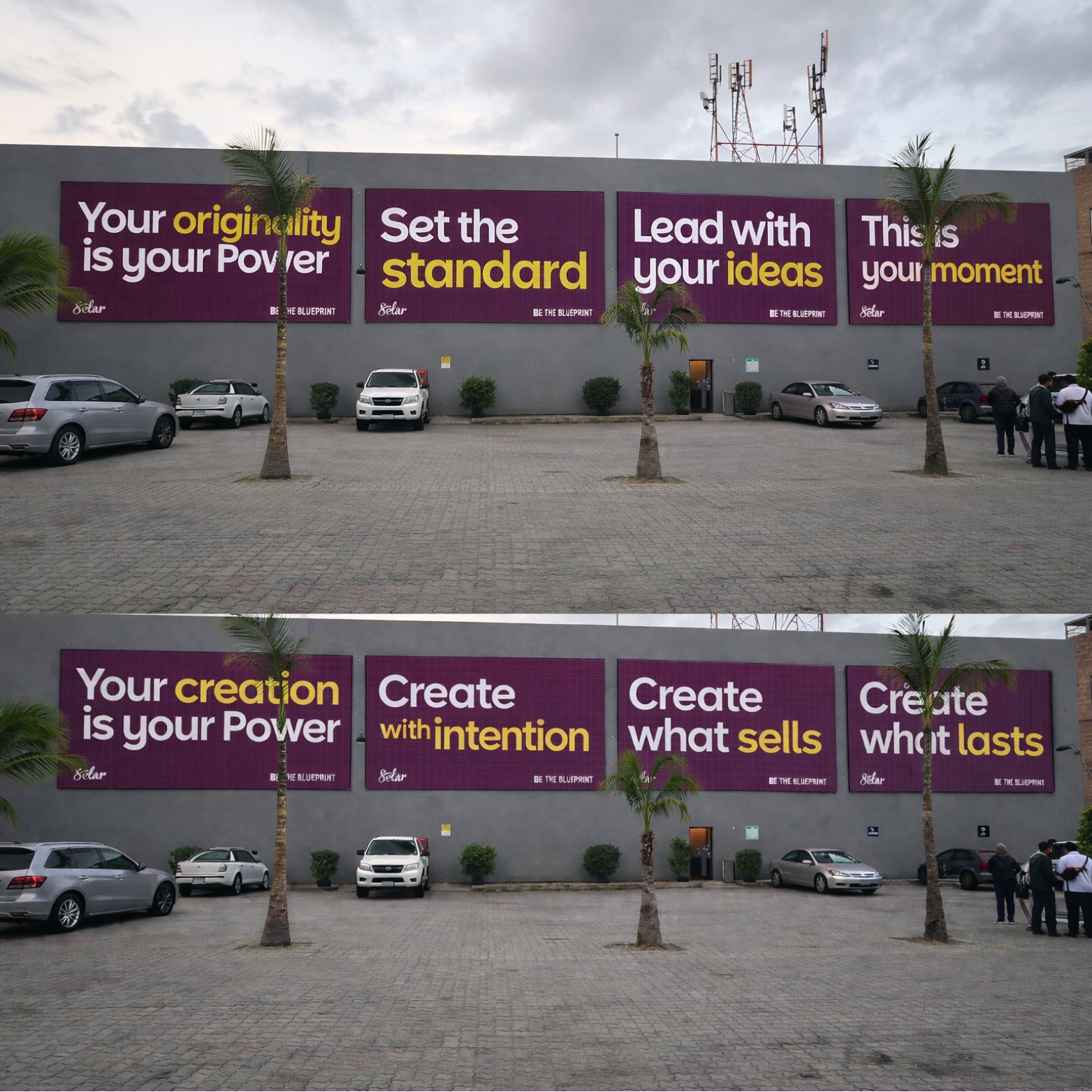

The Selar-Mainstack billboard feud exposes the competitive pressures shaping Africa’s $30B creator economy — and what creators should watch for. Over the weekend Mainstack hosted in Lagos, Nigeria what the company called the biggest African creators’ conference. A conference it had been planning from the beginning of the year. In the thick of this, Selar rented out a space right in front of the hall where the event was being held and with the approval of the management of the hall, put up its billboard. It is alleged Mainstack thereafter pressured owners of the advert space to take down Selar’s posters. In a public statement posted by Selar, the company said “ the idea was simple: Creators are gathering in one place, and we wanted to meet them where they are. A little bit of playful competition never hurt anyone.”
The billboard incident might have remained lowkey had the drama ended there. It did not. During the conference, Mainstack formally announced that Milton Tutu, Selar’s former Chief Marketing Officer, had joined them in the same role. Within hours, a wave of near-identical posts appeared on X from various accounts, with statements like: “So, I guess I am moving with Milton Tutu to Mainstack.”
Selar CEO Douglas Kendyson responded directly on X, calling the posts a “cheap coordinated PR attack.” He went further, publicly stating pointblank that Tutu had not left Selar voluntarily “He was fired.” Kendyson also alleged that Mainstack had been running a broader misinformation campaign targeting Selar’s fees, payout reliability, and product quality.
What had started as an aggressive marketing stunt became a public dispute over personnel, trust, and competitive conduct; one of the most high-profile tech feuds Nigeria has seen this year.
Africa’s creator economy is projected to grow from approximately $5 billion in 2025 to nearly $30 billion by 2032. That scale is attracting capital, talent, and new entrants. It is also intensifying competition between existing players.
Selar, founded in 2016 by Douglas Kendyson, has operated largely without external funding. With over two million users and more than $26 million paid out to creators, it has built its position on reliability and volume: e-books, courses, and event tickets. Mainstack, founded in 2022, has taken a different approach: an all-in-one platform that combines storefront tools, booking, link-in-bio features, and global payment options, marketed as a product for the modern digital entrepreneur.
Both companies are competing for the same creator base in a market where switching costs are low and platform loyalty is earned, not assumed.
Selar’s billboard placement sits in legally defensible territory. Ambush marketing – placing your brand near an event you did not sponsor is not inherently unlawful in Nigeria or most African jurisdictions. For legal liability to arise, there would need to be evidence of trademark infringement, passing off, or deliberate misrepresentation of affiliation. Selar made no claim to be associated with The Moment 2026, and the venue gave written approval for the placement.
The ethical question is less clear-cut. Mainstack invested significant resources in organising the event. Using that footfall without contributing to it may be legally permissible but it raises questions about conduct standards within the industry. African tech audiences appear divided on the matter, which itself reflects a broader reality: competitive norms in this ecosystem are still being established.
The number of platforms targeting African creators is growing — Selar, Mainstack, Nestuge, and Leenkies among them. At the feature level, the offerings are converging. Most platforms now provide some combination of digital storefronts, payment processing, link-in-bio tools, and creator analytics. Meaningful product differentiation is becoming harder to sustain.
When feature sets look similar, competition shifts to brand, community, and perception. That dynamic helps explain why a CMO hire became a public event and why billboard placement outside a rival’s conference seemed worth the controversy. In a crowded market, attention is a competitive asset.
Leenkies founder Tayo Aina took a different approach, posting on X that his platform was complementary to both Selar and Mainstack rather than competitive with either. The positioning was well-received, illustrating that in a saturated market, the decision not to compete on the same terms can itself be a differentiator.

Platform rivalries do not automatically serve creator interests. Both Selar and Mainstack are tools. Creators benefit most by evaluating platforms on fees, reliability, payout speed, and support not by choosing sides in a public dispute.
How a company handles competitive pressure is informative. Coordinated inauthentic social media campaigns, public allegations of misinformation, and the airing of employment disputes may be seen as indicators of how an organisation operates under stress but also open a pathway to legal disputes.
The growth projections for Africa’s creator economy are real, but they depend on the ecosystem maintaining credibility with international brands and investors on the one hand, and acting within legal confines when opinions diverge. The feud between Selar and Mainstack must be seen as an opportunity to work closely with legal teams all through the process of engaging and disengaging employees, and in structuring go-to-market or growth strategies.
Lawyers help manage contracts for establishment, promotion and expansion of a business while forecasting and addressing possible disputes. Seeking legal advice only after a market entry or capture strategy draws the ire of competitors can prove costly. Public disputes that appear petty or poorly managed can also make the growth of the creator economy harder. African creator economy platforms are the infrastructure but when the infrastructure is seen as unstable, it is creators who bear the cost. The $30 billion opportunity is credible. Whether the industry handles its growing pains well enough to reach it is a separate question.