








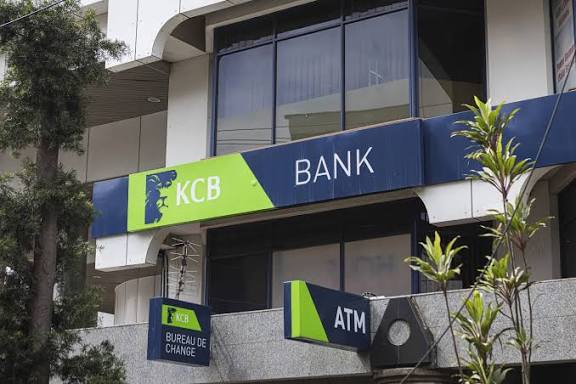
KCB Bank Kenya is turning smartphones into POS Terminal in partnership with VISA


KCB Bank Kenya has partnered with Visa to launch Tap-to-Phone, a revolutionary contactless payment solution that transforms ordinary Android smartphones into fully functional card payment terminals, eliminating the need for traditional point-of-sale machines. This is a move to democratize digital payment across Kenya.
The innovation, announced this week, represents a seismic shift in Kenya’s payment landscape, particularly for small and medium-sized enterprises that have long been excluded from card payment acceptance due to the prohibitive costs of traditional POS infrastructure.
KCB Bank Kenya is partnering with Visa to introduce Tap-to-Phone, a contactless payment solution that allows merchants to accept card payments using only their Android smartphones. Business owners no longer need to invest thousands of shillings in dedicated payment terminals or worry about maintenance costs, internet connectivity issues specific to POS devices, or hardware failures.
Speaking during the launch, KCB Bank Kenya Director of Retail Banking, Jane Isiaho said, “This partnership with Visa brings to life a powerful solution that gives every merchant the ability to accept digital payments using just a smartphone”. The solution simplifies payment acceptance, reduces operational costs, and empowers merchants to serve customers faster and more securely.
The Tap-to-Phone solution leverages Near-Field Communication (NFC) technology already built into most modern Android smartphones. Merchants simply download the KCB app, register their business, and their phone becomes a payment terminal capable of accepting Visa cards and other compatible payment methods.
The transaction process is straightforward:
1. Customer taps their contactless card or NFC-enabled phone on the merchant’s smartphone
2. Merchant enters the transaction amount
3. Customer authorizes the payment
4. Funds are instantly transferred to the merchant’s account
The Tap to Phone solution is supported by the Visa Acceptance Platform, which uses tokenisation and other advanced security tools to protect every transaction, ensuring the same level of security as traditional POS terminals.
With this solution, businesses no longer need a traditional point-of-sale (POS) machine, making digital payments easier and more affordable, especially for small and medium-sized businesses that often face barriers due to the expenses related to the purchase of POS infrastructure.
Traditional POS machines in Kenya can cost anywhere from KSh 10,000 to KSh 30,000, plus monthly maintenance fees, transaction charges, and the need for reliable power and internet connectivity. For a roadside fruit vendor, a small kiosk owner, or a market trader operating on thin margins, these costs have been insurmountable barriers to accepting card payments.
Tap-to-Phone eliminates these barriers entirely. Since most merchants already own smartphones for personal use, the marginal cost of adding payment acceptance is virtually zero.
John Njoroge, Visa Country Manager for Kenya, South Sudan and Somalia, said the rollout would help expand access to “safe, fast and affordable” payment acceptance. He emphasized that Visa’s partnership with KCB demonstrates how turning devices merchants already own into secure acceptance tools can unlock scale, drive inclusion, and build a stronger digital economy.
The security framework is robust. The Visa Acceptance Platform incorporates global-grade tokenization, meaning actual card numbers are never exposed during transactions. Instead, unique digital tokens represent the payment information, protecting both merchants and customers from fraud.
The timing couldn’t be more strategic. Kenya has witnessed explosive growth in digital payments over recent years, driven primarily by mobile money platforms like M-Pesa. However, card payments have lagged behind, partly due to acceptance infrastructure gaps.
Data from the Central Bank Kenya (CBK) shows that the use of bank cards to shop hit a record high at 4.4 million transactions by May 2022 from a low of 676,275 in August 2014, indicating growing consumer preference for card payments when the option is available.
The challenge has been making that option available to more merchants, especially in informal and semi-formal sectors that constitute the backbone of Kenya’s economy.
At a time when mobile money dominates retail payments, KCB has created a credible bridge between card networks and everyday merchant activity, especially among informal and semi formal businesses that had previously been excluded from card acceptance due to cost and complexity.
This isn’t about replacing M-Pesa—Kenya’s beloved mobile money platform processes billions of shillings daily and has become deeply embedded in commercial and social transactions. Rather, Tap-to-Phone provides merchants with additional payment options, enabling them to serve international tourists, corporate customers who prefer cards, and anyone seeking alternatives to mobile money.
What does this translate to?
Souvenir vendors, tour guides, and beach operators can now accept international Visa cards directly, eliminating the need for tourists to find ATMs or exchange cash.
Small shops, salons, restaurants, and service providers can offer card payment options without capital investment in POS infrastructure.
Vendors in open-air markets can accept digital payments while maintaining mobility and their payment terminal is literally in their pocket. Taxi and matatu operators can accept card payments, providing alternatives to cash and mobile money.
**Professional Services**: Freelancers, consultants, and service providers can accept client payments professionally without expensive equipment.
This demonstration highlighted the solution’s practical viability beyond theory, showing how seamlessly card payments could integrate into Kenya’s mobile-first commerce ecosystem.
## Challenges and Considerations
However, KCB’s advantage lies in scale and institutional reach. As one of Kenya’s largest banks, its deployment of Tap to Phone is not positioned as a niche innovation, but as a core part of mainstream banking infrastructure, giving it potential to normalize smartphone-based card acceptance in ways smaller players might struggle to achieve.
Still, challenges remain:
**Merchant Education**: Training merchants on the technology and building confidence in smartphone-based payment acceptance will require sustained effort.
**Customer Trust**: Some customers may initially hesitate to tap their cards on a merchant’s personal phone, though this is being addressed through education about security features.
**Network Reliability**: Transaction processing depends on internet connectivity, which can be inconsistent in some areas.
**Device Compatibility**: The solution currently works only on NFC-enabled Android smartphones, potentially excluding merchants with older or incompatible devices.
**Competition with M-Pesa**: The deeply entrenched mobile money ecosystem means merchants must see clear advantages to adopting additional payment methods.
## Financial Inclusion Implications
This approach aligns closely with national financial inclusion objectives and the broader push towards a cash lite economy by both industry and regulators. By lowering barriers to digital payment acceptance, Tap-to-Phone directly supports government and central bank goals of increasing formalization and bringing more economic activity into the regulated financial system.

For many informal sector businesses, accepting card payments represents a step toward formalization, improved record-keeping, and access to formal financial services like loans and insurance that require transaction histories.
## KCB’s Digital Banking Leadership
According to representatives from KCB Bank Kenya, offering payment acceptance through smartphones forms part of the bank’s wider digital strategy, which aims to expand access to electronic transactions and streamline customer interactions.
KCB remains one of Kenya’s largest retail banking providers, operating an extensive branch and agent network across several East African markets through KCB Group Plc. The bank’s existing digital platforms, including mobile and online banking channels, have been central to its expansion strategy, and Tap-to-Phone represents the latest evolution in this digital-first approach.
Kenya’s advanced mobile technology adoption, mature fintech ecosystem, and supportive regulatory environment position it as an ideal testing ground for such innovations, potentially serving as a model for other African markets.
Impact on Kenya’s Cashless Economy Vision
The launch supports Kenya’s broader transition toward a cashless economy, a goal that has gained momentum following the COVID-19 pandemic’s acceleration of contactless and digital payment adoption globally.
By making card payment acceptance as simple and accessible as mobile money, Kenya could see more balanced growth across different payment modalities, providing consumers with genuine choice and merchants with flexibility to serve diverse customer preferences.
What Happens Next?
Following the launch, KCB is embarking on a merchant onboarding campaign, targeting small and medium-sized businesses across urban centers, tourist destinations, and high-traffic commercial areas.
The bank has indicated that merchant support, including training, technical assistance, and marketing materials, will be key components of the rollout strategy. Success will ultimately be measured not by launch-day enthusiasm but by sustained merchant adoption and transaction volumes over the coming months.
KCB’s team was candid about the frustrations that shaped the rollout, noting that tools must fit into a trader’s day, not interrupt it, and that performance in real conditions like heat, dust, queues, patchy network moments will determine adoption far more than launch-day applause.
If successful, Tap-to-Phone could become the new standard for small merchant payment acceptance in Kenya and potentially across East Africa, demonstrating that inclusive financial technology doesn’t always require new hardware—sometimes it just requires smarter software.
For Kenya’s millions of small businesses, the message is clear: accepting digital payments is no longer a luxury reserved for large retailers with capital to invest. It’s now as accessible as the phone in your pocket.
KCB Bank Kenya is the flagship subsidiary of KCB Group Plc, one of East Africa’s largest financial services institutions. The bank serves millions of customers through an extensive network of branches, ATMs, and digital channels across Kenya.
Visa Inc. is a global leader in digital payments, facilitating transactions between consumers, merchants, financial institutions, and government entities across more than 200 countries and territories.