








Djibouti Revises Labor Code, Steps Up Drive to Formalize Employment



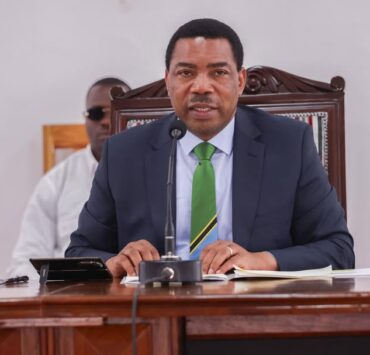
Djibouti is pressing ahead with efforts to formalize employment and move workers out of insecure informal jobs. Labor Minister Yonis Ali Guedi outlined the main pillars of the country’s strategy on Thursday at the 114th session of the International Labour Conference, held at the ILO headquarters in Geneva. There is a broad package for these labour reforms.
The first pillar of the strategy is legal reform. The Djiboutian government is finalizing a revision of its labor code (Code du Travail Djiboutien), which it considers outdated and no longer suited to current economic realities. The new legislation will incorporate ILO standards on decent work and will be based on tripartite consultation among the government, employers and unions, an approach authorities see as essential to lasting reform.
Separately, a national employment policy covering 2027-2035 is being drafted, with young people and women identified as priority groups because of their greater exposure to underemployment and informal work.
“Bringing workers into the formal economy improves working conditions and broadens access to social rights,” Guedi said.
The impact of these reforms, however, will depend on the country’s ability to improve the daily reality of hundreds of thousands of workers operating outside the formal economy.
What formalization means in the Djiboutian context
According to Guedi, moving into formal employment gives workers access to health insurance, pensions and legal recognition. It also enables the state to collect tax revenues that currently remain beyond its reach.
For Djibouti, expanding formal employment is central to the sustainability of its social protection system. The challenge is becoming more urgent as automation advances. Artificial intelligence is expected to affect low-skilled and undeclared jobs first, which account for a large share of the country’s workforce.
Formalizing employment is therefore also a way to prepare workers for retraining before technological change forces the issue. “AI must not become a factor of exclusion or precariousness,” Guedi warned.
Djibouti is calling for greater technology access and skills transfers to countries in the Global South. The country therefore faces both social and fiscal pressures. Expanding the tax base provides an additional argument for accelerating labor market formalization.
The push comes as Djibouti’s labor market continues to face some of the most severe imbalances on the continent. The unemployment rate reached 25.9% in 2024, according to France’s Directorate General of the Treasury (Direction Générale du Trésor). Youth unemployment was close to 70%, according to the same source.
Nearly 90% of workers are employed in the informal sector. At the same time, Djibouti’s economy grew by 6.6% in 2024, according to the African Development Bank, but that growth did not generate enough formal jobs. Poverty still affects 42% of the population, according to the World Bank.