
Court orders Azman Air to pay Pilot N14m outstanding salaries, damages

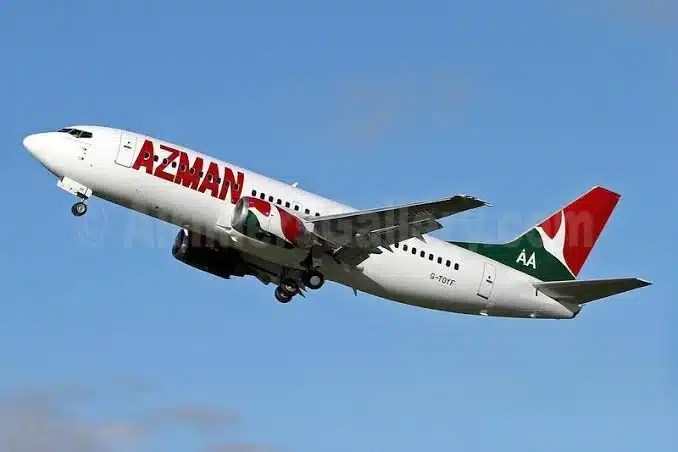

The Presiding Judge, Kano Judicial Division of the National Industrial Court, Hon. Justice Mahmood Namtari, has ordered Azman Air to pay its former Line Captain, Mr Abubakar, the sum of N9m being unpaid salaries for 3months in 2020, the sum of N2.4m being the balance of one month’s salary in lieu of notice, and N5m as damages for wrongful termination within 30 days.
The Court held that Azman Air failed to justify the reason given for terminating the employment of Mr Abubakar and that the termination was wrongful for failure to establish a valid reason in accordance with settled judicial authorities and the Termination of Employment Convention.
The Court further held that Azman Air did not comply with the agreed termination clause contained in the contract of employment by terminating Mr Abubakar’s employment with immediate effect, contrary to the requirement that the payment should accompany the termination.
From facts, the claimant, Mr Abubakar, had submitted that, despite rendering his services faithfully, the company owed him salaries for 3 months in 2020, paid only part of his salary in lieu of notice, wrongfully terminated his employment, and falsely portrayed him as having been dismissed for indiscipline and promotion of anarchy through publications.
Abubakar stated that the publication was false, defamatory and damaging to his professional reputation, and accused Azman Air of blacklisting him within the aviation industry by discouraging other airlines from employing him while simultaneously advertising vacancies for pilots shortly after his disengagement.
In defence, Azman Air had admitted to employing Mr Abubakar as a Line Captain but contended that the COVID-19 pandemic compelled it to review the salaries of all pilots, reducing the salary of Mr Abubakar.
The Airline posited that it lawfully terminated his employment in accordance with the terms of his appointment by paying one month’s salary in lieu of notice based on the reviewed salary structure.
Azman Air further denied owing Mr Abubakar outstanding salaries or authorising any defamatory publication against him, and insisted that the newspaper reports relied upon by Mr Abubakar were not issued by the company, denied blacklisting him within the aviation industry, and maintained that recruitment of new pilots after Mr Abubakar’s disengagement was a routine operational decision unconnected with his termination.
Counsel to Azman Air submitted that the employment relationship was one of ordinary master and servant governed strictly by the contract of employment and argued that once one month’s salary in lieu of notice was paid, the termination could not be declared wrongful provided it was carried out in accordance with the agreed terms, and therefore urged the court to dismiss Mr Abubakar’s case in its entirety.
Delivering judgment after evaluating the evidence and submissions of both parties, Justice Mahmood Namtari held that the reason contained in the termination letter issued to Mr Abubakar was not established by credible evidence, and found that apart from internal memoranda referring to the effects of the COVID-19 pandemic, Azman Air failed to produce evidence showing the developments within the company that necessitated the termination of Mr Abubakar’s employment.

The Court further reasoned that the advertisement published by Azman Air shortly after the disengagement of Mr. Abubakar for the recruitment of new pilots contradicted the company’s contention that prevailing economic realities required a reduction in the number of pilots in its employment.
Justice Namtari stated that the internal memoranda reviewing pilots’ salaries could not create or alter the contractual obligations contained in the claimant’s letter of appointment.
The Court found no evidence that Mr Abubakar accepted the salary review and held that an internal memo or requisition could not constitute or create a contractual obligation.
On the defamation claim, the Court held that to succeed in an action for defamation, Mr Abubakar must establish that the defamatory words were published by or at the instance of the Defendant, that the Defendant denied authoring or authorizing the publications, and the publishers were neither joined nor called as witnesses.