









CJN Calls for Stronger Legal Framework to Drive Maritime Sector Growth

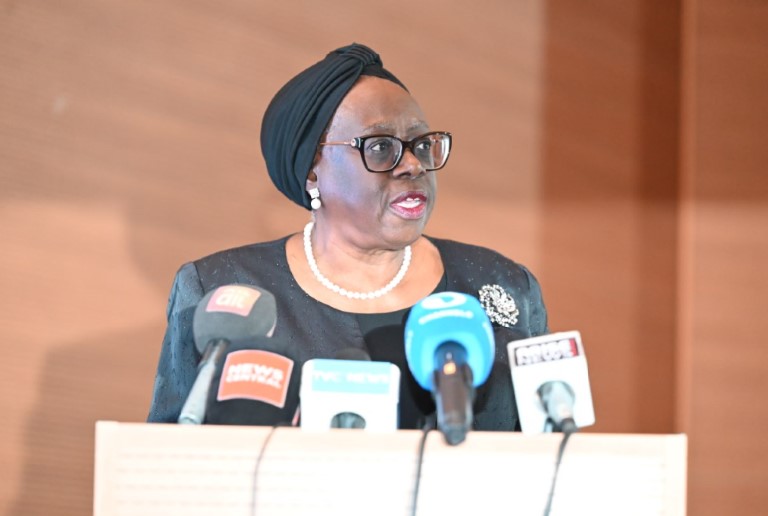

At the opening of the 18th International Maritime Seminar for Judges in Abuja, the Chief Justice of Nigeria (CJN), Justice Kudirat Kekere‑Ekun, underscored the need for robust legal protection, efficient justice delivery, and cross‑jurisdictional collaboration to strengthen global maritime commerce.
Organised by the Nigerian Shippers’ Council in partnership with the National Judicial Institute, the three-day seminar brought together judges, regulators, and maritime practitioners from across Africa to deepen maritime jurisprudence.
Justice Kekere‑Ekun described maritime law as a pillar of global trade, noting that nearly 90% of international commerce moves through sea routes.
She stressed Nigeria’s maritime resources positioned the country to benefit significantly from the blue economy, noting that its sustainable growth depended on an efficient and trusted legal system.
The CJN said legal certainty remained one of the strongest incentives for investment, stressing that prompt, impartial and effective resolution of maritime disputes would strengthen investor confidence and economic development.
She added that maritime judges must continually develop expertise to address emerging legal issues arising from technological innovation, environmental regulation, digital commerce and evolving international maritime obligations.
“The administration of maritime justice remains indispensable to commercial certainty, investor confidence and sustainable development within the blue economy.
“Judicial dialogue and cooperation across jurisdictions strengthen consistency in interpreting international maritime instruments and resolving increasingly complex disputes.
“Every well-reasoned maritime judgement reinforces confidence in the legal system and strengthens the institutional framework upon which global commerce depends,” she said.
Justice Kekere-Ekun said climate change, maritime security, autonomous vessels and digital shipping continued to reshape maritime commerce, requiring courts to balance commercial certainty with environmental protection and evolving international obligations.
She urged judges across jurisdictions to deepen collaboration, exchange experiences and adopt comparative approaches capable of addressing increasingly sophisticated maritime disputes with consistency and professionalism.
According to her, seminars such as the annual maritime forum provide valuable opportunities for continuous judicial education, policy engagement and developing coherent maritime jurisprudence across Africa.
She expressed confidence that deliberations would generate practical recommendations to strengthen maritime adjudication, deepen regional cooperation and advance Nigeria’s reputation as a credible maritime investment destination.

Speaking, the Secretary to the Government of the Federation, George Akume, said maritime justice was no longer a sectoral issue but a national economic priority.
He warned that delays in adjudicating maritime claims undermine trade, increase business costs, and erode investor confidence.

“When maritime claims are delayed, trade suffers, investor confidence declines and the cost of doing business increases, with ordinary Nigerians ultimately bearing the consequences.
“A credible, efficient and knowledgeable maritime justice system is foundational to unlocking the full potential of Nigeria’s blue economy and sustaining economic diversification.
“The federal government will support implementation of practical recommendations from this seminar to strengthen maritime justice and institutional reforms,” the SGF said.
Mr Akume said maritime commerce cut across several government institutions, requiring effective collaboration among regulators, ministries and the judiciary to deliver a predictable and efficient maritime business environment.
He said agencies responsible for ports, shipping regulation, maritime safety, customs administration and judicial adjudication must work in harmony to strengthen Nigeria’s competitiveness within the global maritime industry.
Akume highlighted the need for inter‑agency collaboration among regulators, ministries, and the judiciary to ensure a predictable maritime business environment.
Delegations from Ghana, Kenya, Liberia, Sierra Leone, and Gambia participated, reinforcing the importance of harmonised maritime laws and regional judicial cooperation across Africa in harmonising maritime jurisprudence and facilitating cross‑border trade.