









NCC Secures Major Wins on Right of Way Charges, Paving the Way for Accelerated Broadband Deployment

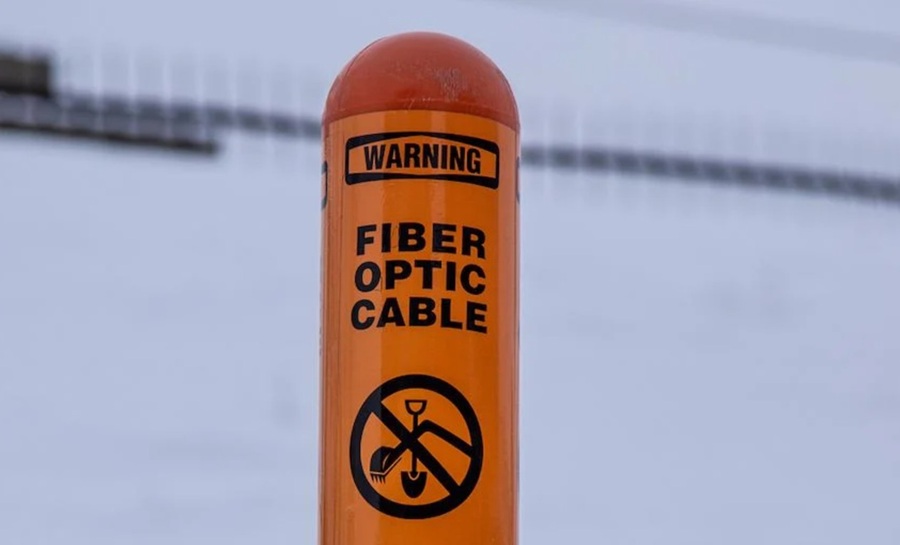

Nigeria’s journey towards ubiquitous broadband penetration has received a significant boost, with the Nigerian Communications Commission (NCC) reporting substantial progress in dismantling one of the most entrenched obstacles: Right of Way (RoW) charges. Dr. Aminu Maida, the NCC’s executive vice chairman and chief executive officer, announced that thirteen states have now fully waived these charges, while an additional sixteen have adopted the National Economic Council’s (NEC) benchmark rate of N145 per linear metre.
Speaking at the ATCON High-Level Industry Forum on Fibre to the Home (FTTH) in Lagos, Dr. Maida underscored the critical role of RoW approvals in the nation’s fibre rollout strategy. He identified excessive charges, unpredictable approval timelines, and a labyrinth of overlapping permitting requirements as persistent impediments that inflate deployment costs and decelerate national digital progress. “We must improve the deployment environment,” Maida stated. “Right of Way approvals remain one of the most significant factors affecting fibre rollout. Excessive charges, unpredictable approval timelines and multiple permitting requirements increase deployment costs and slow national progress.”
Dr. Maida urged state governments to recalibrate their perspective, emphasising the long-term economic dividends of digital infrastructure over immediate revenue generation. “State Governments must increasingly recognise that the long-term economic value of digital infrastructure far outweighs the short-term revenue from RoW charges,” he asserted.
The figures presented by the NCC reveal a landscape rapidly shifting towards federal alignment. With thirteen states offering complete waivers and sixteen adopting the NEC’s recommended rate, a total of 29 out of Nigeria’s 36 states are now either fully compliant or substantially aligned with the federal government’s preferred RoW framework. This leaves seven states yet to embrace either measure. The NCC remains committed to engaging these remaining states to achieve complete national uniformity and eliminate what Dr. Maida described as “unnecessary barriers to broadband deployment.” The N145 per linear metre rate, introduced as a standardising benchmark, aims to replace the historically disparate and often prohibitive charges that have hampered operators’ national fibre infrastructure expansion plans.
In a move designed to enhance transparency and provide investors with clearer visibility into the RoW landscape, the NCC has launched its Ease of Doing Business Portal. This new platform offers state-specific data on RoW charges, approval processes, relevant legislation, infrastructure deployment statistics, and essential contact points for operators and investors. This initiative directly addresses the historical opacity that has plagued multi-state fibre rollouts, often forcing operators to navigate a fragmented and unreliable information ecosystem, thereby adding cost and delay to critical infrastructure projects.
Beyond the immediate RoW reforms, Dr. Maida highlighted two further strategic priorities crucial for Nigeria’s fibre future. Firstly, he stressed the imperative of integrating broadband readiness into urban and community planning from the outset. “Connectivity should not be treated as an afterthought, considered only after roads have been paved and buildings completed,” he explained. “Just as new developments make provision for electricity, water and drainage, they should also make provision for telecommunications infrastructure.” Proactive planning, he argued, significantly reduces deployment costs, accelerates service activation, and mitigates the disruptive retrofitting that currently characterises much of Nigeria’s urban fibre rollout.

Secondly, Dr. Maida underscored the critical importance of deployment quality. He clarified that the NCC’s objective extends beyond mere volume, stating, “Nigeria does not only need more fibre; it needs fibre that is properly designed, properly installed, properly documented and properly protected.” He warned that substandard materials, inadequate installation practices, poor site restoration after civil works, and deficient asset record-keeping inevitably lead to higher failure rates, increased service disruptions, and escalating long-term maintenance expenses. The NCC will continue to enforce compliance with approved technical, safety, and deployment standards across the entire fibre value chain, ensuring that the infrastructure built today can support Nigeria’s digital ambitions for decades to come.
The progress on RoW charges arrives at a critical juncture, as the industry grapples with the persistent and costly challenges of fibre cuts, vandalism, and infrastructure damage that have plagued operators throughout 2025 and into 2026. While RoW reforms address the initial deployment hurdles, the parallel crisis of protecting deployed fibre remains a significant concern. The NCC’s multi-pronged approach, encompassing RoW alignment, the transparency portal, and a renewed emphasis on planning integration and technical standards, signals a comprehensive strategy to address the structural barriers to fibre-to-the-home deployment, even as the operational challenge of safeguarding existing fibre infrastructure continues to demand industry-wide attention.