








Forget Democracy, says Traore

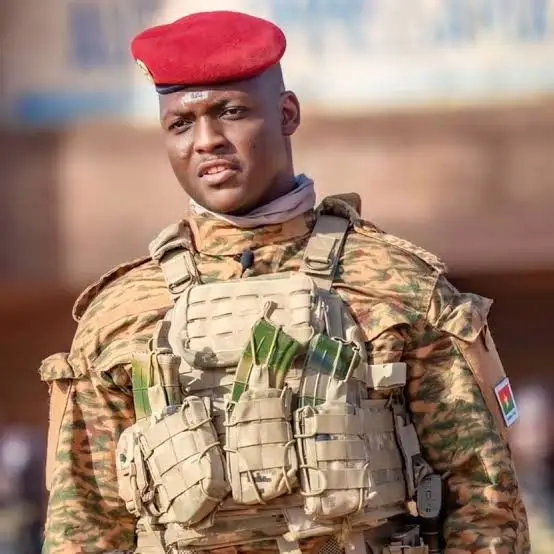

On April 3, 2026, Ibrahim Traore abandoned the final vestige of democratic transition. Speaking on state television, Burkina Faso’s military leader claimed that residents should “forget about the issue of democracy,” claiming that “democracy isn’t for us” and “democracy kills.” The declaration came three months after his administration disbanded all political parties in the country and seized their assets. This was not improvisational rhetoric. It was the formal ideological manifestation of a consolidation that was already well underway in institutional practice. The process of democraticdismantling is meticulous. Traore initially pledged elections in 2024, but then made them conditional on security, which he controls and has shown little haste to deliver
The Independent National Electoral Commission was abolished in July 2025. Parliament and all political activity has been stopped since he assumed control. Each stage was described as preliminary. Collectively, they form a permanent totalitarian architecture. The regime’s primary excuse, security, has fallen under its own data. Fatalities tripled in Traore’s first three years, reaching 17,775 by May 2025, compared to 6,630 documented fatalities in the same period before to his takeover. The rebellion has not been suppressed. It has been instrumentalised, serving as a continual justification for the suspension of constitutional order as the state’s coercive apparatus becomes increasingly internal. Journalists, opposition leaders, and prosecutors who are critical of the administration have been forcibly drafted and deployed to active frontlines. The battlefield has become a tool for political eradication. The judicial implications are obvious. Burkina Faso’s 1991 Constitution, albeit suspended after the coup, enshrined multiparty democracy, universal suffrage, and judicial independence as fundamental constitutional imperatives.Extrajudicial dissolution of political parties is a clear infringement of the right to freedom of association, as guaranteed by Article 10 of the African Charter on Human and Peoples’ Rights, to which Burkina Faso remains a treaty signatory. Treaty responsibilities do not disappear with political rupture; they remain binding international law obligations of the state, regardless of the government in power.
Burkina Faso’s removal from ECOWAS and establishment of the Alliance of Sahel States, which includes Mali and Niger, does not relieve it of its commitments under the ECOWAS Protocol on Democracy and Good Governance. Withdrawal from a regional entity does not constitute a repudiation of customary international law principles on democratic governance or political rights. The state is still accountable under general international law, the African Charter framework, and relevant UN human rights agreements. Traore has neither recovered a precolonial African government paradigm, nor has his regime made substantial progress in security or economic reform since assuming power. The rejection of democracy is not a philosophical viewpoint based on indigenous political theory. The elimination of accountability measures limits executive impunity.
The events in Ouagadougou are putting African constitutionalism’s normative architecture to the test. The precedent, that security exigencies justify permanent suspension of political rights, judicial independence, and civilian control, has continental consequences. Africa’s regional institutions and legal community cannot afford to remain