







The End of the Old Order: Takeaways from Mark Carney Speech at Davos 2026

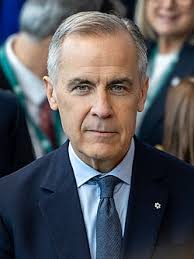

Carney declared the world is experiencing “a rupture, not a transition,” where the longstanding rules-based international order has faded and great powers are using economic integration as weapons (World Economic Forum) . Using Václav Havel’s concept of “living within a lie,” he compared countries to a greengrocer placing a sign saying “Workers of the world, unite!” without believing it—performing compliance while knowing the system is broken (World Economic Forum) . His central message: stop pretending the old order will return. Nostalgia is not a strategy.
Strategic Autonomy Through Coalition-Building
Carney emphasized that countries must develop autonomy in energy, food, critical minerals, finance, and supply chains, as those who cannot feed, fuel, or defend themselves have few options (World Economic Forum) . However, building individual fortresses is expensive and ineffective. Instead, he advocated “variable geometry”—different coalitions for different issues, including bridging the Trans-Pacific Partnership with the EU, forming critical minerals buyer’s clubs, and working with regional partners on Arctic security (World Economic Forum) .
The core principle: when middle powers negotiate bilaterally with hegemons, they negotiate from weakness, competing to be most accommodating—this is “the performance of sovereignty while accepting subordination” (World Economic Forum) . Middle powers must act together because “if you are not at the table, you are on the menu” (World Economic Forum) .
Lessons for Developing Countries
Developing nations should prioritize diversification over dependence. Canada signed twelve trade and security deals on four continents in six months (World Economic Forum) , demonstrating that spreading partnerships reduces vulnerability to economic coercion. Rather than competing for favor from great powers, developing countries should form coalitions around shared interests, strengthening regional bodies like the African Union, ASEAN, and Mercosur.
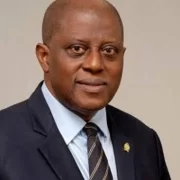
Carney’s “values-based realism”—being principled in commitment to sovereignty and human rights while pragmatic in recognizing that progress is incremental and interests diverge (World Economic Forum) —offers a framework for navigating great power rivalry. This means investing strategically in assets the world needs, whether critical minerals, agricultural products, renewable energy, or technological talent. Countries earn the right to principled stands by reducing vulnerability to retaliation through strong domestic economies (World Economic Forum) .
Critically, developing countries should stop relying on diminished multilateral institutions like the WTO and UN, instead building practical partnerships that deliver results (World Economic Forum) . By maintaining consistent standards, investing in domestic strength first, and pooling resources through flexible networks, developing nations can preserve sovereignty while advancing their interests in an increasingly fragmented world.