









Supreme Court Upholds Tinubu’s Emergency Powers, AGF Hails Judgement, Falana Warns Against Overreach

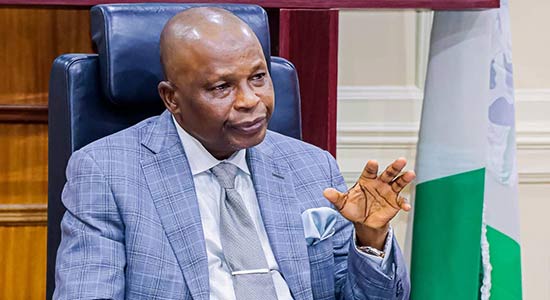

The Attorney General of the Federation (AGF) and Minister of Justice, Lateef Fagbemi, SAN, has hailed the recent Supreme Court judgment affirming the constitutional power of President Bola Ahmed Tinubu to declare a state of emergency as a victory for Nigeria’s democracy.
According to Fagbemi, the ruling consolidates Nigeria’s democratic jurisprudence and dispels lingering doubts about the scope of presidential authority under Section 305 of the 1999 Constitution. In a statement issued by his media aide, Kamarudeen Ogundele, the AGF described the judgment as “a landmark decision that strengthens our democracy and reinforces the rule of law.”
However, human rights lawyer, Femi Falana, SAN, offered a nuanced interpretation, stressing that while the President may declare a state of emergency, such powers do not extend to suspending or removing elected governors, legislators, or local government chairmen. Speaking on Arise TV, Falana underscored the Court’s consistent jurisprudence affirming the autonomy of Nigeria’s three tiers of government, noting: “Elected officials can only be removed in accordance with constitutional provisions, and any attempt to do otherwise is unlawful.”
Falana further highlighted the minority judgment of Justice Obande Ogbuinya, which reinforced the principle that no constitutional provision empowers the President to displace elected public officers. He criticised what he termed the Court’s inconsistent application of the “local standard” doctrine, pointing out that in earlier cases involving Plateau and Ekiti States, the Supreme Court permitted challenges to emergency rule, thereby setting precedents for public interest litigation.
He emphasised that public interest litigation remains vital to Nigeria’s democratic development, enabling citizens to hold government accountable and safeguard federalism. Falana warned that limiting such access would undermine constitutionalism and erode democratic safeguards.

Meanwhile, the African Democratic Congress (ADC) has condemned the ruling, describing it as a dangerous precedent that risks creating a “constitutional tyrant” in the presidency. In a statement by its National Publicity Secretary, Mallam Bolaji Abdullahi, the party argued that granting the President authority to suspend elected governors and state assemblies during a state of emergency concentrates excessive power in the executive, thereby undermining Nigeria’s federal system and democratic balance.
The judgment, arising from a suit filed by Adamawa State and ten other PDP‑led states challenging the emergency rule declared in Rivers State earlier this year, has thus ignited significant debate within Nigeria’s legal and political circles. While the AGF views it as a consolidation of democracy, critics caution that unchecked presidential powers could destabilise the constitutional equilibrium between federal and state authorities.