







Daudu, SAN, Cautions Against Shifting Burden of Proof in Election Petitions

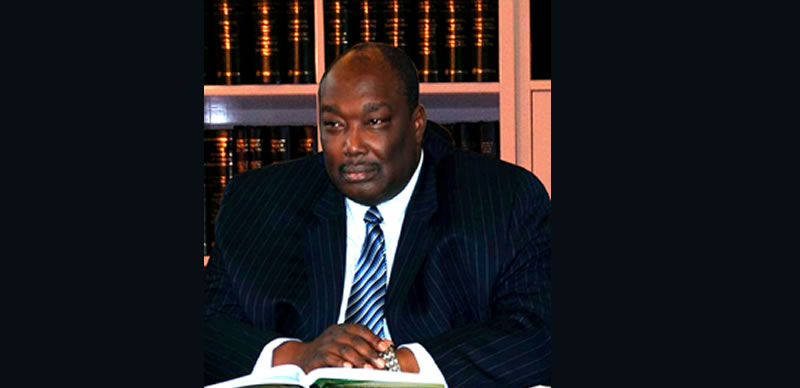

Senior Advocate of Nigeria, J.B. Daudu, SAN, has urged the National Assembly to retain the existing legal position on the burden of proof in election petitions, warning that any attempt to alter it in the proposed amendment to the Electoral Act would undermine the integrity of the electoral process.
Speaking during a send-forth ceremony for the 42nd set of externs at his Abuja office, Daudu stressed that the burden of proof must remain with the petitioner, as currently provided by law.
He recalled that the National Assembly had hinted at reforms that would require the Independent National Electoral Commission (INEC) to prove that elections were validly conducted. According to him, such a shift would not only distort established legal principles but also compromise INEC’s neutrality.
“The INEC Chairman does not have the manpower for the task the National Assembly is about to heap on his shoulders. More importantly, imposing such a duty would permanently damage the Commission’s avowed neutrality,” he warned.
Daudu emphasized that INEC’s foundational role is to serve as an impartial umpire, both during elections and in post-election disputes. If compelled to defend the validity of declared results, INEC would effectively align itself with the declared winner, thereby eroding public confidence in its neutrality.
He explained that under current law, election results are presumed correct until the petitioner adduces credible evidence to the contrary. Reversing this presumption, he argued, would render all elections—presidential, gubernatorial, and legislative—suspect until INEC proves otherwise.
On the standard of proof, Daudu reiterated that allegations of non-compliance are determined on a balance of probabilities, while allegations of electoral offences must be proved beyond reasonable doubt. He questioned how these standards would operate if the burden were shifted to INEC.
“Would INEC go the whole nine yards to assist a petitioner in proving allegations, or would it merely sit back in cahoots with the declared winner and watch the case collapse? This contrivance is nothing but a device by winners to kill off election petitions,” he said.
The learned silk further noted that the present arrangement already allows litigants access to electoral materials—such as certified true copies of ballot papers and result sheets—upon payment of prescribed fees. If INEC were compelled to provide these materials free of charge and also bear the evidential burden, the Commission would be overwhelmed, leading to chaos in the petition process.

He warned that such a reversal would dismantle the very architecture of Nigeria’s electoral system, which is built on a pyramid structure beginning at the polling unit and culminating at INEC’s national headquarters. Both the Electoral Act 2022 and the proposed 2025 Bill, he observed, preserve this structure.
Daudu also dismissed the Senate’s claim that INEC suppresses results, pointing to Section 60 of the Act, which mandates transparency in vote counting, recording, and transmission, and criminalizes deliberate violations by presiding officers.
In conclusion, he argued that shifting the burden of proof to INEC would be illogical, unlawful, and counterproductive. The real problem, he maintained, lies not with INEC or the courts, but with politicians who engage in vote buying, thuggery, and manipulation of the process.
Until our politicians summon the courage to participate in free and fair elections, Nigerians will remain victims of manipulation and buck-passing,” he declared.