







Ogun CJ Demands Better Pay, Welfare for Judges to Safeguard Judicial Independence and Integrity

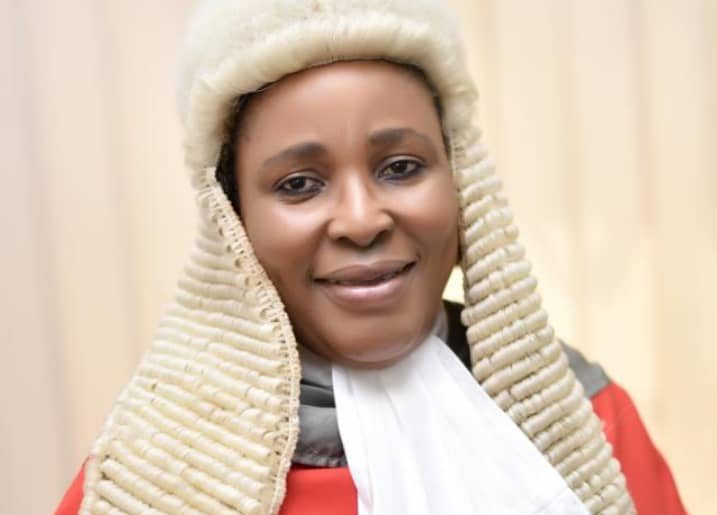

The Chief Judge of Ogun State, Hon. Justice Mosunmola Dipeolu, has renewed calls for improved remuneration and comprehensive welfare packages for judicial officers, stressing that such measures are essential to building a truly independent, motivated, and incorruptible judiciary.
She noted that judicial welfare and financial autonomy have remained unresolved challenges in Nigeria’s justice sector for decades, despite repeated advocacy from the Bench and Bar.
Justice Dipeolu lamented that, although the judiciary is often described as the last hope of the common man, it continues to suffer neglect when compared to the executive and legislative arms of government.
According to her, judges across the country have for years contended with poor pay, excessive workloads, chronic underfunding, and inadequate infrastructure, a situation she described as a painful disconnect between the weight of judicial responsibilities and the resources allocated to discharge them.
The Chief Judge warned that these systemic deficiencies have taken a toll on the health of judicial officers, pointing out that a well‑remunerated and healthy judiciary is not only more productive but also less susceptible to corruption.
Declaring open the 2025 Judges’ Conference at the Ogun State Judiciary Complex, Kobape Road, Abeokuta, Justice Dipeolu cited research indicating that judges report higher levels of distress and problematic alcohol use than the general population.
She added that the nature of judicial work predisposes officers to burnout, obesity, hypertension, and mental health challenges, owing to high caseloads, prolonged sitting, exposure to traumatic cases, and the immense pressures of the vocation.
Reflecting on the past, she recalled that judges’ salaries remained stagnant for 15 years, from 2008 to 2023 which she described as a “silent testament to institutional neglect.” However, she acknowledged that 2023 brought a “ray of hope” with constitutional amendments and the enactment of the Judicial Office Holders (Salaries and Allowances, etc.) Act signed by President Bola Ahmed Tinubu.

While welcoming the upward review of salaries, Justice Dipeolu emphasised that such reforms must be sustained and institutionalised, warning against one‑off interventions. She urged that judicial remuneration be reviewed regularly and systematically, rather than arbitrarily.
Speaking on the conference theme, “Judicial Officers’ Well‑Being”, she encouraged judges to prioritise personal wellness and called for organisational policies that promote regular vacations, access to healthy meals, and a supportive professional community.
Also addressing the gathering, retired Justice Solomon Olugbemi decried the long‑standing neglect of the judiciary by the other arms of government. He criticised the disproportionate benefits enjoyed by governors and their deputies after only eight years in office, contrasting it with the plight of career civil servants who retire into poverty after 35 years of service.
Justice Olugbemi advocated for genuine financial independence for the judiciary, with allocations drawn directly from the Federation Account and disbursed through the National Judicial Council to state judiciaries. He maintained that only such a structure can guarantee the resources needed for the judiciary to function effectively and uphold the rule of law.