








The Right to Health Under the Nigerian Constitution: Myth or Reality?


The right to health is universally recognized as a fundamental human right, indispensable to the enjoyment of life and the preservation of human dignity. The World Health Organization defines health as “a state of complete physical, mental and social well-being and not merely the absence of disease or infirmity.”
The Universal Declaration of Human Rights (UDHR), adopted in 1948, was the first international instrument to expressly articulate this right. It provides that: “Everyone has the right to a standard of living adequate for the health and well-being of himself and of his family, including food, clothing, housing and medical care and necessary social services, and the right to security in the event of unemployment, sickness, disability, widowhood, old age or other lack of livelihood in circumstances beyond his control.”
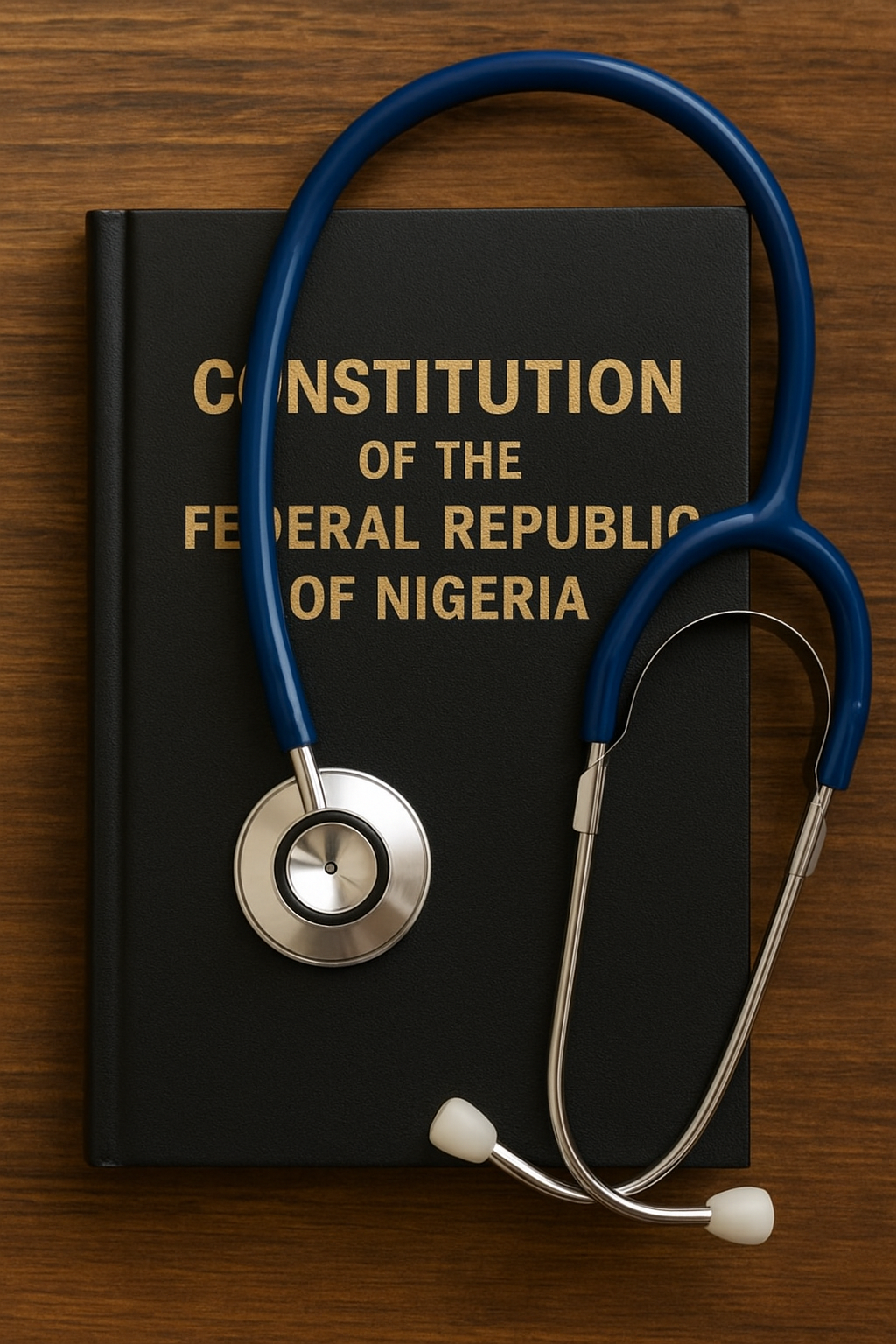
Similarly, Article 12 of the International Covenant on Economic, Social and Cultural Rights (ICESCR, 1966) specifically recognizes the right of everyone to the enjoyment of the highest attainable standard of physical and mental health. Yet, despite these international commitments, the 1999 Constitution of the Federal Republic of Nigeria (as amended) makes no explicit provision for the right to health. This gap raises an important constitutional question: is the right to health in Nigeria a myth or a reality?
Constitutional Position on the Right to Health
Unlike jurisdictions that expressly guarantee the right to health, such as South Africa under Section 27 of the 1996 Constitution and Kenya under Article 43(1)(a) of the 2010 Constitution, the Nigerian Constitution does not specifically provide for it. Instead, health-related obligations are indirectly embedded in the Fundamental Objectives and Directive Principles of State Policy under Chapter II, Section 17(3)(d), which provides that “the State shall direct its policy towards ensuring that there are adequate medical and health facilities for all persons.”
However, Section 6(6)(c) of the Constitution renders Chapter II non-justiciable, meaning that courts cannot directly enforce these provisions. As a result, while the Constitution recognizes health as a desirable policy objective, it does not elevate it to the status of an enforceable right.
Deriving the Right to Health from Other Constitutional Rights
Despite the absence of an explicit constitutional guarantee, the right to health can be inferred from other fundamental rights in Chapter IV.
The right to life under Section 33 is a clear example, as life cannot be meaningfully enjoyed without access to adequate healthcare. Courts in several jurisdictions have recognized that protecting life implies a duty to provide the conditions necessary for sustaining it, including healthcare services. Although the Constitution does not expressly enshrine the right to health, Nigerian courts have on occasion, interpreted the right to life to encompass health-related protections. For instance, in Medical and Dental Practitioners Disciplinary Tribunal v. Okonkwo (2001), the Supreme Court emphasized the sanctity of life and the duty to preserve it, underscoring the connection between medical care and the enjoyment of life. Similarly, in Gbemre v. Shell Petroleum Development Company (2005), the Federal High Court held that gas flaring violated the constitutional rights to life and dignity, linking environmental health directly with human survival.
Beyond the right to life, the right to dignity of the human person under Section 34 also has strong implications for health. The Constitution prohibits inhuman or degrading treatment, and the denial of medical treatment or exposure to inhumane health conditions may amount to degrading treatment. Dignity therefore presupposes access to humane health conditions and treatment facilities. For instance, in Odafe & Ors v. Attorney-General of the Federation, the Federal High Court held that denying medical care to detainees amounted to a violation of their right to dignity under Section 34.
Similarly, the right to private and family life under Section 37 extends to issues of reproductive health, medical privacy, and autonomy in healthcare decision-making, thereby strengthening the constitutional basis for health-related protections.

Furthermore, Nigeria’s ratification and subsequent domestication of the African Charter on Human and Peoples’ Rights further affirms the right to health as legally binding within its jurisdiction. Article 16 of the Charter expressly provides for the right to enjoy the best attainable state of physical and mental health, and Nigerian courts have recognized the Charter as enforceable in domestic law. In the landmark case of Abacha v. Fawehinmi, the Supreme Court affirmed that the African Charter, having been domesticated, has the force of law in Nigeria.
It is also important to note that the National Health Act 2014 establishes a framework for the regulation, development, and management of Nigeria’s health system, and makes provisions for access to basic health services. While this legislation does not cure the constitutional silence, it represents a legislative acknowledgment of health as a fundamental concern for governance.
Between Myth and Reality
The right to health in Nigeria therefore straddles the boundary between aspiration and enforceability. On one hand, the lack of explicit constitutional protection and the non-justiciability of Chapter II provisions weaken its legal force, leaving many citizens without effective remedies when their health rights are infringed. On the other hand, judicial interpretation of related rights, particularly life, dignity, and privacy, together with Nigeria’s international obligations, increasingly affirm health as a fundamental human entitlement.
Ultimately, the constitutional framework places the right to health in an uncertain position. To bridge this constitutional gap, Nigeria must pursue reforms that render socio-economic rights, including health, justiciable and enforceable. Only then will the right to health cease to be a constitutional myth and become a practical reality for all Nigerians, in line with international human rights standards.