





Unsafe Grounds: What Nigeria Must Learn To Promote Safety At Sports Grounds


Nigerian football stadiums are becoming increasingly unsafe for fans, players, and match officials. In recent seasons, incidents of crowd violence, pitch invasions, and assaults on players and referees have exposed serious weaknesses in how matches are organised and secured across the country. From Kano to Lafia, football grounds that should serve as spaces of entertainment and community have too often become scenes of chaos and danger.
These incidents are not isolated. They point to a broader failure of regulation, enforcement, and accountability in Nigeria’s sports ecosystem. Stadium safety is not merely about fan behaviour; it is about whether governments, football authorities, and club administrators are meeting their responsibility to protect lives. Other footballing nations have paid a heavy price for ignoring these warning signs. Nigeria must decide whether it will learn from or repeat their mistakes.
Stadium Safety Concerns in Nigeria
The safety of fans in sports grounds creates multi-layered responsibilities for several parties. To begin with, the government owes a natural duty to citizens to ensure they are protected from harm or harassment. Additionally, the enforcement of criminal laws aimed at promoting public order – and the enactment of laws aimed at safeguarding citizens, and maintaining public order. Further, Sports Federations, sports administrative bodies and football clubs have a duty to ensure the sports grounds are not only safe, but meet the required standard for them to function.
Nigerian sports – especially football – has been riddled with several situations which have put the safety of football fans and officials in danger. In October 2025, Nigeria Professional Football League [NPFL] club, fans of Kano Pillars, were involved in assaulting match officials, as well as players and officials of opposition team, Shooting Stars FC. This incident was the ninth infraction which the club had been involved in in a period of twelve years – amounting to an incident at least every 18 months. A few months before, in May of 2025, a player of Plateau United was attacked by fans of Nassarawa United after a 3-2 loss away to the latter.
The examples of safety concerns at sports grounds are not limited to the above examples. However, it brings into question, the level of safety required to protect sports fans, and the role of the government, as well as other administrative bodies in promoting fans safety at sports grounds in Nigeria. It also contrasts the fact that sport is influenced by the society it finds itself in, raising sports, infrastructural and societal concerns.
Historical Incidents
Several countries have learned hard lessons about stadium safety through tragic failures. Two of the most significant incidents are the Ibrox disaster of 1971 and the Hillsborough disaster of 1989.
The Ibrox disaster occurred during a match between Rangers and Celtic in Scotland, when crowd movement on an exit stairway led to a fatal crush that killed over 50 supporters. Investigations into the tragedy exposed serious structural and crowd-control failures, resulting in legal action and policy reforms, including the influential Wheatley Report, which helped shape modern stadium safety standards.
Nearly two decades later, the Hillsborough disaster in England claimed the lives of more than 90 Liverpool supporters due to severe overcrowding and policing failures. Initial attempts to blame fans were later proven false following extensive inquiries and legal proceedings. The disaster triggered sweeping reforms in English football and continues to influence proposals for stronger accountability laws, including the Hillsborough Law Bill, aimed at ensuring transparency and honesty by public authorities.
More recent incidents, such as security breaches at the Euro 2020 final and crowd-control failures at the 2022 UEFA Champions League final in France, show that stadium safety remains an ongoing challenge — and that regulatory vigilance is essential.
What can Nigeria do?
To begin with, Nigeria must adopt laws aimed at protecting fans at stadiums, as well as ensuring stadiums are fit for purpose. For example, in England, the Safety of Sports Grounds Act 1979, which was enacted after the Ibrox disaster and plays a crucial role in creating a safety standard for football stadium operators and managers, as well as promoting a minimum standard required to keep spectators at sports venues safe. Also, the Guide to Safety at Sports Ground Regulation which also regulates how sports grounds can be safer for spectators.
Further, another critical recommendation is the implementation of criminal laws which punish persons involved in football hooliganism within or outside sports grounds. Punitive measures play a role in putting fans in check, as well as making them reconsider any acts of violence.
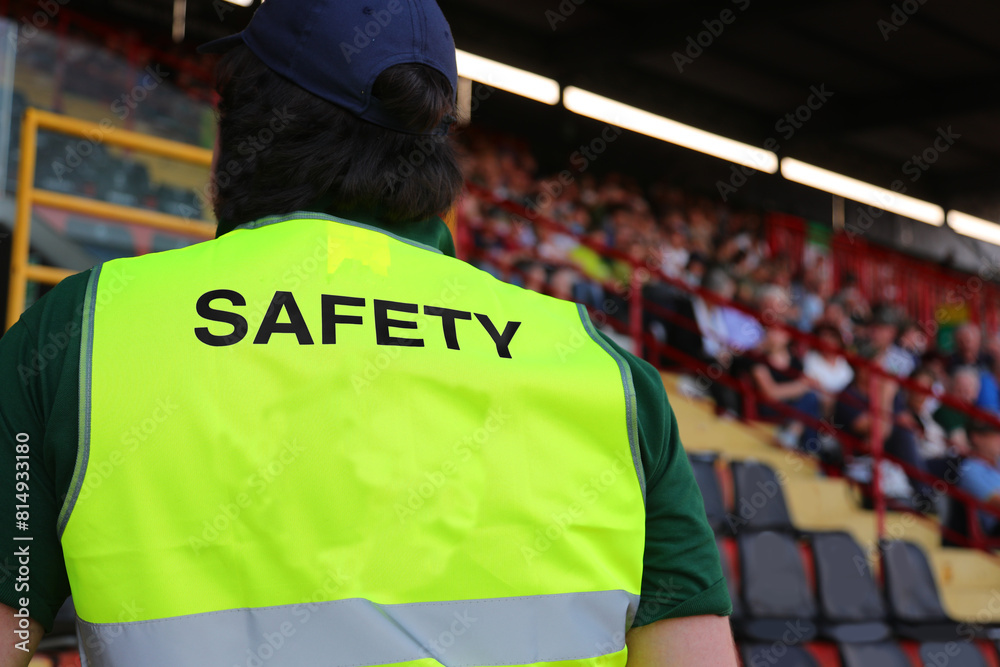
Lastly, the author proposes that the sports federations and league management bodies mandate the use of trained match stewards whose duty it shall be to ensure the safety of spectators and improve crowd control. Match stewards shall also ensure fans do not gain entrance into the stadium with materials which may put others in danger or cause harm.

Conclusion
Stadium safety cannot be treated as an afterthought in Nigerian football. The recurring incidents of violence and disorder make it clear that existing measures are inadequate, and that fans are being exposed to avoidable risks. Ensuring safe sports grounds requires more than reactive sanctions after incidents occur; it demands clear laws, firm enforcement, and professional matchday operations.
Nigeria must move beyond rhetoric and adopt a comprehensive framework that regulates stadium safety, criminalises football-related violence, and mandates trained match stewards at league fixtures. Government authorities, football federations, and league organisers must be held accountable when standards are ignored. Until these steps are taken, attending a football match in Nigeria will continue to carry unnecessary danger — a situation no sport, and no society, should accept.
Bio:
Ayomide Eribake is a lawyer specialising in sports law, policy, and governance. He holds an LL.M in Sports Law from Nottingham Trent University and was called to the Nigerian Bar in 2022 after graduating from the University of Lagos. His sports law work includes involvement in international football transfer agreements and advisory work relating to sports transactions. His research and professional interests focus on sports governance, policy development, competition law in sport, and sustainable funding models for sports development