









Supreme Court Reserves Judgment in Rivers State Emergency Powers Suit

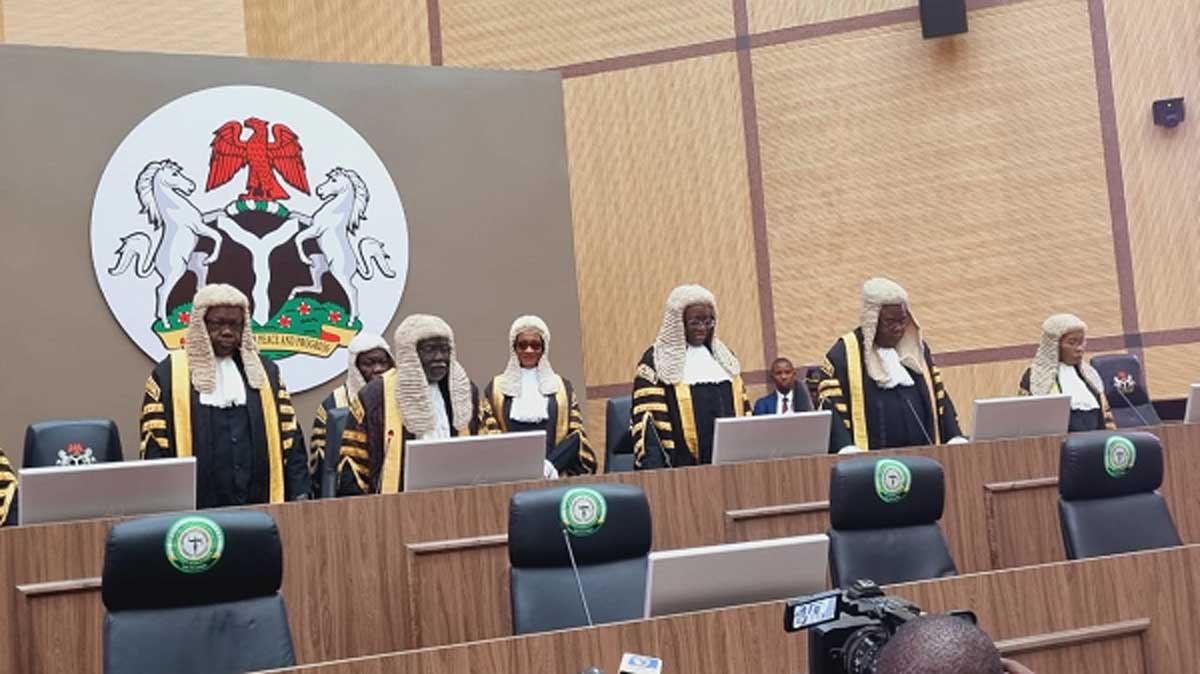

The Supreme Court on Tuesday reserved judgment in the high-profile suit challenging the declaration of a state of emergency in Rivers State.
A seven-man panel of the apex court fixed judgment for a date to be communicated after hearing final arguments from counsel representing the parties in the action instituted by eleven states against President Bola Tinubu.
The suit, filed through the respective Attorneys-General, was brought by the governments of Adamawa, Enugu, Osun, Oyo, Bauchi, Akwa Ibom, Plateau, Delta, Taraba, Zamfara, and Bayelsa States.
Appearing personally for the Federal Government, the Attorney-General of the Federation and Minister of Justice, Prince Lateef Fagbemi, SAN, led a team of senior counsel including Chief Akinlolu Olujimi, SAN (former AGF), Prof. Kanyinsola Ajayi, SAN, Abiodun Ononikoko, SAN, and Kehinde Ogunwumiju, SAN. Their presence underscored the gravity with which the Federal Government views the constitutional questions raised.
The plaintiffs were represented by Eyitayo Jegede, SAN, with J.A. Mumuni and Musbau Adetumbi, while the National Assembly, joined as second defendant, was represented by Charles Yohila, who urged the court to dismiss the action.
At the resumed hearing, Delta State formally withdrew as a plaintiff. The court accordingly struck out its name from the suit.
Arguing for the plaintiffs, Jegede clarified that the action was not a denial of the president’s power under Section 305 of the 1999 Constitution (as amended) to proclaim a state of emergency, but a challenge to the extent of such proclamation, particularly its impact on the offices of the governor, deputy governor, and the state legislature.
In response, Fagbemi adopted all processes filed by the Federal Government, including its preliminary objection and counter-affidavit, urging the court to dismiss the suit as speculative and lacking merit. He argued that Rivers State was engulfed in a political crisis that left governance paralysed, and that the president acted not out of discretion but in discharge of a constitutional obligation to safeguard democracy, life, and property.

According to him, the suspension of the governor, deputy governor, and lawmakers was an extraordinary measure necessitated by an extraordinary situation, not a removal from office. He submitted that the plaintiffs lacked locus standi, as those directly affected by the proclamation were not before the court, remarking that the states were “trying to be more Catholic than the Pope.”
Counsel to the National Assembly aligned with the AGF’s submissions, while the plaintiffs countered that executive action, however extraordinary, must remain within constitutional limits.
After hearing arguments, the Supreme Court reserved judgment. The decision, when delivered, is expected to be a landmark pronouncement on the scope of presidential powers under Section 305 of the Constitution and the balance between executive necessity and constitutional safeguards.