






Tinubu Moves to Decriminalise Attempted Suicide, Seeks Senate’s Approval

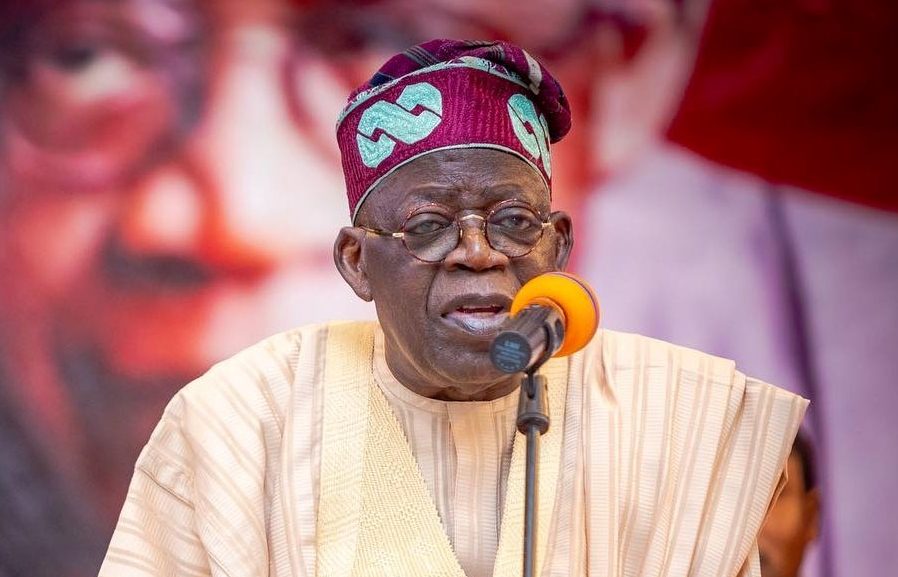

President Bola Tinubu has asked the Senate to remove criminal penalties for attempted suicide and provide support for survivors, submitting a proposed amendment to the National Mental Health Act 2021 for legislative consideration.
The President’s proposal marks a significant intervention in the debate over whether Nigerians who survive suicide attempts should face criminal prosecution or receive medical and psychological assistance.
The National Mental Health Amendment Bill 2026 was conveyed to the Senate in a presidential letter read by Senate President Godswill Akpabio during plenary on Tuesday.
In the letter, Tinubu invoked Section 58(2) of the 1999 Constitution, as amended, to formally transmit the proposed legislation to the National Assembly, expressing hope that lawmakers would give it expeditious consideration.
“Pursuant to Section 58, subsection 2 of the 1999 Constitution of the Federal Republic of Nigeria, as amended, I forward herewith the National Mental Health Amendment Bill 2026 for the kind consideration of the Nigerian Senate,” the President stated.
The proposed legislation seeks to amend the existing National Mental Health Act by removing criminal sanctions for attempted suicide and establishing a more supportive framework for people who survive suicide attempts.
The President’s intervention comes against the backdrop of growing legislative debate over the continued criminalisation of attempted suicide under Nigeria’s existing criminal laws, despite provisions recognising mental health emergencies.
It also follows the Senate’s passage of a separate bill seeking to decriminalise attempted suicide for second reading, sponsored by Senator Asuquo Ekpenyong, representing Cross River South.
Presenting the bill, Ekpenyong had drawn attention to what he described as an inconsistency in Nigeria’s legal framework.
He had argued that while the National Mental Health Act recognises attempted suicide as a psychiatric emergency requiring immediate intervention, the Criminal Code and Penal Code continue to treat it as a criminal offence.
He had challenged lawmakers to reconsider the appropriate response of the state to individuals who survive suicide attempts, stressing the need to choose between prosecution and protection.
The debate had attracted considerable attention following Akpabio’s earlier opposition to decriminalising attempted suicide.
During deliberations on the separate bill, the Senate President had insisted that attempted suicide should remain a criminal offence, arguing that survivors should face imprisonment.
“As far as we are concerned, we are saying that suicide is a crime for now. Therefore, if you attempt it, you better succeed. If you don’t succeed, we will send you to prison,” Akpabio had declared.
However, reacting to Tinubu’s proposed amendment on Tuesday, the Senate President welcomed the initiative, explaining that his earlier position distinguished between individuals who were mentally sound and those experiencing mental health challenges.
Akpabio maintained that people suffering from mental health conditions should not be treated in the same manner as those considered mentally capable of understanding their actions.
“I did not include people who are mentally disturbed because they don’t have a mental balance to know what they are doing,” he said.
He added that criminalising the actions of people experiencing mental health challenges would amount to insensitivity rather than addressing the circumstances responsible for their actions.
His remarks appeared to underscore the importance of distinguishing between criminal responsibility and mental health emergencies in determining the appropriate treatment of suicide attempt survivors.
The Senate subsequently referred the National Mental Health Amendment Bill 2026 to its Committee on Rules and Business for further legislative action.
The proposed amendment is expected to provide an opportunity for lawmakers to harmonise the country’s mental health framework with existing criminal laws and reconsider the treatment of people who survive suicide attempts.
Meanwhile, the Senate on Tuesday confirmed six nominees for appointment as executive directors of the Nigerian Midstream and Downstream Petroleum Regulatory Authority (NMDPRA).

The confirmation followed the consideration of a report by the joint committees on Petroleum Downstream and Gas, presented by Senator Kawu Sumaila, representing Kano South.
The nominees were confirmed through a voice vote after the Senate considered the committee’s report at the Committee of the Whole, presided over by Akpabio.
Those confirmed are Abiodun A. Adeniji, Executive Director, Finance and Accounts; Ogbugo Kalu Ukoh, Executive Director, Distribution Systems, Storage and Retailing Infrastructure; and Mustapha Lamorde, Executive Director, Health, Safety, Environment and Community.
Others are Mobolaji Tajudeen Musa, Executive Director, Hydrocarbon Processing Plants, Installation and Partnership and Transportation Infrastructure; Ogechukwu Olufunmilola Modie, Executive Director, Economic Regulation and Strategic Planning; and Said Abutalib, Executive Director, Corporate Services and Administration.
Presenting the report, Sumaila disclosed that the nominees appeared before the joint committees on November 12, 2026, for screening, where they responded to questions on the petroleum industry and measures to reposition the sector for improved economic performance.
He said the nominees were also asked to explain their understanding of the challenges confronting the midstream and downstream petroleum sectors and how the regulatory authority could be effectively managed.
According to him, the committees were satisfied with their performances, describing their responses as intelligent and convincing and demonstrating a sound understanding of the complexities, challenges and opportunities in the petroleum industry.
The report further stated that the nominees possessed the requisite technical knowledge, professional experience and expertise to discharge their responsibilities effectively.
The committees also confirmed that the appointments complied with Sections 41(2) and 41(3) of the Petroleum Industry Act 2021, adding that no petition was received against any of the nominees.
It recommended their confirmation, which the Senate subsequently approved.