









Senate Passes Bill Imposing Jail, Fine on Hospitals Over Neglecting Emergency Treatment

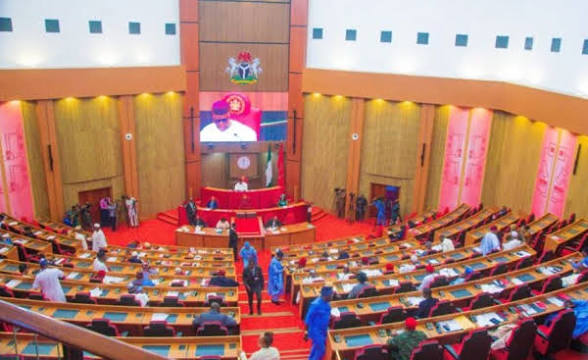

The Nigerian Senate has passed for second reading a bill seeking to introduce stricter penalties for hospitals and healthcare providers that fail to comply with proposed emergency treatment standards. Under the proposed legislation, offenders could face up to six months’ imprisonment, a fine of ₦300,000, or both.
The bill also seeks to establish mandatory response timelines for public and private healthcare facilities, requiring hospitals to assess emergency patients within 15 minutes of arrival, begin initial stabilisation within 30 minutes and complete necessary referrals to other medical facilities within three hours.
Sponsored by Senator Abdulaziz Musa Yar’Adua, who represents Katsina Central, the National Health Act (Amendment) Bill, 2026, is designed to strengthen the existing National Health Act, 2014, by introducing enforceable emergency care standards, compulsory training for healthcare workers and clearer procedures for transferring patients between medical facilities.
Presenting the bill during Wednesday’s plenary on November 4, 2026, Yar’Adua explained that the proposed amendment would address longstanding weaknesses in Nigeria’s healthcare delivery system and ensure that patients receive prompt, life-saving medical attention regardless of their financial status, social background, influence or location.
He said the legislation would introduce a standardised national emergency care curriculum to be jointly developed and maintained by the Medical and Dental Council of Nigeria and the Nursing and Midwifery Council of Nigeria.
Under the proposed framework, healthcare professionals involved in emergency medical services would be required to undergo specialised training and obtain certification at intervals not exceeding 18 months.
The senator also explained that all public and private hospitals licensed to provide emergency services would be expected to commence triage and initial patient assessment within 15 minutes of arrival.
Where a licensed medical doctor is unavailable, a trained and certified nurse would be permitted to conduct the initial assessment.
Furthermore, hospitals would be required to begin basic stabilisation procedures within 30 minutes. These interventions would include oxygen administration, intravenous fluids, pain management and preliminary diagnostic examinations.
For patients experiencing life-threatening medical conditions, healthcare providers would be expected to immediately initiate appropriate emergency interventions, including cardiopulmonary resuscitation, airway management and bleeding control.
The proposed legislation also outlines specific requirements for patients who need hospital admission or transfer to another facility.
Where admission is necessary, hospitals would be required to allocate a bed within two hours, subject to availability.
However, facilities without available beds would be expected to immediately stabilise the patient and begin arrangements for referral to another hospital within two hours of arrival, or as soon as the patient has been clinically assessed and considered stable for transfer.
The referral process would also be expected to be completed within three hours, except where unavoidable circumstances, such as transportation difficulties or insecurity, make compliance impossible.
Additionally, hospitals would be required to provide an ambulance or arrange alternative transportation within 30 minutes of deciding that a patient needs to be transferred.
According to Yar’Adua, these measures are intended to eliminate unnecessary delays in emergency medical care and prevent avoidable deaths resulting from negligence or administrative bottlenecks.
The proposed amendment prescribes criminal penalties for individuals and healthcare facilities that violate its emergency treatment requirements.
Under the provision, anyone found guilty of an offence would face a fine of up to ₦300,000, imprisonment for a maximum of six months, or both.
Nevertheless, the bill recognises that certain hospitals may encounter genuine resource limitations that prevent them from meeting the prescribed standards.
In such situations, healthcare facilities would be expected to properly document the circumstances, follow the required referral procedures and report the challenges to the appropriate hospital management or regulatory authorities.
Yar’Adua noted that the proposed emergency care standards were consistent with practices adopted in countries such as Ghana, South Africa, Kenya, the United Kingdom and the United States.
Supporting the legislation, Senate Chief Whip Mohammed Tahir Monguno, who represents Borno North, said the proposal would help reduce preventable deaths associated with road accidents, maternal emergencies and other critical medical conditions.

Monguno expressed concern over cases in which healthcare providers allegedly neglect patients requiring urgent medical attention, leading to deaths that could have been prevented through timely intervention.
He argued that introducing criminal liability for deliberate violations of emergency treatment standards would strengthen accountability and encourage hospitals and medical professionals to take their responsibilities more seriously.
Other lawmakers also raised concerns about the practice of delaying or denying emergency treatment to patients who cannot make advance payments or whose financial circumstances prevent them from accessing immediate medical assistance.
They stressed that preserving human life must take precedence over financial demands and administrative procedures, particularly during medical emergencies.
The proposed amendment builds on Section 20 of the National Health Act, 2014, which already prohibits healthcare providers, medical workers and healthcare establishments from refusing emergency medical treatment.
However, Yar’Adua maintained that the existing law needs clearer response deadlines, standardised emergency procedures and stronger enforcement provisions to ensure that patients effectively enjoy their right to emergency medical care.
Following deliberations, the Senate passed the bill for second reading and referred it to the Committee on Health, Secondary and Tertiary, for further legislative consideration.
The committee was given four weeks to review the proposed amendments and submit its report to the Senate.
It is important to note that the proposed six-month jail term and ₦300,000 fine are not yet enforceable under the amendment, as the bill must pass through the remaining legislative stages and receive the necessary approvals before becoming law.
If eventually enacted, the legislation would establish stricter emergency response obligations for Nigerian hospitals and healthcare professionals, with the broader objective of reducing preventable deaths, improving the quality of emergency medical services and ensuring greater accountability across the country’s healthcare system.