







Legal Aid Council Unveils New Screening Tools to Detect Hidden SGBV Cases


The Legal Aid Council of Nigeria (LACoN) is introducing new screening procedures to help identify survivors of sexual and gender-based violence (SGBV) who seek legal assistance without disclosing their experiences of abuse.
The Director-General of LACoN, Aliyu Abubakar, stated this in Abuja at a validation workshop organised by the Council and the International Institute for Democracy and Electoral Assistance (International IDEA) under the European Union-funded Support to End Sexual and Gender-Based Violence in Nigeria programme implemented by International IDEA.
Abubakar said revised client intake forms and identification guidelines would help legal aid practitioners detect signs of abuse, document cases and refer survivors to appropriate support services.
He explained that survivors often approach legal aid offices over matrimonial disputes, child custody, maintenance, inheritance and tenancy without revealing underlying experiences of violence, coercion or intimidation due to fear of retaliation, stigma, trauma, economic dependence and social barriers.
According to him, existing procedures focus mainly on legal representation and alternative dispute resolution, leaving some cases of abuse undetected and preventing survivors from accessing justice and protection.
He said the proposed tools include revised client intake forms, LAC 2 for criminal cases and LAC 3 for civil cases, alongside guidelines and checklists for identifying SGBV.
Abubakar added that the tools would guide practitioners in recognising physical and psychological abuse while protecting survivors’ confidentiality, obtaining their consent and safeguarding personal data. They would also establish referral pathways to specialised services and facilitate access to remedies under the Violence Against Persons (Prohibition) Act 2015 and other relevant laws.
He said the guidelines would be used by LACoN lawyers and pro bono legal aid providers.
Chairman of the Nigerian Bar Association (NBA), Abuja Branch, Yakubu Philemon, said the association had recorded about 112 gender-based violence cases nationwide, with more than half of the affected persons receiving support.
Philemon reaffirmed the NBA’s commitment to working with law enforcement agencies to support investigations and prosecutions where sufficient evidence exists.
Similarly, Executive Director of the Sexual Offences Awareness and Response Initiative (SOAR Initiative), Chinyere Eyoh, said abuse could remain concealed in cases presented as matrimonial disputes, child custody matters and other legal disagreements.
Eyoh, who is a member of the tools’ Technical Working Group, stressed that the questions legal aid officers ask, how they ask them and the environment in which clients are received could determine whether survivors disclose abuse and obtain help.
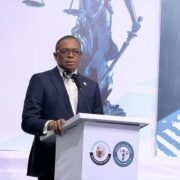
She called for confidential, survivor-centred responses, adequate staff training and effective referrals to legal, psychosocial and protection services.
The Senior Programme Manager for the Ending Sexual and Gender-Based Violence programme at International IDEA, Mufuliat Fijabi, also called for sustained collaboration among stakeholders to strengthen responses to SGBV.
Representing the Executive Secretary of the National Human Rights Commission, Dr Tony Ojukwu, Ngozi Okorie identified financial constraints as a major barrier preventing survivors from pursuing legal action and called for stronger institutional collaboration to protect vulnerable persons and improve access to justice.
The workshop brought together legal practitioners, human rights institutions, civil society organisations and development partners to review the proposed tools ahead of their formal adoption and rollout.
The initiative seeks to address gaps in Nigeria’s response to SGBV by improving early identification at legal aid offices. However, uneven implementation of the Violence Against Persons (Prohibition) Act 2015, alongside gaps in state-level legislation and enforcement, continues to pose challenges in parts of the country.