







Ex‑Power Minister Saleh Mamman Seeks to Quash EFCC’s Nine‑Count Charge, Cites Double Jeopardy

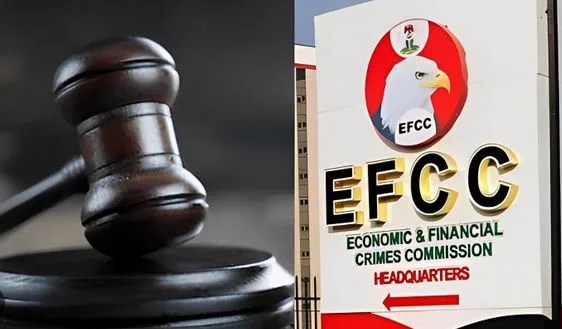

Former Minister of Power Saleh Mamman has asked the High Court of the Federal Capital Territory (FCT) to quash a nine-count charge filed against him by the Economic and Financial Crimes Commission (EFCC), arguing that he has already been tried and convicted over offences arising from the same transaction.
Mamman is relying on Section 36(9) of the 1999 Constitution, which protects individuals from being tried or punished twice for the same offence, in a motion marked M/8214/26 and filed on May 14, 2026.
The former minister was previously tried and convicted by the Federal High Court in Abuja on May 7, 2026, in Charge No. FHC/ABJ/CR/273/2024: Federal Republic of Nigeria v. Saleh Mamman. He contends that the allegations in the current case are based on substantially the same facts as those in the earlier proceedings.
Before the conviction, the EFCC had filed a separate nine-count charge against Mamman and seven other defendants before the FCT High Court. The charge, registered as FCT/HC/CR/375/2025, includes allegations of obtaining by false pretence and related offences.
The other defendants named in the charge are Mustapha Abubakar Bida, Joseph Omotayo Adewumi, Ben Nsikak, Stephen Ojo, Oladipo Adebowale, Micheal Achua and Ogunjobi Olusola.
Legal experts have questioned why the co-defendants, who reportedly held various key positions in the Mambilla-Zungeru hydropower project, were not initially charged alongside Mamman before the Federal High Court.
In his application, Mamman is seeking two principal orders from the court: an order quashing the current charge on the grounds that he has already been tried and convicted over offences arising from the same transaction or set of facts, and an order discharging and acquitting him on all counts relating to him in the charge.
He listed several grounds in support of the application, including his constitutional right to a fair hearing and protection against double jeopardy under Section 36(9) of the 1999 Constitution.
Mamman also argued that the allegations in the current case arose from the same transaction and set of facts for which he had already been convicted by a court of competent jurisdiction. He maintained that subjecting him to another criminal trial on the same facts would violate his constitutional rights.
In a 15-paragraph affidavit supporting the motion, Mohammed Ahmed, a member of the legal team that defended Mamman in the earlier trial before Justice James Omotosho of the Federal High Court, stated that the allegations in the current charge arose from the same transaction and set of facts considered in the previous proceedings.
Ahmed further stated that no superior court had ordered a retrial in respect of the offences for which Mamman was convicted. He argued that continuing the prosecution under the present charge would therefore amount to double jeopardy.
The motion was filed by Mamman’s counsel, Femi Atteh, a Senior Advocate of Nigeria (SAN).
However, the EFCC, through its counsel, Mohammed, opposed the application and urged the court to dismiss it.
After hearing arguments on the motion, Justice Maryann Anenih fixed November 26, 2026, for ruling.