





“Return Nullified Elections to Voters, Don’t Choose Their Leaders for Them” — Odinkalu tells Judiciary

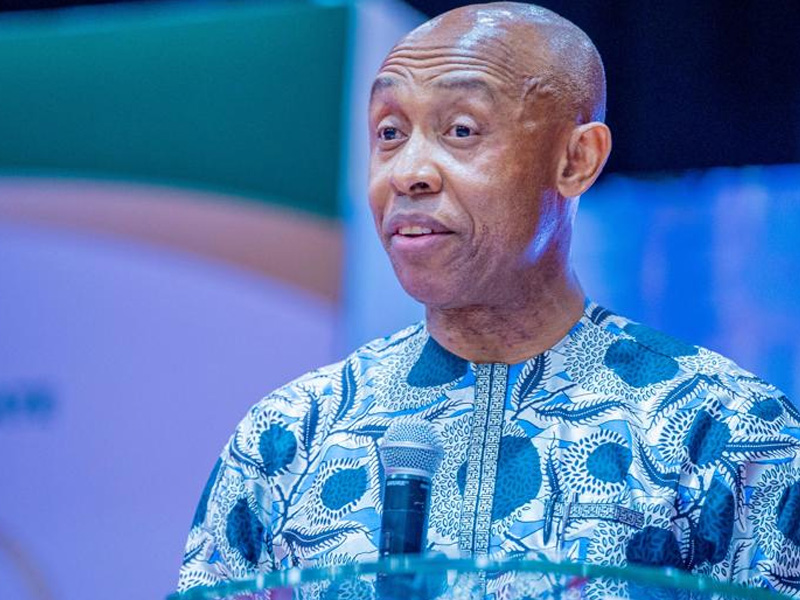

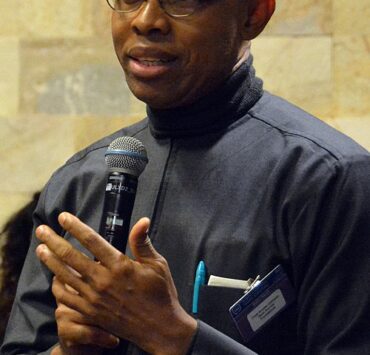
Human rights lawyer and activist, Chidi Odinkalu, has criticised the judiciary over its use of the “wasted votes” doctrine in electoral disputes, arguing that the practice undermines the mandates given to politicians by voters.
Odinkalu spoke on Thursday at the third edition of the Tunji Braithwaite Symposium in Lagos, themed “The Judiciary and Electoral Integrity in Nigeria.”
He argued that votes cast by citizens could not legitimately be described as wasted in a democracy, warning that such judicial decisions weaken the power of the electorate.
Odinkalu said he was particularly concerned about cases in which courts cancelled election results after citizens had exercised their right to vote.
“In a democracy, there is only one currency. It is the ballot. When courts tell you that votes cast by citizens can be wasted, they effectively have announced a coup on the people. I cannot say this enough. It is beyond arrogant. It is irresponsible,” he said.
He cited the 2019 Zamfara State governorship election dispute, in which the Supreme Court overturned the victory of the All Progressives Congress despite the party securing a large majority of the votes.
According to Odinkalu, the APC won 72 per cent of the votes in the state, while the candidate to whom the victory was subsequently awarded, Bello Matawalle, secured 22 per cent.
“The Supreme Court cancelled their victory and awarded it to (Bello) Matawalle, who got 22 per cent of the votes. He had been beaten in every ward in the state.
“And based on pre-election disputes, the Supreme Court ruled that the votes of all the people in Zamfara State who had made the effort to vote were wasted,” he said.
Odinkalu questioned the basis for judges declaring citizens’ votes wasted, arguing that the judges were not part of the electoral process before making such decisions.
“The arrogance of judges who have never voted, who will never go to vote in Zamfara State, sitting down in the safety of the Supreme Court to say that the votes of citizens are wasted is irresponsible,” he said.
He also cited the 2007 Rivers State governorship dispute, arguing that although the Supreme Court may have been justified in addressing the dispute surrounding the Peoples Democratic Party primary, the remedy adopted was problematic.
According to him, rather than awarding victory to another candidate who had not been presented to voters, the court could have ordered that the candidate removed from the ballot be returned to contest the election.
“What it could have done was fashion a suitable remedy, which could have been what? Return the man to the ballot and ensure that the contest is done between those who are on the ballot; return it to the people.
“But the court decided not to do that, to install as a winner a person who had not been on the ballot and who had not been presented to the people as a matter of fact,” he said.
The lawyer also criticised the Court of Appeal’s handling of election petitions arising from the 2023 elections in Plateau State.

He alleged that the appellate court relied on the doctrine of wasted votes to overturn victories secured by the Peoples Democratic Party and hand the seats to the All Progressives Congress.
“I do not want to describe publicly how the government managed to retain these seats, because I saw that and I was involved in that up close. With the frequent advice given to aggrieved politicians and citizens to seek redress in court, the credibility of the judicial process is increasingly being questioned.
“And when they tell you to go to court, they’re laughing at you because they have rigged the courts,” he said.
Odinkalu, however, attributed some of the problems within the judicial system to the process of appointing judges, alleging that political and personal considerations influenced some appointments.
He also expressed concern over what he described as the growing involvement of courts in political disputes, saying it was limiting the judiciary’s ability to attend to ordinary cases.
According to him, the situation was contributing to the growing influence of non-state actors in resolving disputes.
“The courts are so immersed in political disputes that there is increasingly little or no judicial time available for regular court work. Citizens languish in courts,” he said.
“So lawyers are taking their cases away from the courts and taking them to vigilantes. In certain states, vigilante organisations are settling