Nigeria Defeats Sunrise Power in $3.38 Billion ICC Arbitration on Mambilla Hydroelectric Project

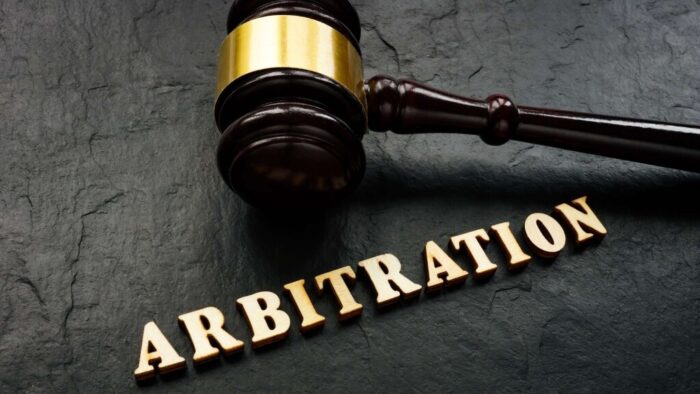

An arbitral tribunal constituted under the auspices of the International Chamber of Commerce (ICC) in Paris has ruled in favour of Nigeria in the long-running arbitration brought by Sunrise Power and Transmission Company Limited over the Mambilla Hydroelectric Power Project.
In its final award issued on September 17, 2026, the three-member tribunal rejected Sunrise’s claims in their entirety and ordered the company and its promoter, Mr. Leno Adesanya, to reimburse Nigeria for the bulk of its legal costs.
The two related arbitrations had exposed Nigeria to potential claims exceeding $3.38 billion.
The dispute dates back nearly nine years to when Sunrise commenced arbitration proceedings against Nigeria over the proposed Mambilla power project in Taraba State.
The tribunal dismissed Sunrise’s claim for a declaration that Nigeria had breached its contractual obligations under a settlement agreement and an addendum entered into by the parties.
It also rejected the company’s demand for $400 million, comprising a $200 million settlement sum and an additional $200 million default payment.
The tribunal further declared that Adesanya, the promoter of Sunrise, is bound by the arbitration agreement with Nigeria under the settlement agreement and its addendum.
As a result, the panel ruled that it has jurisdiction over Nigeria’s counterclaim against Adesanya and his firm.
On legal costs, the tribunal ordered Sunrise and Adesanya to reimburse Nigeria 75 per cent of the legal fees and expenses incurred during the arbitration.
The tribunal assessed Nigeria’s legal fees and expenses at $11,819,506.51. Of that amount, $2.5 million is to be covered directly from funds held in escrow by the ICC and released following notification of the final award.
Sunrise and Adesanya were ordered to pay Nigeria the remaining $9,319,506.51, together with interest at an annual rate of 10 per cent, compounded annually, from the date of notification of the final award until the amount is paid in full.
The tribunal also fixed the costs of the arbitration itself at $1.66 million, with 75 per cent to be borne by Sunrise and Adesanya and the remaining 25 per cent by Nigeria.
The panel was chaired by Ms. Melaine van Leeuwen, with Mr. Stavros Brekoulakis and Mr. Simon Nesbitt serving as co-arbitrators.
Nigeria was represented by a legal team led by Ms. Elizabeth Oger-Gross and Mr. Tolu Obamuroh, both now of Paul Hastings LLP.
Sunrise commenced arbitration against Nigeria before the ICC International Court of Arbitration on October 10, 2017, seeking $2.354 billion over an alleged breach of contract relating to a 2003 agreement for the construction of a hydroelectric plant at Mambilla in Taraba State.
The project was originally to be developed on a build, operate and transfer basis and was valued at about $6 billion. With interest, Sunrise’s claim was put at more than $2.7 billion.
In a second arbitration, the company sought another $400 million, which was put at $680 million with interest. That claim was based on an allegation that the Federal Government had failed to honour a 2020 settlement agreement intended to bring the first arbitration to an end.
Taken together, the two claims put Nigeria’s potential exposure at more than $3.38 billion.
The project at the centre of the dispute has since undergone significant changes from the scheme contemplated in the original 2003 agreement.
It was initially conceived as a 3,050-megawatt hydroelectric power plant in Taraba State. In 2016, the then Minister of Power, Works and Housing, Mr. Babatunde Fashola, described the project as a scheme capable of generating about 3,000MW.
In February 2021, the then Minister of Power, Mr. Saleh Mamman, announced that the Federal Government had reduced the planned capacity by about 50 per cent, from 3,050MW to approximately 1,525MW.
The reduction was intended to cut the project cost by about $1 billion and improve its financial viability.
By July 2021, Mamman told the Senate Committee on Power that the project had been rescoped further to approximately 1,500MW to make it bankable and acceptable to lenders.
He explained at the time that the original 3,050MW capacity was not considered financially viable under prevailing market conditions.
The original project was estimated to cost between $5 billion and $5.8 billion, while the rescoped project of about 1,500MW to 1,525MW has been estimated at approximately $4 billion.
Despite being identified by successive administrations as a major component of efforts to increase Nigeria’s electricity generation capacity, the Mambilla project has remained largely on the drawing board.
Its implementation has faced repeated setbacks linked to legal disputes, financing difficulties and changes to its implementation arrangements.
A Federal Ministry of Power implementation document identified the arbitration, completion of financing arrangements with the Export-Import Bank of China and the need to rescope the project among the challenges affecting its execution.
The origins of the 2003 contract were also challenged by former President Chief Olusegun Obasanjo, who questioned the authority of his then Minister of Power, Mr. Olu Agunloye, to award the contract.
Obasanjo said that ministers did not have the authority during his administration to approve projects above N25 million without express presidential consent.
“When I was president, no minister had the power to approve more than N25 million without express presidential consent. It was impossible for Agunloye to commit my government to a 6 billion dollar project without my permission, and I did not give him any permission,” Obasanjo said.
He said he was prepared to testify before any commission of inquiry into the matter, adding that the relevant records were available.
“I never approved it,” he said.
Obasanjo also recalled a memorandum presented to the Federal Executive Council on May 21, 2003, saying he was surprised by the proposal because Agunloye had previously discussed the project with him.
“When he presented his memo to the federal executive council, I was surprised, because he had previously discussed it with me and I had told him to jettison the idea, that I had other ideas on how the power sector would be restructured and funded,” he said.
According to Obasanjo, he told Agunloye during the council meeting to withdraw the memorandum.
“I told him as much at the council meeting and directed him to step down the memo. I find it surprising that Agunloye is now claiming he acted on behalf of Nigeria,” he said.
Obasanjo added that he would have dismissed Agunloye had he known that the minister had issued a letter committing Nigeria to the project.
“If I knew he issued such a letter to Sunrise, I would have sacked him as minister during my second term. He would not have spent a day longer in office,” he said.
The late President Muhammadu Buhari also denied authorising the 2020 settlement agreement between Nigeria and Sunrise.
In a letter addressed to the Attorney-General of the Federation, Prince Lateef Fagbemi, SAN, Buhari said his ministers had engaged with Sunrise and other stakeholders in efforts to resolve issues surrounding the project, but denied giving specific instructions for a settlement agreement to be concluded.
“While I understood that my ministers of justice, power and water resources were approached by Sunrise and were engaging with various stakeholders that were involved in the project to resolve the issues blocking the project’s implementation, at no time did I specifically instruct them to enter into and conclude any settlement agreement with Sunrise Power and Transmission Company Limited,” he wrote.
Buhari said the proposed settlement agreement and addendum were presented to him for consideration and approval on April 20, 2020, but that he declined to approve them.
“Indeed, when the proposed settlement agreement and addendum were presented to me for my consideration and approval on 20th April 2020, I refused to approve the settlement deal because I was convinced that there was no basis for Sunrise’s claim,” he wrote.
He linked the dispute to a broader concern over out-of-court settlements involving the Nigerian government, referring to his earlier statement on Nigeria’s victory in the P&ID arbitration.
“I hope the above clarifications will assist you in your defence of our country from these ‘invisible contractors who all too often quietly take Nigeria for many millions in out-of-court settlements’, as I stated in my recent statement regarding Nigeria’s victory in the P&ID saga,” Buhari wrote.