






Nigeria Forges Ahead: Joint Decarbonisation Group Launched to Drive 2030 Gas Flaring Deadline and Secure Investment

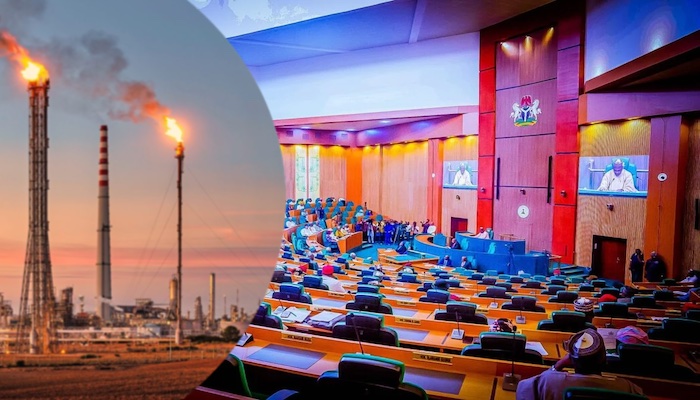

The Nigerian federal government has officially launched the Joint Decarbonisation Working Group (JDWG) for the oil and gas sector, signalling a renewed commitment to eradicating routine gas flaring by 2030. This strategic initiative also aims to solidify natural gas’s role as Nigeria’s transition fuel, fostering industrial growth while simultaneously pursuing ambitious lower carbon emission targets.
Speaking at the inauguration in Abuja, the Minister of State for Petroleum Resources (Gas), Ekperikpe Ekpo, underscored the JDWG’s critical function as a coordinated platform. This collaborative body will bring together government institutions, regulators, industry operators, and development partners to spearhead decarbonisation efforts within the petroleum industry. Crucially, the group is tasked with ensuring these initiatives align with Nigeria’s overarching economic development aspirations. Minister Ekpo emphasised that this is more than just another committee; it is a landmark initiative designed to bolster institutional collaboration and maintain the global competitiveness of Nigeria’s industrial sector as it navigates sustainability goals.
Minister Ekpo articulated the government’s vision, stating, “Nigeria is blessed with significant volumes of natural gas resources. Natural gas remains Nigeria’s transition fuel and our objective under the Renewed Hope Agenda is clear. We have committed ourselves to transforming this abundant resource into industrial growth, expanding energy access, employment opportunities, cleaner cooking solutions, increased domestic utilisation and greater prosperity for our people.” He further highlighted the evolving landscape where decarbonisation is no longer solely an environmental obligation but an economic and investment imperative, as investors increasingly scrutinise carbon performance. “If we are to remain a preferred destination for responsible energy investment, we must continue building institutions, policies and regulatory systems that inspire confidence while preserving our sovereign rights to utilise our natural resources for national growth,” he asserted. Nigeria’s commitment to global methane emission reduction efforts was reaffirmed, with the principle that climate ambition must progress in tandem with economic development, ensuring no developing nation is forced to choose between poverty reduction and environmental protection.
The JDWG is expected to enhance policy coordination, refine measurement, monitoring, reporting, and verification (MMRV) systems, support the implementation of existing regulations, facilitate technology deployment, and improve access to climate finance and carbon markets.

Dr. Tenioye Majekodunmi, Director General of the National Council on Climate Change (NCCC), identified methane emissions reduction as a swift and cost-effective strategy for improving Nigeria’s environmental performance and bolstering the oil and gas industry’s competitiveness. She noted that global markets are increasingly favouring cleaner production methods, making decarbonisation essential for Nigeria’s long-term economic relevance. “The global energy transition is no longer a distant aspiration. It is today’s economic reality. Around the world, investment decisions are increasingly being shaped by carbon performance. Decarbonisation is therefore not merely an environmental obligation, it is an economic imperative,” she stated. Dr. Majekodunmi reiterated that Nigeria’s net-zero by 2060 pathway hinges on a pragmatic and just transition, balancing climate commitments with industrialisation, job creation, and energy security, underpinned by the Decade of Gas initiative. The Nigeria Gas Flare Commercialisation Programme remains central to ending routine gas flaring by 2030, transforming environmental waste into economic value, creating jobs, improving public health, and unlocking new investment opportunities.
Kama Nkemkanma, Chairman of the House Committee on Climate Change and Security, views decarbonisation as an opportunity to modernise Nigeria’s oil and gas industry. He posited that the country’s financial capacity, technical expertise, and established supply chain position it to accelerate investments in gas development, renewable energy integration, carbon capture, and energy efficiency, while maintaining energy security.