









M-PESA Pivots to Lending: Leveraging Transactional Data to Bridge Kenya’s Persistent Credit Gap

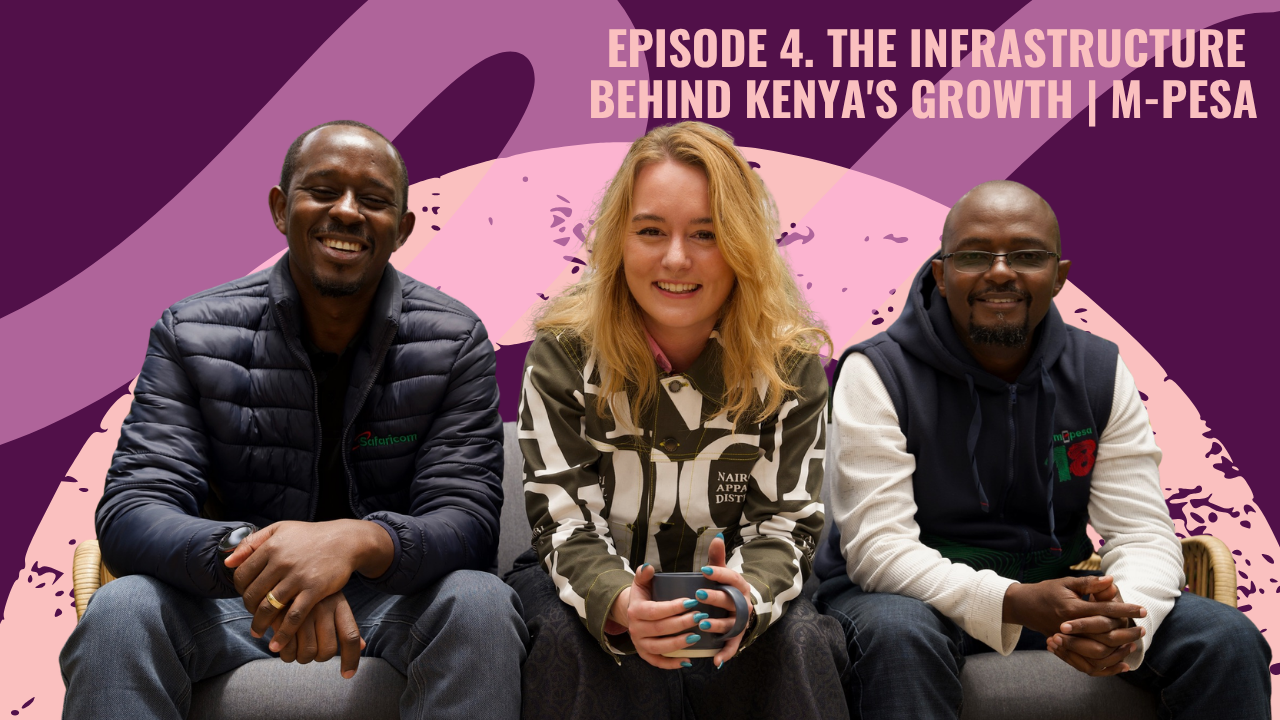

Safaricom’s M-PESA, the mobile money service that revolutionised payments in Kenya, is now setting its sights on a more complex challenge: the credit market. Nearly two decades after transforming how millions transact, save, and pay, the telco giant is aiming to address the significant gap in accessible and affordable lending, a domain where traditional banks have historically shown reluctance to extend credit beyond established clientele. This strategic shift, as detailed in a recent conversation on the *Voices & Visions* podcast, produced through a partnership between Tutto Passa Agency and TechCabal, signals M-PESA’s ambition to leverage its vast transactional data to serve small businesses and households underserved by conventional financial institutions.
Peter Gichangi, Safaricom’s head of Super Apps, articulated the pressing need, stating, “There is pain. There is real pain.” He further indicated Safaricom’s openness to collaborations, noting, “If there are people interested in partnering with us, from Europe or wherever it is, to provide accessible, affordable credit in the market, we are open to having those discussions.” This sentiment underscores Safaricom’s belief that its established platform, serving over 30 million customers, can be replicated to enhance credit access in a market where traditional lenders perceive significant risk.
Kenya, despite its advanced digital financial landscape, faces a persistent credit deficit for its small and medium-sized enterprises (SMEs). These businesses, which constitute over 90% of the nation’s enterprises and employ millions, consistently identify financing as a primary operational constraint. Their lack of formal financial statements, collateral, or extensive banking histories renders them difficult for traditional banks to assess. While the private sector credit growth has shown a cautious recovery, rising from a 2.9% contraction in January 2025 to 8.1% by March 2026, following interest rate adjustments by the Central Bank of Kenya, the industry’s non-performing loan ratio stood at 15.6% in March 2026. This elevated ratio makes banks highly selective in their capital deployment.
Consequently, many households and small businesses are compelled to seek financing from digital lenders, often at exorbitant interest rates. Andrew Mutha, chief executive of Safaricom Money Transfer Services, highlighted this dilemma: “Banks are saying, ‘Look, you’re too risky.’ There’s a digital lender somewhere who is willing to give you credit. However, the risk is too high, so the interest rate is very high.” He noted that borrowers can end up paying annualised borrowing costs that frequently exceed 60%, and sometimes even 100%, of the original loan amount.
The core of the divergence between banks and Safaricom lies not in the availability of capital, but in the methodology of risk assessment. Banks traditionally rely on collateral, audited accounts, employment records, and established banking relationships. These criteria, while effective for large corporations, are often inaccessible to micro-enterprises such as kiosk owners, online merchants, or boda boda operators. Safaricom, however, possesses an unparalleled dataset derived from millions of daily transactions. Every payment, supplier settlement, salary disbursement, utility bill payment, and customer purchase generates a financial footprint, providing Safaricom with a rich repository of consumer and business behaviour data.
This data is already instrumental in determining credit limits for existing products like Fuliza overdrafts, M-Swari, and KCB-MPESA. Safaricom now intends to apply this model to business finance. Gichangi confirmed the internal focus, stating, “We recently got a person joining the M-Pesa team to support on the credit side. Defining how this will look like, what type of partners do we need, what type of loans do we want to get into, and how do we structure this going forward.” The company’s hypothesis is that transaction history can offer a more accurate measure of creditworthiness than traditional banking metrics. This approach mirrors successful models seen with companies like Ant Group in China and Mercado Pago in Latin America, which have built substantial lending businesses by analysing daily transaction patterns.
Crucially, Safaricom and M-PESA Africa are not seeking to become licensed banks. Instead, their strategy is to function as a platform connecting capital providers with borrowers. This “unbundling” of banking services, where tech firms manage customer relationships and distribution while financial institutions provide capital and regulatory oversight, is a global trend Safaricom appears poised to emulate. “We partner with financial institutions,” Gichangi explained. “Banks bring in the financing, we bring in the platform, help with the credit scoring and collections.” This model also explains Gichangi’s outreach to international investors, offering M-PESA as a ready-made platform for capital deployment, customer acquisition, data analytics, and collections infrastructure.
This strategic pivot echoes the origins of M-PESA itself. When M-PESA was first conceived, banks deemed millions of low-income Kenyans commercially unviable, imposing stringent requirements such as minimum balances, employer letters, and customer referrals. Mutha recalled, “You needed a referral. You needed to maintain a minimum account. Some banks were asking you to come with an introduction letter from your employer.” These barriers effectively excluded a significant portion of the informal economy from formal financial services. Safaricom’s initial success was built on redesigning financial services around the customer, a paradigm shift that fundamentally altered Kenya’s financial landscape.
Gichangi and Mutha are now advocating for a similar breakthrough in lending, asserting that years of transaction data can provide lenders with deeper insights into a business’s financial health than traditional collateral or documentation. If successful, M-PESA’s role will expand from a payment infrastructure to a credit one. While digitising payments required a shift in consumer behaviour, revolutionising lending practices will necessitate a more profound change in established banking and investment paradigms. However, the potential reward is significantly greater, as credit, unlike mere transactions, is a fundamental driver of business growth and economic development.