Cameroon’s Sonara Overhaul: CFA700 Billion Modernisation Signals Strategic Shift in National Refining


Seven years after a devastating fire crippled Cameroon’s sole refinery, the National Refining Company (Sonara), the government has unveiled a significantly revised and expanded plan. Moving beyond mere restoration, Cameroon is now embarking on a comprehensive modernisation project estimated to cost CFA700 billion. This ambitious undertaking marks a profound shift in scope and strategic intent for the nation’s oil value chain.
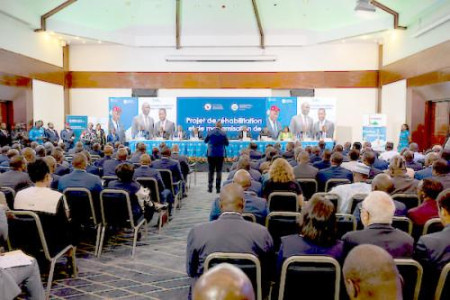
The initiative officially commenced on June 29 with an international market consultation held in Yaoundé. This crucial phase has convened a broad spectrum of industry stakeholders, including engineering and construction firms, oil companies, financial institutions, investment banks, and specialised advisory services. The Ministry of Finance has indicated that this market sounding is designed to elicit critical feedback on the project’s technical, financial, legal, and contractual architecture. The objective is to refine the project’s structure, thereby enhancing its attractiveness to potential investors and qualified operators before proceeding to subsequent stages. Following the consultation, the government intends to issue a call for expressions of interest, followed by a bidder shortlisting process, in-depth discussions with selected candidates, and ultimately, the selection of a private partner to execute the project.
The scope of this project has evolved considerably from the initial response to the 2019 fire. The Ministry of Finance has confirmed that the redesigned plan incorporates a full modernisation of the refinery. A key element of this revised strategy is the planned construction of a hydrocracker unit, which will enable Sonara to process crude oil domestically produced within Cameroon. Furthermore, the project includes substantial upgrades to storage facilities and a significant increase in refining capacity, projected to rise from the current 2.1 million tons per annum to at least 3.5 million tons per annum.
This strategic pivot effectively merges two previously distinct initiatives: the reconstruction of Sonara post-fire and the long-planned second phase of the refinery’s modernisation program, which predated the 2019 incident. This consolidation dramatically expands the scale of the investment, transforming a reconstruction effort into a comprehensive industrial upgrade with far-reaching financial, operational, and strategic implications. The revised budget of CFA700 billion represents a substantial increase from the initial CFA250 billion earmarked for repairs or replacement of fire-damaged facilities. More importantly, it underscores the government’s ambition to reposition Sonara as a modern refinery capable of playing a more significant role in Cameroon’s oil value chain, rather than simply restoring lost capacity. A critical question that remains to be definitively addressed is the ultimate funding mechanism, with the government yet to detail the precise allocation of financial risks among the state, Sonara, private investors, and potentially, consumers, despite outlining a preferred contractual structure.

The market consultation, concluding on June 30, also provides insight into the intended contractual model. According to the Ministry of Finance, the project will be structured as a public-private partnership (PPP) under a Design-Build-Finance-Maintain (DBFM) framework. Under this arrangement, the selected private partner will assume responsibility for the design, construction, financing, and ongoing maintenance of the upgraded refinery. This DBFM model differs from the Build-Operate-Transfer (BOT) contracts previously employed by Cameroon for several infrastructure projects. Crucially, the DBFM model positions Sonara at the core of the project, with the state-owned refinery retaining ownership of all facilities and remaining accountable for day-to-day operations throughout the contract’s duration. While this structure theoretically allows the government to maintain control over a strategic national asset while leveraging private sector expertise for financing and execution, it raises several pertinent questions regarding sovereign guarantees, the source of future payments (Sonara’s revenues versus the state budget), contract duration, and the revenue streams designated for long-term maintenance of such a substantial industrial asset. These considerations are paramount given Sonara’s vital role in the Cameroonian economy, particularly in light of the nation’s increased reliance on imported refined petroleum products since the 2019 fire halted its operations.
The Sonara overhaul is also unfolding within a dynamic industrial landscape marked by the concurrent development of a second refinery. This new facility, located in the Kribi industrial-port zone in the South Region, is being developed by the National Hydrocarbons Corporation (SNH), Cameroon’s state-owned oil company and a shareholder in Sonara. Initial projections indicate the Kribi refinery will achieve a capacity of 30,000 barrels per day by 2028, with an initial output of 10,000 barrels per day targeted for the latter half of 2026. The emergence of two state-backed refineries within a relatively small domestic fuel market inevitably prompts questions about their synergistic integration. SNH has publicly dismissed concerns of direct competition, affirming its commitment to supporting Sonara’s reconstruction and modernisation with technical, industrial, and financial expertise. While this stance aims to mitigate anxieties regarding infrastructure duplication, it does not fully resolve the broader strategic debate. Upon completion, both the upgraded Sonara refinery and the new Kribi facility will need to operate within a unified national refining strategy. This will necessitate critical decisions regarding crude oil processing types, available production volumes, target markets, storage capacity, port logistics, energy security, and the financial sustainability of both assets. With its budget now firmly established at CFA700 billion, the Sonara project has entered a new, transformative phase. The objective has transcended mere damage repair, signalling Cameroon’s strategic commitment to a comprehensive overhaul aimed at processing more locally produced crude, reducing import dependency, and fostering a robust national refining industry without creating detrimental overlaps between its two flagship refining projects.