








Meter Procurement Dispute Threatens $500 Million World Bank Programme, Risks Project Cancellation

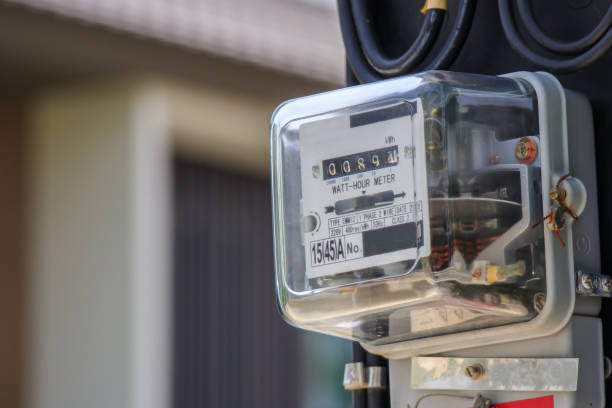

A significant legal challenge brought by local electricity meter manufacturers has emerged as the primary impediment to Nigeria’s $500 million World Bank-backed Distribution Sector Recovery Programme (DISREP). The ongoing litigation has precipitated repeated postponements in the procurement of 1.55 million smart meters and has raised the distinct possibility of the entire exercise being abandoned.
This critical risk assessment was detailed in the World Bank’s latest Implementation Status and Results Report for the Nigeria Distribution Sector Recovery Programme, a document obtained by Nairametrics. The report indicates that while the programme generally maintains a “Moderately Satisfactory” rating and shows steady implementation progress, the court injunction secured by the Association of Meter Manufacturers of Nigeria (AMMON) represents the most substantial threat to its successful execution. The programme had been upgraded from “Moderately Unsatisfactory” six months prior, reflecting sustained improvements in delivery, but this meter procurement dispute now jeopardises that positive trajectory.
According to the World Bank’s findings, AMMON obtained a court injunction on April 30, 2026, which has effectively halted the opening of bids for the International Competitive Bidding (ICB2) phase of the smart meter procurement. The association contends that the current procurement framework disadvantages Nigerian manufacturers and undermines domestic industrial development. The report explicitly states, “The most significant implementation risk at present is the court injunction obtained by the Association of Meter Manufacturers of Nigeria (AMMON) on April 30, 2026, which has halted the opening of bids for the procurement of 1.55 million additional smart meters (ICB2).” Consequently, the Transmission Company of Nigeria Project Management Unit has extended the bid submission deadline on three occasions, with the most recent deadline set for June 25, 2026, as discussions with relevant government agencies continue in an effort to resolve the dispute. The World Bank has issued a stark warning: prolonged litigation could compel authorities to abandon the procurement altogether, stating, “If the matter cannot be resolved in the near term, cancellation of the ICB2 procurement may need to be considered to avoid market uncertainty, cost escalation, and further programmatic delay.”
In parallel, contracts for 217,000 meters intended for local procurement via National Competitive Bidding have reached an advanced stage, having received comments from the Attorney General of the Federation. However, the Bureau of Public Enterprises has stipulated that the signing of these contracts is contingent upon the lifting of the AMMON court injunction.
Despite the procurement impasse, the World Bank reports that implementation under the initial international bidding phase is progressing. As of June 15, 2026, approximately 1.23 million smart meters had been manufactured, with 1.03 million already shipped to Nigeria. Of these, 482,000 meters have been installed, a notable increase from the 365,000 reported at the programme’s mid-term review in April. Further acceleration of meter deployment across electricity distribution companies is anticipated, driven by the Nigerian Electricity Regulatory Commission’s directives issued in January 2026 concerning DISREP implementation. The programme has also contributed to Mission 300 by providing direct electricity access to an estimated 530,000 individuals, a figure expected to grow substantially with ongoing installations. Performance indicators within the report highlight gradual operational improvements across the distribution sector, with the metering gap narrowing to 57.27% and billing efficiency reaching 82.02%. Weekly deployment reports indicate a rise in customer meter installations to 379,380 from 265,000 earlier in the year, and direct electricity connections have increased to 418,033 people. Furthermore, over three million customers have been mapped under the Geographic Information System initiative, moving towards a long-term target of nearly 13 million.

Financial data reveals that as of June 2026, only $87.34 million, representing approximately 17.5% of the total loan, had been disbursed from the $500 million World Bank facility. Separately, under the programme’s results-based financing component, the Bureau of Public Enterprises has initiated the phased transfer of a $37.5 million advance released by the World Bank in December 2025 to electricity distribution companies. This disbursement is tied to the execution of revised Performance Improvement Plans by the DisCos, with Port Harcourt, Ibadan, and Yola DisCos expected to finalise their agreements first. The report also notes delays in resolving a contractual dispute between the Bureau of Public Enterprises and the Independent Verification Agent, with the submission of a revised scope of work to the World Bank overdue. Concurrently, preparations for an additional $308 million financing package are advancing, with the concept note completed and peer-reviewed, pending World Bank team clearance to proceed to the Concept Review stage.
The Nigeria Distribution Sector Recovery Programme, approved in February 2021, aims to enhance the financial and technical performance of electricity distribution companies and is slated to conclude in May 2028. This development follows Nigeria’s earlier cancellation of $717.7 million in undisbursed funding under the World Bank-backed Power Sector Recovery Performance-Based Operation (PSRO), a significant setback for efforts to achieve financial sustainability in the nation’s electricity sector amidst tariff deficits, foreign exchange pressures, and persistent operational inefficiencies. With the World Bank’s warning of potential cancellation for the current meter procurement to avert further delays and cost escalation, the ongoing legal battle presents a critical juncture, posing the risk of another substantial impediment to the programme’s objectives if a swift resolution is not achieved.