




Tinubu Demands End to Raw Resource Exports, Urges African Industrialisation and Value Addition

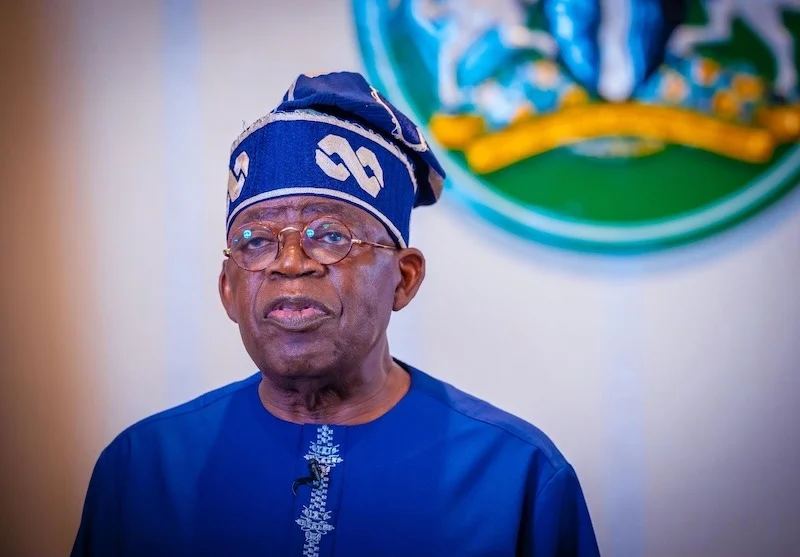

President Bola Tinubu has issued a stark call to African nations, demanding an immediate cessation of the long-standing practice of exporting raw minerals and subsequently importing finished products. Speaking at the fifth African Natural Resources and Energy Investment Summit in Abuja, President Tinubu, represented by the Minister of Solid Minerals Development, Dele Alake, asserted that the continent’s persistent poverty is intrinsically linked to its failure to embrace industrialisation, value addition, and robust regional cooperation.
The summit, themed “One Africa, One Resource Vision,” convened delegates from over 15 African countries, including ministers, investors, development institutions, mining executives, energy experts, and policymakers. The gathering focused on charting a course for the future of Africa’s substantial natural resource wealth. President Tinubu articulated that Africa stands at a critical juncture in its developmental trajectory, emphasising the imperative for the continent to act as a unified economic bloc rather than fragmented markets vying for global attention.
“For generations, our continent has been described by what lies beneath our soil, gold, gas, oil, lithium, cobalt, iron ore, copper and rare earth elements. We have been called resource-rich, strategic and indispensable,” President Tinubu stated. He posed a pivotal question: “But the question before us today is whether Africa will finally turn that wealth into power, power for our homes, power for our industries, power for our young people, power for our economies and power for our rightful place in the world.” The President underscored the significance of the summit’s theme as a declaration of intent, signalling Africa’s resolve to think, plan, build, and rise collectively.
The rapidly evolving global economy, driven by the energy transition, critical minerals demand, climate responsibility, and new technologies, has positioned Africa at the epicentre of resource competition. President Tinubu highlighted that Africa’s resources are indispensable for electric vehicles, renewable energy technologies, and modern industrial systems. He declared, “There can be no global energy transition without Africa. There can be no secure supply of critical minerals without Africa. There can be no true industrial future without Africa. But there can also be no just global order if Africa remains merely a supplier of raw materials while others capture the value.” This era, he insisted, must end. “Africa must no longer export the future in raw form and import poverty in finished form,” he reiterated, calling for a concerted effort to refine, process, manufacture, power factories, train engineers, and build value chains that ensure wealth generated from African soil translates into prosperity on African soil.
President Tinubu affirmed that Nigeria’s Renewed Hope Agenda is aligned with this continental vision of economic transformation through production, industrialisation, and infrastructure development. He stressed that Africa’s prosperity is inextricably linked to inter-African collaboration, envisioning a scenario where a mine in one nation fuels a refinery in another, a gas field powers factories across borders, and a solar corridor supports a continental grid. This integrated approach, he argued, will transform Africa into a vast field of opportunity for innovators across the continent.
However, the President cautioned against the misconception that natural resources alone guarantee economic prosperity. He drew upon historical lessons, noting that resources without vision can foster dependence, without governance can exacerbate inequality, and without value addition can perpetuate poverty. The mission, therefore, must be to transform Africa’s resources into instruments of sovereignty, requiring leadership, policy courage, patient capital, infrastructure, technology, peace, security, and a robust public-private sector partnership.
Addressing investors directly, President Tinubu conveyed Africa’s readiness for business, with a clear preference for investments that foster long-term value creation. He welcomed capital that builds, partnerships that create jobs, transfer technology, strengthen local capacity, and respect communities and the environment. Africa, he clarified, does not reject global partnerships but unequivocally rejects unequal ones. The future, he concluded, will belong to those who create the most value, not those who extract the most.
On energy development, President Tinubu maintained that Africa’s transition to cleaner energy sources must not impede its economic development. He underscored the fundamental need for power to industrialise, create jobs, educate, heal, manufacture, store, transport, and innovate at scale. Africa’s energy transition, he argued, must be practical, balanced, and just, acknowledging the responsibility to protect the planet while asserting the right to develop. He highlighted the urgent need for reliable electricity for millions of Africans, factories, farmers, hospitals, students, and entrepreneurs. A just transition, he insisted, must not force Africa to choose between climate responsibility and human dignity but must deliver both. Nigeria, he assured, will continue to pursue policies that expand energy access, support industrialisation, and attract investment into modern energy infrastructure, with the ultimate goal of producing more opportunities.
President Tinubu challenged summit participants to ensure that discussions translate into tangible outcomes, urging that agreements become projects, projects become industries, industries create jobs, and jobs foster dignity, thereby laying the foundation for a new African century.
Moses Michael Engadu, Secretary-General of the African Minerals Strategy Group, echoed the call for strengthened cooperation and the development of institutions capable of transforming mineral wealth into sustainable economic growth. He likened Africa’s future to a giant tree with interconnected roots, emphasising that collective strength, not individual resource endowments, is the key to industrial transformation and unlocking the continent’s full potential. Engadu noted that while rising global demand for strategic minerals presents a historic opportunity, vision, partnerships, and institutions, rather than resources alone, create prosperity. The task, he stated, is to export value, shape global supply chains, and direct investment towards Africa’s long-term development priorities.
Senator Ekong Sampson, Chairman of the Senate Committee on Solid Minerals Development, urged African leaders to move beyond discussions of mineral potential and focus on productivity, industrialisation, and job creation. Similarly, Jonathan Gaza, Chairman of the House Committee on Solid Minerals, commended Nigeria’s mining sector reforms and pledged legislative support for initiatives aimed at boosting exploration, attracting investment, and increasing government revenue. The summit concluded with a strong emphasis on deeper collaboration among governments, investors, development institutions, and industry stakeholders to leverage Africa’s vast mineral and energy resources as catalysts for industrialisation, regional integration, and shared prosperity. The African Natural Resources and Energy Investment Summit continues to serve as a crucial platform for dialogue and partnership formation across Africa’s natural resource value chains, particularly at a time of accelerating global demand for critical minerals essential for the energy transition.