


AI Frontier Models Face Political Risk as Governments Assert Control Over Strategic Technology

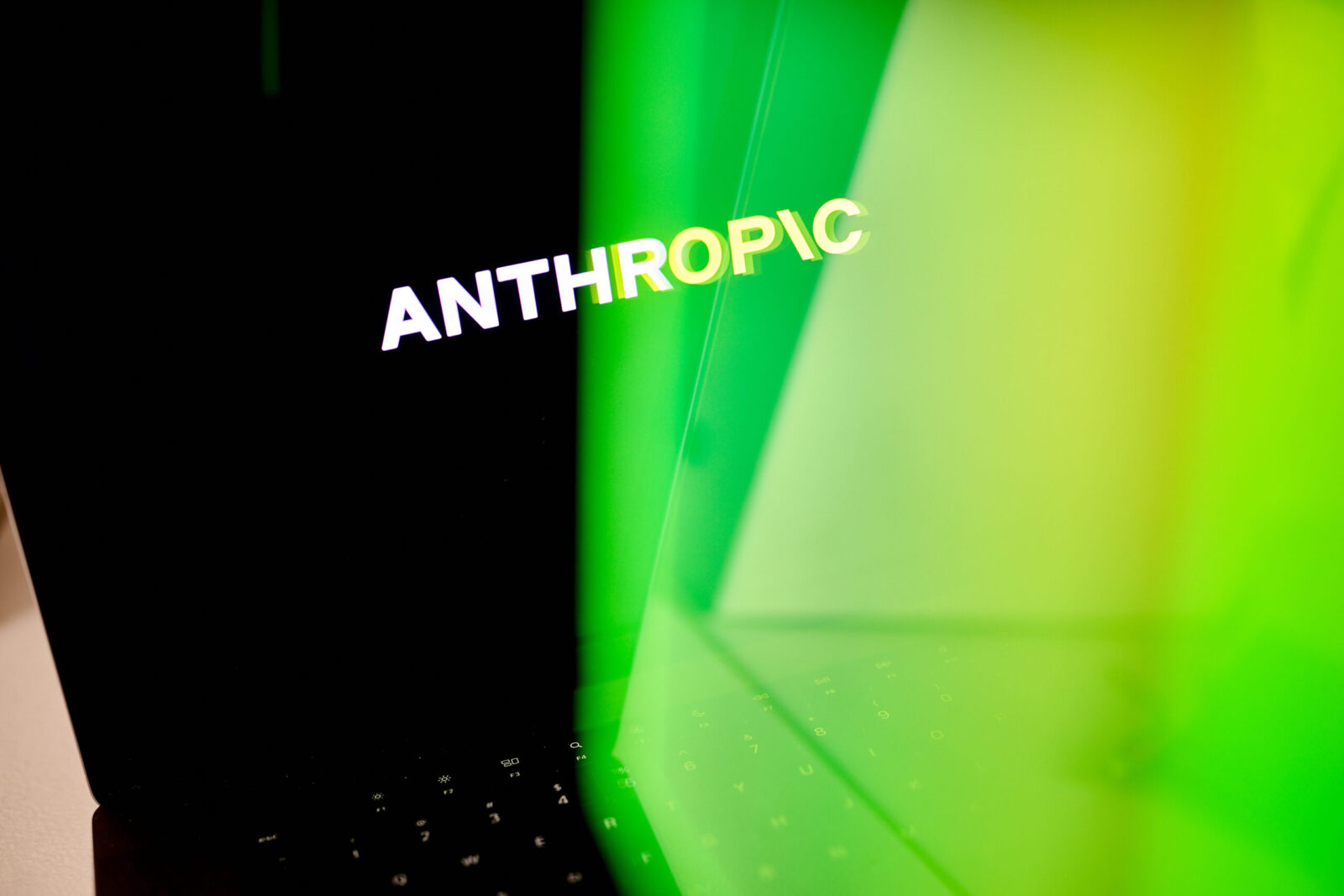

Investors navigating the increasingly competitive artificial intelligence (AI) landscape must now contend with a significant and potentially disruptive risk: political intervention. The US administration’s recent decision to restrict foreign access to Anthropic PBC’s most advanced AI models, citing security concerns, represents an unprecedented move that has sent ripples through the industry. In response, Anthropic proactively disabled access to these models for all users, underscoring the profound impact of governmental actions on AI development and deployment.
This development, as reported by Insurance Journal News on June 23, 2026, marks a critical shift. While governments have long regulated the hardware underpinning AI development, such as advanced semiconductors, their direct intervention in the availability of AI models themselves serves as a stark warning. The risk of governmental interference now poses a tangible threat to the global operations and, consequently, the revenue streams of AI firms. These earnings are crucial for justifying the elevated valuations of technology companies, chip manufacturers, and electrical equipment producers.
The incident fundamentally alters the narrative surrounding AI, transforming it from a race for technological superiority into a matter of national security and the safeguarding of cutting-edge technology. Model accessibility has suddenly become an operational risk for both AI providers and their users, particularly with the potential for sudden and arbitrary sanctions. Bobby Molavi, a partner at Goldman Sachs Group Inc., aptly characterised frontier AI as evolving into “state-supervised strategic infrastructure,” describing the Anthropic situation as the deployment of “a kill switch of sorts.” This raises a critical question for equity investors: will AI model providers increasingly function as “hybrid consumer, enterprise and state-funded defense contractors”?
While market sentiment remains overwhelmingly bullish, with a recent rebound in chip stocks and positive indicators for the Nasdaq-100 Index, the direct market impact of this political intervention has been limited thus far. The primary observable effect was a modest decline in the over-the-counter trading of Anthropic’s pre-IPO stock. However, dismissing this threat as negligible would be imprudent. Anthropic is already on the Department of Defense’s supply-chain risk list due to its refusal to allow its Claude model to be used for mass domestic surveillance or fully autonomous weapons. This context is particularly relevant as the company reportedly eyes an Initial Public Offering (IPO) with a valuation approaching $965 billion.
With OpenAI also reportedly considering a public offering, the critical question for investors is whether to reassess AI valuations now or wait until pure-play AI firms are publicly traded. Post-IPO, this political risk will transition from a theoretical concern to a quantifiable factor that markets can directly discount. This also implies that “platform risk” now extends to major technology companies, including the “Magnificent Seven,” that have stakes in or contracts with leading AI frontier companies.
The implications of this geopolitical shift extend beyond the United States. A European “sovereignty trade” is already gaining momentum, evidenced by the rise in shares of French cloud provider OVH Groupe. French Prime Minister Sebastien Lecornu cited the US government’s actions as a catalyst for France to pursue “strategic autonomy” in AI, reinforcing the nation’s decision to replace data tools from American firm Palantir Technologies Inc. with domestic alternatives.
European contender Mistral AI is reportedly in funding discussions that could nearly double its valuation to €20 billion ($23 billion). While substantial, this figure highlights the significant financing gap compared to its US counterparts, with Mistral having raised approximately $4 billion against OpenAI’s roughly $186 billion and Anthropic’s $161 billion. Furthermore, Mistral’s “sovereign” infrastructure still relies on Microsoft Corp.’s Azure and Nvidia Corp. chips.

China is actively positioning itself as an alternative, leveraging lower operating costs, state support, and a willingness to make advanced models widely available internationally, albeit with stringent domestic licensing requirements. Following Anthropic’s access restrictions, Beijing-based Knowledge Atlas Technology JSC, known as Zhipu, promptly unveiled its most advanced open-source model, leading to a 33% surge in its stock. DeepSeek, another Chinese startup, has implemented a permanent 75% price reduction on its latest model, becoming one of the most frequently used AI providers on the OpenRouter platform based on token consumption.
Anthropic is reportedly engaged in discussions with Washington to lift the current restrictions. If the security concerns prove to be as narrowly defined as the company asserts, access could be reinstated within weeks, potentially relegating this incident to a minor footnote. However, it is more probable that a significant precedent has been established. The control over access to the most advanced AI models is increasingly becoming a governmental prerogative rather than a corporate decision. Political risk is now an indelible factor in AI valuations, influencing IPO pricing, shaving multiples, and commanding premiums for technologies associated with national sovereignty.
Rosenblatt Securities analyst Barton Crockett described the incident as posing an “obvious disruptive risk to the entire AI growth story.” He articulated the concern that “we may be entering a period when future advancements in AI frontier models can be seen as unsafe by some in the security arena and spark security-driven holdups by the government.” This evolving landscape necessitates a recalibration of risk assessments for legal counsel, compliance officers, and corporate strategists involved in the AI ecosystem.