Kenya’s Critical Minerals Deal with US: Local Processing Mandate Signals Strategic Industrial Ambition

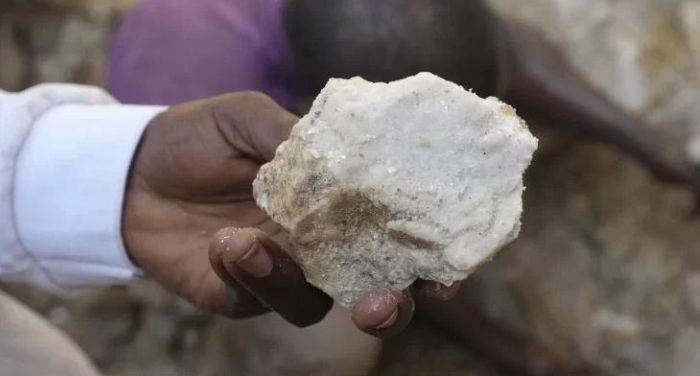

Kenya is poised to finalise a significant critical minerals agreement with the United States, a pact that hinges on a non-negotiable requirement for domestic processing of all covered mineral resources before their entry into global markets. This proposed partnership underscores Nairobi’s strategic intent to fundamentally reshape its mining sector, accelerate industrialisation, and maximise the economic value derived from its abundant natural resources.
President William Ruto confirmed that negotiations with Washington are in their advanced stages, encompassing discussions on rare earth elements and a suite of other critical minerals vital for the global energy transition. He emphatically stated that local processing and beneficiation will be a cornerstone of any future minerals agreement with the U.S., signalling a decisive departure from the historical model of exporting raw materials only to re-import higher-value finished goods. This strategic pivot aligns with a discernible global trend among resource-rich developing economies aiming to cultivate domestic value chains, generate skilled employment, and bolster industrial capacity through enhanced mineral processing and manufacturing capabilities.
While Kenya is not yet a dominant force in Africa’s mining landscape, its substantial untapped mineral potential is attracting considerable international interest, driven by escalating global demand for critical minerals. Government surveys and ongoing exploration programmes have identified significant deposits of rare earth elements, lithium, graphite, niobium, copper, nickel, and coltan. These minerals are indispensable to burgeoning industries such as electric vehicle (EV) battery manufacturing, renewable energy technologies, semiconductor production, telecommunications infrastructure, and defence and aerospace systems. As nations intensify their efforts to secure reliable supplies of these strategic resources, Kenya’s resource base is increasingly recognised as a prospective future source for global supply chains.
Despite its considerable mineral wealth, Kenya’s mining industry remains comparatively nascent, currently contributing a modest 1% to the nation’s Gross Domestic Product (GDP). However, the government has articulated an ambitious objective to elevate the sector’s contribution to 10% of GDP by 2030, positioning mining as a pivotal driver of economic diversification, industrial expansion, and export growth. Achieving this ambitious target will necessitate substantial investment in exploration, geological mapping, infrastructure development, and crucially, mineral processing facilities. Many identified deposits are in early-stage development, requiring further comprehensive studies to ascertain their commercial viability.
For the United States, a critical minerals agreement with Kenya presents both economic and strategic advantages. Washington is actively pursuing the diversification of its critical mineral supply chains to meet the accelerating demand for materials essential to clean energy technologies, electric vehicles, advanced electronics, and national defence. Establishing an early foothold in Kenya’s nascent mining sector could grant U.S. companies preferential access to future mineral production, potentially ahead of large-scale projects initiated by competing global powers. Such an agreement would also bolster broader U.S. objectives of enhancing resource security and mitigating reliance on geographically concentrated sources of critical minerals.
The proposed minerals agreement is set to build upon the increasingly robust bilateral relationship between Nairobi and Washington. In 2022, the two nations launched the Strategic Trade and Investment Partnership (STIP), designed to deepen bilateral trade and investment cooperation. This relationship was further solidified in 2024 when the United States designated Kenya as a Major Non-NATO Ally, a distinction held by a select group of countries globally and a limited number within Sub-Saharan Africa. A critical minerals partnership would expand this cooperation beyond trade, security, and development financing, incorporating resource security and industrial development into the expanding bilateral agenda.

Beyond its mineral endowments, Kenya offers significant geopolitical and economic advantages. As East Africa’s largest economy and a preeminent regional logistics and financial hub, Kenya serves as a critical gateway to broader African markets. The nation also wields considerable diplomatic influence across the continent and maintains strong relationships with major global powers, including the United States, China, and the European Union. This balanced foreign policy approach enhances Kenya’s appeal as a strategic long-term partner for countries seeking deeper economic engagement in Africa.
While negotiations appear to be progressing favourably, several key aspects of the proposed agreement remain undisclosed. Neither government has yet announced specific investment commitments, project timelines, participating companies, individual mining projects to be covered, or detailed plans for processing infrastructure. Furthermore, Kenya’s long-term mineral potential requires extensive verification through ongoing exploration and resource development programmes. Unlike more established African mining jurisdictions such as the Democratic Republic of Congo, South Africa, and Zambia, Kenya’s mining sector is still in its formative stages.
The proposed U.S.-Kenya critical minerals agreement underscores the escalating geopolitical imperative of securing access to strategic resources that will power future technologies and energy systems. For Kenya, these negotiations represent far more than a mere resource extraction opportunity. They are integral to a comprehensive strategy aimed at fostering local mineral processing, expanding industrial capacity, creating higher-value employment, and accelerating long-term economic transformation. Should this agreement be finalised, it could position Kenya as an emerging force in the global critical minerals market while simultaneously strengthening its economic and strategic alliance with the United States.